SCO Anti-Terrorist Body Sets 2027 Agenda to Counter Online Extremism as Chairmanship Passes to Russia
The 46th SCO RATS Council meeting in Islamabad agreed a 2027 agenda targeting internet-based terrorism, separatism and extremism, as chairmanship passes to Russia


-
SCO Anti-Terrorist Body Sets 2027 Agenda to Counter Online Extremism as Chairmanship Passes to Russia
-
The 46th SCO RATS Council meeting in Islamabad agreed a 2027 agenda targeting internet-based terrorism, separatism and extremism, as chairmanship passes to Russia
By: Muhammad Arif, Editor NSN.Asia
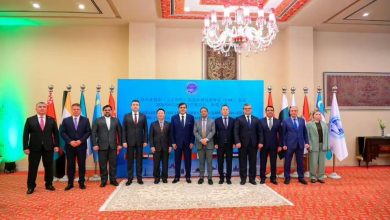
Islamabad: The Council of the Regional Anti-Terrorist Structure of the Shanghai Cooperation Organization (SCO RATS Council) convened its 46th meeting in Islamabad on 14 September 2026, chaired by Pakistan, agreeing a forward agenda for 2027 that places particular emphasis on preventing the use of the internet for terrorist, separatist and extremist purposes — while also using the platform to address escalating regional security concerns.
A Broad Regional Turnout
The meeting drew delegations from the competent authorities of Belarus, India, Iran, Kazakhstan, China, Kyrgyzstan, Pakistan, Russia, Tajikistan, and Uzbekistan, alongside representatives of the Executive Committee of SCO RATS. The gathering reflects the structure’s role as the SCO’s standing mechanism for coordinating member states’ efforts against what the bloc collectively terms the “three forces of evil” — terrorism, separatism, and extremism.
Statement on Iran
Beyond its core counter-terrorism business, the Council used the session to address the security situation surrounding Iran directly. The RATS Council condemned what it described as new military attacks against Iran, reaffirming the SCO’s previously stated position on the matter. The Council also extended condolences to the government and people of Iran, and to the families of those killed, in connection with reported casualties, while reaffirming its position on preserving Iran’s sovereignty, security, and territorial integrity, and backing efforts aimed at de-escalating tensions and restoring regional stability.
(Editor’s note: the source communiqué references casualties connected to Iran’s leadership in the course of these attacks. Given the gravity of that claim and the absence of independent confirmation available to us at the time of writing, readers and editors should verify this detail against current wire reporting before publication, and treat it as an unconfirmed element of the official statement pending corroboration.)
Reviewing Progress, Approving 2027 Work Plans
On its core mandate, the Council reviewed implementation of previously adopted decisions governing cooperation among member states’ competent authorities in combating terrorism, separatism, and extremism. It approved forthcoming work plans for the Executive Committee of SCO RATS and its expert groups, covering what officials described as the most pressing issues in countering the three forces of evil.
The Council also adopted decisions on establishing and upgrading shared information infrastructure, aimed at strengthening interaction and coordination among member states’ authorities — a technical but significant step, given that much of RATS’ day-to-day value lies in intelligence-sharing and coordinated response mechanisms rather than public declarations.
Internet-Based Extremism Takes Centre Stage for 2027
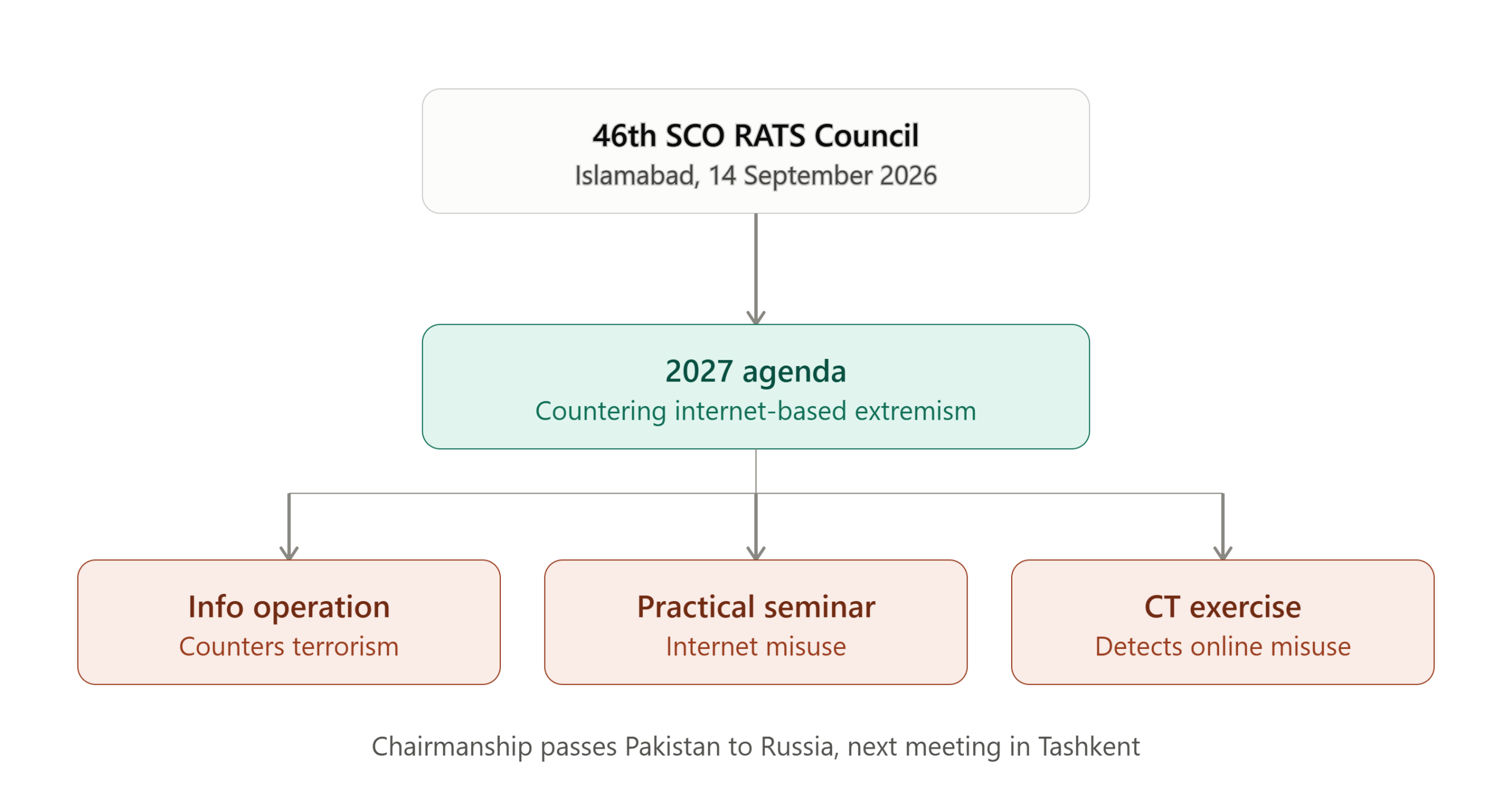
The most concrete forward commitment to emerge from the meeting concerns online radicalisation. Member states agreed to conduct, in 2027, a joint information operation focused on countering terrorism, a practical seminar specifically addressing the use of the internet for terrorist, separatist, and extremist purposes, and a joint counter-terrorism exercise among competent authorities aimed at identifying and preventing internet-based use by these movements.
The focus reflects a broader pattern seen across multilateral counter-terrorism bodies globally: online radicalisation, encrypted recruitment channels, and extremist content moderation have become as central to counter-terrorism strategy as traditional operational and intelligence cooperation, particularly as groups adapt recruitment and financing methods to digital platforms.
Separately, the Council confirmed that the Thirteenth International Scientific and Practical Conference on cooperation between SCO member states and SCO observer states in countering terrorism, separatism, and extremism will be held in Kazakhstan, continuing a long-running academic and policy track that runs alongside RATS’ operational work.
Leadership Transition and Recognitions
The meeting also addressed organisational and staffing matters concerning the Executive Committee of SCO RATS, and officials and Executive Committee staff were formally recognised for their contributions to RATS’ development and to strengthening cooperation among member states’ competent authorities.
In the most significant procedural outcome of the session, the chairmanship of the SCO RATS Council passed from Pakistan to the Russian Federation. Member states agreed that the next Council meeting will be held at the Executive Committee’s premises in Tashkent, Uzbekistan. Organisers described the overall proceedings as having taken place in a businesslike and friendly atmosphere.
Backgrounder: What SCO RATS Does
Established in 2004 as a permanent body of the Shanghai Cooperation Organization, RATS is headquartered in Tashkent and functions as the SCO’s operational counter-terrorism coordination hub, facilitating information exchange, joint exercises, and legal cooperation among member states’ security and intelligence services. Unlike the SCO’s broader political and economic tracks, RATS operates with a narrower, security-focused mandate, and its Council meetings — held roughly twice yearly and rotating in chairmanship among member states — serve as the mechanism through which that cooperation is reviewed and redirected.
The Way Forward
The 2027 agenda set in Islamabad signals where SCO counter-terrorism cooperation is heading: toward the digital domain, where the bloc’s member states — several of which maintain tightly controlled domestic internet environments — see a shared interest in coordinated content monitoring and cross-border information operations. Whether the planned joint exercises and seminars translate into meaningfully faster detection and disruption of online extremist activity, or largely formalise practices individual member states already pursue domestically, will become clearer as Russia assumes the chairmanship and the bloc’s work plans move from approval to implementation ahead of the Tashkent meeting.