Islamabad Hosts Coordinators of SCO Council of National as Pakistan Begins Its 2026-27 Chairmanship
Pakistan hosted the first SCO Council of National Coordinators meeting of its 2026-27 chairmanship in Islamabad. Read the key facts, SCO background and Eurasian role

-
Islamabad Hosts Coordinators of SCO Council of National as Pakistan Begins Its 2026-27 Chairmanship
-
Islamabad Makes Preparations for its 2026-27 chairmanship.
-
SCO2027: The four-day meeting formally opened Pakistan’s 2026-2027 term leading one of the world’s largest regional organisations.
By: Muhammad Arif, Editor NSN.Asia
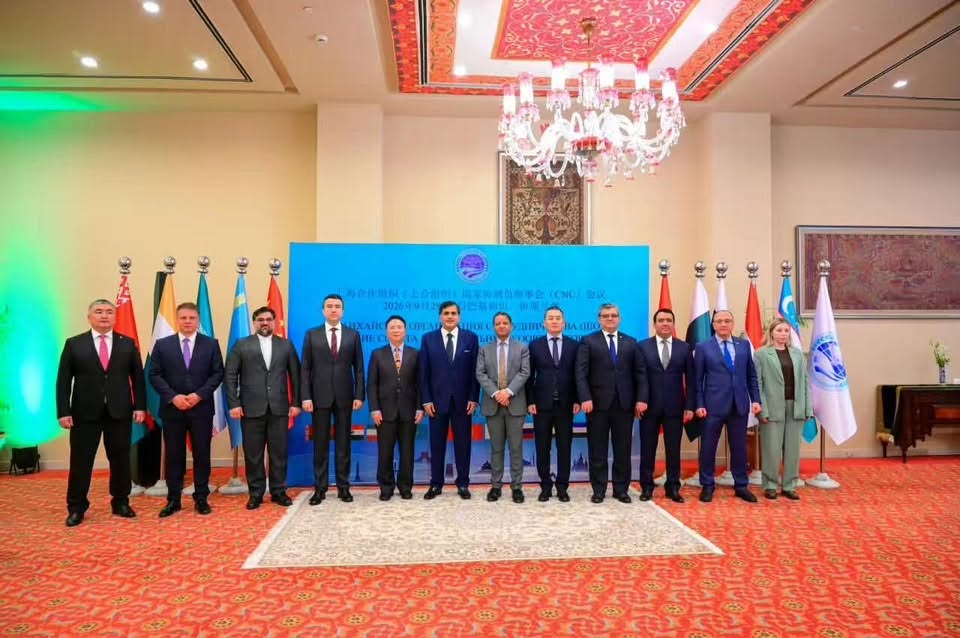
ISLAMABAD: Pakistan hosted the first meeting of the SCO Council of National Coordinators under its chairmanship of the Shanghai Cooperation Organisation (SCO) from 27 to 30 September 2026. The four-day meeting formally opened Pakistan’s 2026-2027 term leading one of the world’s largest regional organisations.
Who Attended the Islamabad Meeting
Representatives of all ten SCO member states took part. The SCO Secretariat and the Executive Committee of the SCO Regional Anti-Terrorist Structure (RATS) also attended.
National coordinators are the senior officials who manage the organisation’s day-to-day work and prepare the agenda for ministerial and leadership meetings. Their first meeting under a new chair therefore sets the priorities for the whole year.
Pakistan Presents Its 2026-2027 Chairmanship Plan
Priorities for the Year Ahead
Pakistan presented its plan for its chairmanship. Participants held a substantive exchange of views on improving the organisation’s activities. The discussions focused on stepping up practical cooperation in several areas:
- Political cooperation
- Trade and economic cooperation
- Cultural exchanges
- Humanitarian cooperation
Preparing for the Dushanbe Meeting
Delegates also discussed preparations for the next meeting of the Council of Heads of Government (Prime Ministers) of the SCO Member States in Dushanbe, along with other events planned during the chairmanship. Coordinators typically use such sessions to align positions and finalise documents before they go to government heads for approval.
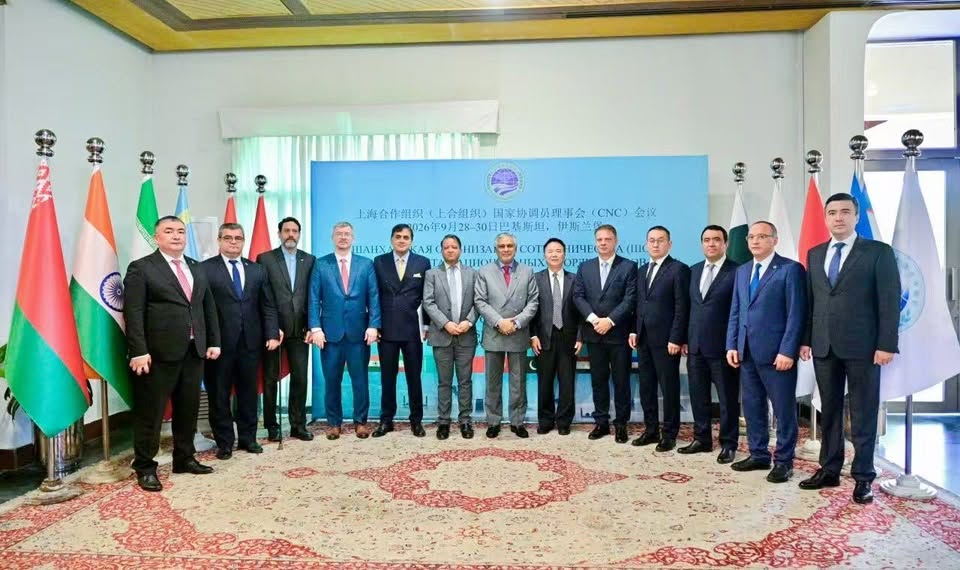
Heads of Delegations Meet Deputy Prime Minister Ishaq Dar
On the sidelines, the heads of delegations met Deputy Prime Minister and Minister of Foreign Affairs Mohammad Ishaq Dar. The meeting gave participants direct access to Pakistan’s senior diplomatic leadership. Sideline engagements like this often matter as much as formal sessions because they allow frank discussion of bilateral and regional concerns.
Background: What Is the SCO?
The Shanghai Cooperation Organisation is a permanent intergovernmental organisation that grew out of the “Shanghai Five” mechanism of the 1990s, which brought together China, Russia, Kazakhstan, Kyrgyzstan and Tajikistan to resolve border issues and build confidence. The SCO was formally founded on 15 June 2001 in Shanghai with the addition of Uzbekistan. Its Charter was signed in 2002 and entered into force in 2003.
The organisation’s guiding principles, often called the “Shanghai Spirit,” stress mutual trust, mutual benefit, equality, consultation, respect for diverse civilisations and the pursuit of common development.
How the SCO Has Grown
The SCO expanded significantly after its early years. India and Pakistan became full members in 2017, Iran joined in 2023, and Belarus followed in 2024, bringing the membership to ten states: Belarus, China, India, Iran, Kazakhstan, Kyrgyzstan, Pakistan, Russia, Tajikistan and Uzbekistan. Several other countries participate as observers or dialogue partners.
How It Is Organised
The SCO Secretariat is based in Beijing, and the Regional Anti-Terrorist Structure (RATS) is headquartered in Tashkent. Leadership rotates among members annually. The main bodies are the Council of Heads of State, the Council of Heads of Government, the Council of Foreign Ministers and the Council of National Coordinators, which oversees the working agenda between high-level meetings.
SCO 2026: A Milestone Year
2026 marks 25 years since the SCO’s founding in 2001, giving the year symbolic weight. It is a natural moment to review how the organisation has evolved from a border-security forum into a broad cooperation platform. Pakistan’s chairmanship, running through 2026-2027, will carry that reflection into practical planning. Official details of the chairmanship plan have not been publicly specified, but the Islamabad discussions pointed to a focus on strengthening institutional work and expanding cooperation beyond security.
The SCO’s Role in Eurasia
A Large Share of the Continent
With its members spanning Central, South and East Asia and extending to Eastern Europe, the SCO covers a major part of the Eurasian landmass and a large share of the world’s population. It is often cited as one of the largest regional organisations by geography and population.
Security Cooperation
Counter-terrorism, separatism and extremism remain core concerns. RATS facilitates information exchange and coordination on these threats among members, which is why its Executive Committee attends coordinator-level meetings.
Economic and Connectivity Cooperation
Trade facilitation, transport links, energy cooperation and regional connectivity increasingly dominate the agenda. As a platform linking Central Asian economies with South Asian and East Asian markets, the SCO offers a forum for projects that cross borders.
Dialogue Between Diverse Powers
The SCO is notable for bringing together states with different political systems and sometimes competing interests, including India and Pakistan. Whatever the differences among members, it provides a standing channel for consultation in a region where such forums are limited.
Why This Meeting Matters
For Pakistan, chairing the SCO puts Islamabad at the centre of a major multilateral platform and allows it to present itself as a convener on regional cooperation and connectivity. Hosting all ten members, the Secretariat and the RATS Executive Committee demonstrates broad engagement with its agenda.
The meeting also shows the rotating-chair system at work: each chair builds on its predecessor’s work while setting its own priorities, with Islamabad as the first formal step of Pakistan’s term.
Key Facts at a Glance
- Event: First Council of National Coordinators meeting under Pakistan’s SCO chairmanship
- Venue: Islamabad, Pakistan
- Dates: 27-30 September 2026
- Participants: Ten member states, the SCO Secretariat and the RATS Executive Committee
- Next milestone: Council of Heads of Government (Prime Ministers) meeting in Dushanbe
- Sideline engagement: Meeting with Deputy PM and Foreign Minister Mohammad Ishaq Dar
- SCO founded: 15 June 2001, Shanghai
- Members: Ten states
Conclusion
The Islamabad meeting formally launched Pakistan’s 2026-2027 chairmanship, with all ten member states and key SCO institutions present. Discussions centred on improving the organisation’s work, preparing for the Dushanbe heads-of-government meeting and expanding practical cooperation in political, economic, cultural and humanitarian fields. In the SCO’s 25th-anniversary year, the meeting shows an organisation that has moved well beyond its security origins.
The Way Forward
- Finalising the Dushanbe agenda. Coordinators must turn Islamabad’s discussions into agreed documents ahead of the Prime Ministers’ meeting.
- Turning plans into projects. The chairmanship will be judged on concrete trade, connectivity, cultural and humanitarian initiatives rather than declarations alone.
- Balancing security and economic tracks. Coordination with RATS must continue alongside the growing economic agenda.
- Managing a larger, more diverse membership. With ten members, consensus-building will be essential to keep the organisation effective.
- Sustaining momentum. Regular contact between the chair, the Secretariat and members will keep the work on track through 2027.
This article is based on the official account of the meeting and publicly known background on the SCO. Further details of Pakistan’s chairmanship plan have not been publicly specified.