Peace Garden Peace Festival 2026 Opens in Beijing,China
SCO Secretary-General Yermekbayev's message to Beijing's Peace Festival links Silk Road Spirit to the UN's International Day of Peace

-
Peace Garden Peace Festival 2026 Opens in Beijing,China
-
SCO Secretary-General Yermekbayev’s message to Beijing’s Peace Festival links Silk Road Spirit to the UN’s International Day of Peace
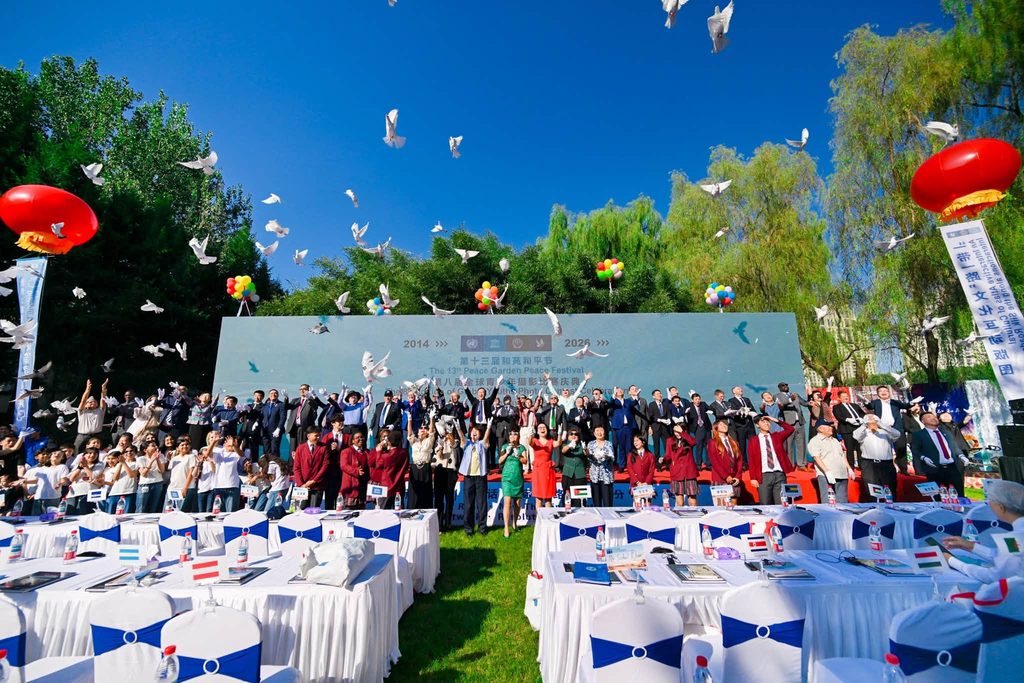
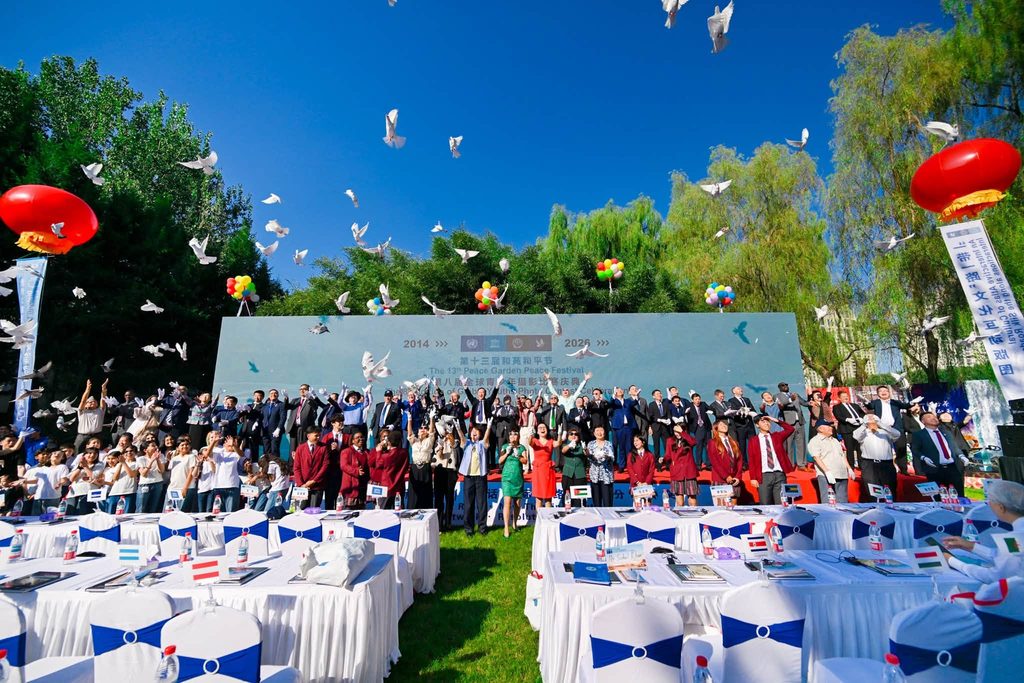
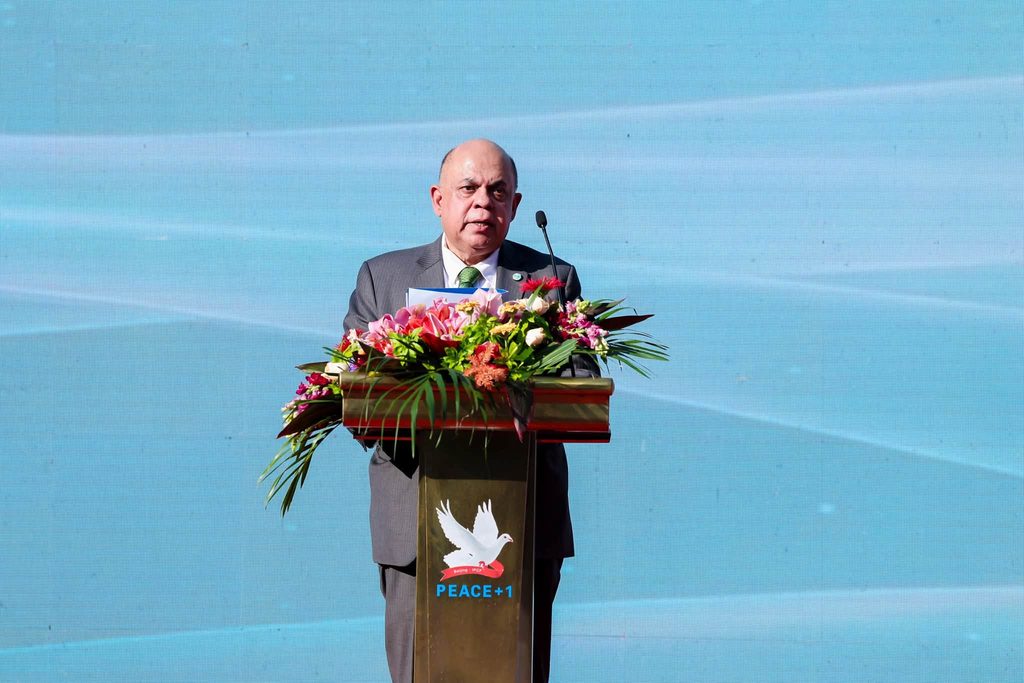
The 13th Peace Garden Peace Festival opened in Beijing on 21 September 2026, bringing the United Nations’ International Day of Peace into direct conversation with a narrative China and its regional partners have spent over a decade cultivating: the Silk Road Spirit. Held under the theme “New Silk Road, New Thinking Route: International Network Dialogue, Resolutions of Divergences and Conflicts,” the festival drew a formal greeting from Shanghai Cooperation Organisation Secretary-General Nurlan Yermekbayev, delivered on his behalf by Deputy Secretary-General Sohail Khan — a message that offers a compact case study in how two very different peacebuilding traditions, one rooted in universal UN mandate and the other in cultural and civilisational narrative, are increasingly being woven together.
A Theme Built for the Moment
The timing was no coincidence: organisers deliberately scheduled this year’s festival to coincide with the International Day of Peace. The theme itself is worth sitting with, too. It does not simply invoke the Silk Road as a historical metaphor for connection, but explicitly frames it as a “thinking route” — a pathway not for goods or capital, but for dialogue capable of resolving divergence and conflict. That framing positions cultural and intellectual exchange as a peacebuilding tool in its own right, on equal footing with the diplomatic and security mechanisms more conventionally associated with conflict resolution.
The SCO’s Message: Diversity as Resource, Not Risk
SCO Secretary-General Nurlan Yermekbayev’s greeting to festival participants, delivered on his behalf by Deputy Secretary-General Sohail Khan, articulated a specific philosophical position on the relationship between cultural diversity and international stability. “The SCO proceeds from the premise that the diversity of civilizations and cultures is an important resource for international cooperation,” Yermekbayev stated. “At the same time, culture remains a universal language of communication that helps maintain dialogue and form a solid foundation for peace, good-neighbourliness and sustainable development.”
This is a notable framing choice. In much international discourse, civilisational and cultural diversity is treated primarily as a source of friction to be managed — a variable requiring careful diplomatic handling to prevent misunderstanding or conflict. Yermekbayev’s message inverts that framing, presenting diversity instead as a resource that strengthens cooperation, provided it is channelled through sustained dialogue. He added that this understanding is precisely why SCO member states have been steadily expanding interaction along the cultural and humanitarian track — an indication that, within the organisation’s broader architecture spanning security, economic, and political cooperation, cultural exchange is increasingly treated as a deliberate, formalised pillar rather than a peripheral gesture.
The choice to have Deputy Secretary-General Sohail Khan personally deliver the message, rather than issuing a written statement alone, also signals the weight the organisation placed on ensuring direct representation at the event.
Backgrounder: How the World Arrived at a Fixed Peace Day
The International Day of Peace did not begin as the fixed, globally synchronised observance it is today. The United Nations General Assembly first proclaimed the day in 1981 through resolution 36/67, initially anchoring its observance to the third Tuesday of September — a date that shifted each year depending on the calendar. Two decades later, in 2001, the General Assembly unanimously adopted resolution 55/282, fixing the date permanently at 21 September starting in 2002, and crucially designating it as a day of global ceasefire and non-violence.
That shift, from a floating calendar date to a fixed one carrying an explicit ceasefire mandate, mattered. It transformed the day from a loosely symbolic gesture into something with a concrete, if largely aspirational, ask directed at every UN member state and, implicitly, at parties to conflict everywhere: lay down arms, even briefly, on this one date. In the years since, that ask has been kept visible less through enforcement — the UN has no mechanism to compel a ceasefire — than through the accumulation of public observances, humanitarian appeals, and cultural events held annually around the world, of which Beijing’s Peace Garden Peace Festival is one recurring example.
Two Traditions, One Convening Point
What makes this year’s festival notable is not the SCO’s presence alone, but the specific alignment between two peacebuilding vocabularies that don’t automatically overlap. The UN’s Peace Day rests on universal, treaty-based legitimacy — a single date observed, at least nominally, by every member state regardless of political system or regional alignment, built around a concrete, if unenforceable, demand. The Silk Road Spirit is a more particular narrative, rooted in a specific historical memory of trade and exchange along ancient routes connecting China with Central Asia, the Middle East, and beyond, and has become a recurring rhetorical anchor for China’s Belt and Road Initiative and, increasingly, for institutions closely aligned with it, including the SCO.
These two traditions are not naturally identical, but they share a structural premise: that sustained contact and dialogue between different peoples and systems reduces, rather than increases, the likelihood of conflict. Beijing’s festival, by explicitly theming itself around a “New Silk Road” of dialogue on the same date the UN has set aside for global ceasefire, functions as a deliberate point of convergence between the two — one that allows an organisation like the SCO to situate its own cultural diplomacy squarely within a universally recognised international observance, lending it a legitimacy that a purely China-specific framing might not carry on its own.
Conclusion: What the Convergence Is Worth
Whether this convergence between UN Peace Day and Silk Road Spirit amounts to more than complementary rhetoric is the harder question, and one that a single festival greeting cannot answer. Cultural dialogue is, by most measures, a necessary but insufficient condition for peace — valuable for building the kind of sustained familiarity that makes cooperation easier, but not, on its own, capable of halting an active conflict or resolving a territorial dispute. The UN’s own experience with the International Day of Peace over more than four decades illustrates the point: the observance has grown in visibility and symbolic weight without acquiring any binding force, and armed conflicts have continued, in many years, on 21 September itself.
What events like the Peace Garden Peace Festival offer is narrower but not therefore negligible: a recurring, low-cost opportunity for institutions and individuals across different political and cultural traditions to use a shared vocabulary — dialogue, diversity as resource, civilisational exchange — even when their underlying interests and systems diverge sharply elsewhere. The real test of the Silk Road Spirit’s convergence with the UN’s peace ideal will not be found in any single greeting or festival theme, but in whether the habits of engagement they promote outlast the ceremony — whether the “New Thinking Route” this year’s festival invoked proves capable of carrying difficult conversations, not just celebratory ones, once the Peace Garden’s lanterns are packed away and the next 21 September approaches with its own unresolved conflicts still waiting for the ceasefire the day was designed to call for.