Pakistan-China Academic Diplomacy in a New Era
Rector Dr. Muhammad Zahid Latif Meets Dr. Ali Asad Gilani, Pakistan's Ambassador-designate to China, proposes initiative for developing knowledge corridor — expanding academic exchange, research collaboration, and education ties.

-
Pakistan-China Academic Diplomacy in a New Era
-
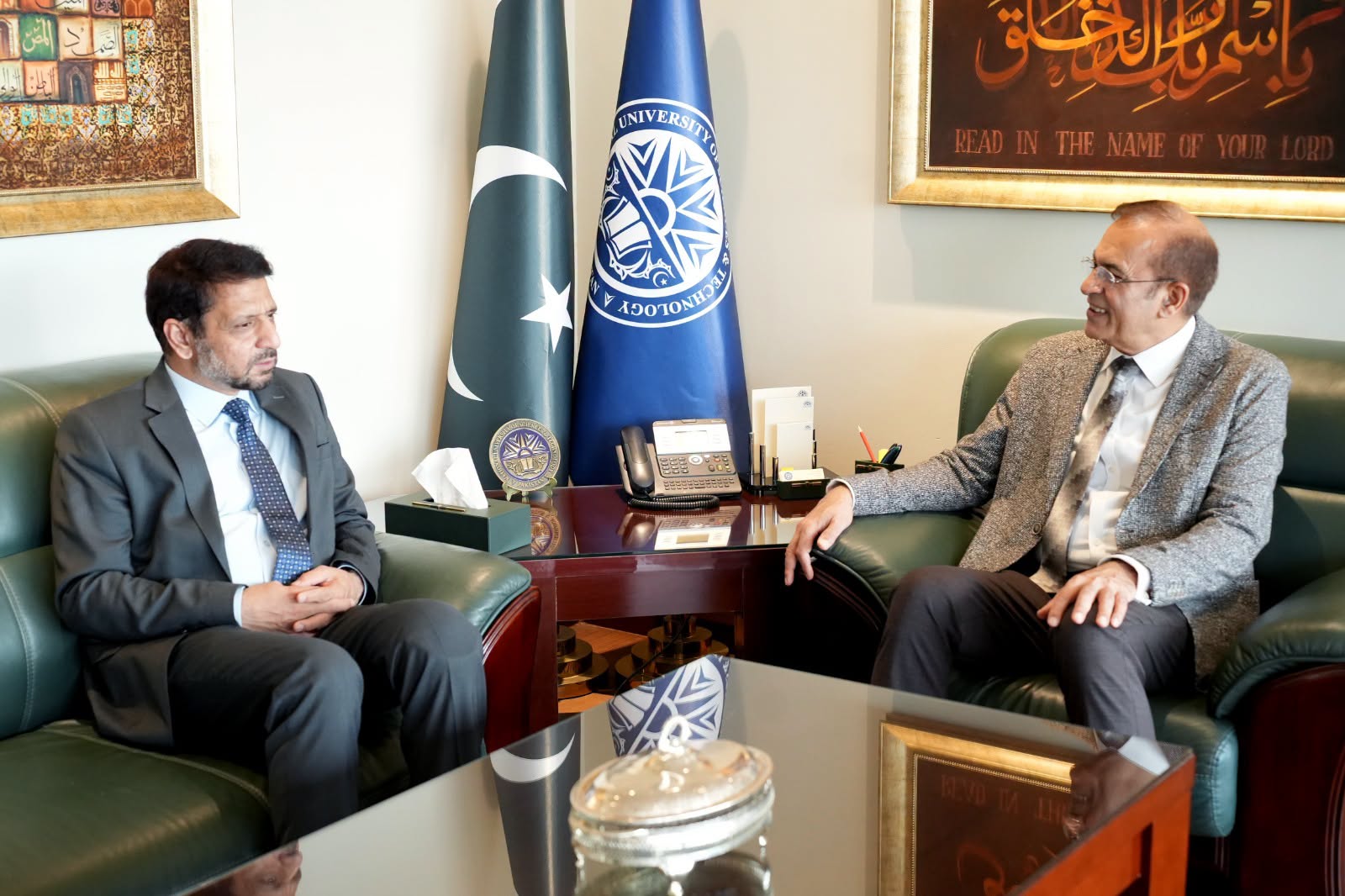
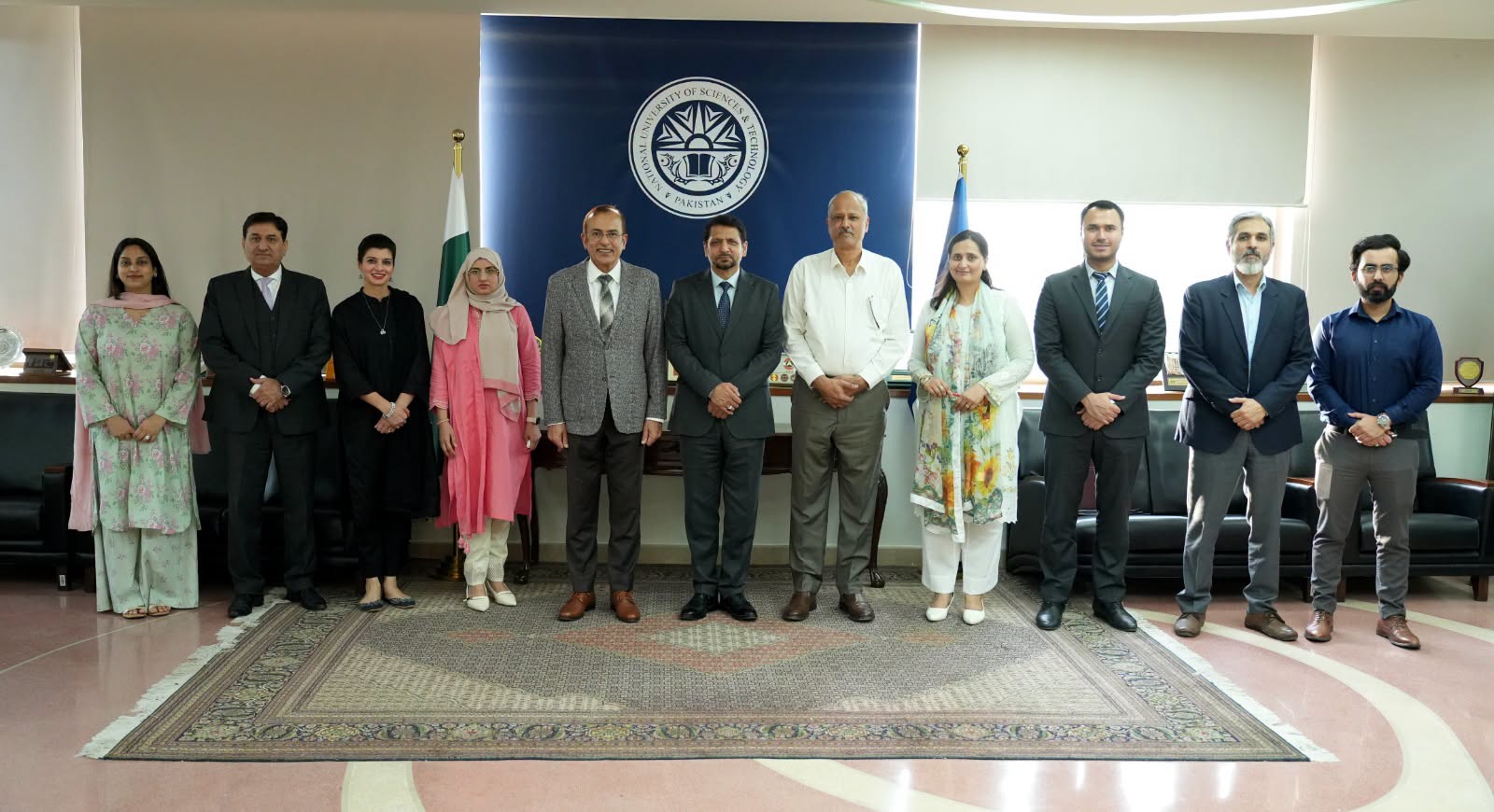
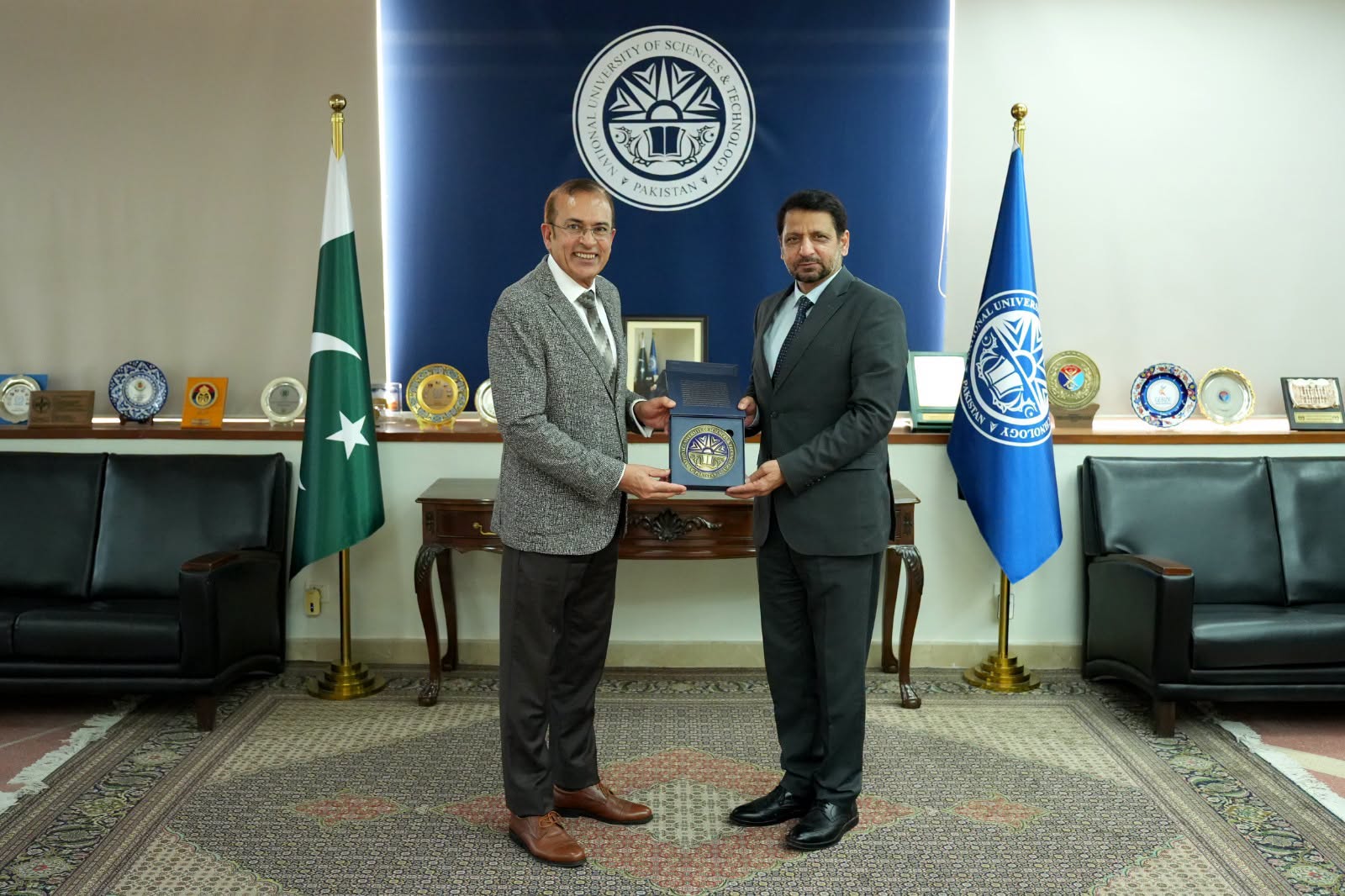
As CPEC enters its second phase, Pakistan and China should focus on developing knowledge corridor — expanding academic exchange, research collaboration, and education ties, says Rector Dr. Muhammad Zahid Latif as calls on Dr. Ali Asad Gilani, Pakistan’s Ambassador-designate to China at NUST.
-
Interaction Highlighted NUST’s Role for Broadening Academic Diplomacy, Building the Knowledge Corridor
By: Muhammad Arif, Editor NSN.Asia
Pakistan-China ties have historically advanced in distinct phases, each adding a new layer to the relationship rather than replacing the last. The foundation was laid in the 1960s and 1970s, when Zulfiqar Ali Bhutto — first as Foreign Minister and later as Pakistan’s Prime Minister — negotiated the 1963 Sino-Pakistan Boundary Agreement and helped position Pakistan as a trusted channel between Beijing and Washington during the early 1970s. That era established the diplomatic and strategic trust that later phases of cooperation would be built on.
The next major phase arrived with the launch of CPEC in 2015, the flagship regional project of China’s Belt and Road Initiative. CPEC’s first phase was overwhelmingly infrastructure-led: energy projects to address Pakistan’s chronic power shortages, road and transport networks linking Gwadar port to western China, and early-stage industrial cooperation. This phase was necessary and transformative, but by design it was capital- and construction-intensive, with success measured largely in megawatts generated and kilometers of road laid.
The Turn Toward Phase II
As CPEC’s first-phase projects matured, Pakistani and Chinese officials began signaling a deliberate shift in emphasis. Rather than continuing to scale up large infrastructure alone, discussions increasingly turned to broadening CPEC’s benefits — extending cooperation into agriculture, industrial development, social sector projects, and, notably, education and research.
This recalibration reflects a recognition on both sides that long-term strategic partnerships cannot rest on infrastructure alone. Roads and power plants create physical connectivity; they do not, by themselves, create the human capital, research capacity, or institutional relationships needed to sustain a modern economic and technological partnership. Phase II of CPEC has therefore been framed by officials less as a sequel to Phase I and more as its necessary complement — moving cooperation from the ground up into classrooms, laboratories, and policy institutes.
NUST Role for Broadening Academic Diplomacy, Building the Knowledge Corridor
The clearest recent expression of this shift is the emerging concept of a Pakistan-China “knowledge corridor” — a framework for connecting institutions and researchers across both countries through joint research, academic exchange, and capacity building.
This concept was given concrete form in a recent engagement at Pakistan’s National University of Sciences and Technology (NUST), where Rector Dr. Muhammad Zahid Latif met with Dr. Ali Asad Gilani, Pakistan’s Ambassador-designate to China. The meeting, also attended by representatives of NUST’s Policy & Strategy Directorate and its in-house think tank, the NUST Institute of Policy Studies (NIPS), focused explicitly on exploring institutional collaboration with leading Chinese universities, research institutions, and think tanks.
Discussions at NUST centered on how such a corridor might function in practice: connecting Pakistani and Chinese researchers through joint research projects, structured academic exchange programs, and capacity-building initiatives. Rather than a single agreement or program, the knowledge corridor is best understood as an organizing concept — a shared framework under which multiple, smaller-scale academic partnerships can be developed over time between individual universities, faculties, and research centers on both sides.
Why Academic Diplomacy Matters under CPEC 2.O
Several factors help explain why academic and research cooperation has moved to the foreground of Pakistan-China relations at this particular moment.
First, Pakistan’s new diplomatic leadership in Beijing appears to be actively using the transition period before formally taking up the ambassadorial post to engage domestic institutions like NUST — suggesting an intent to build academic and research cooperation into the core of the bilateral relationship from the outset, rather than treating it as a secondary track.
Second, China’s own universities and research institutions have expanded dramatically over the past two decades, particularly in engineering, technology, and applied sciences — areas of direct relevance to Pakistan’s own development priorities. A knowledge corridor offers Pakistani institutions a channel to access this expanded research capacity through joint programs, faculty exchange, and collaborative projects, rather than through infrastructure financing alone.
Third, academic diplomacy carries a durability that infrastructure projects, however large, do not always guarantee. Physical infrastructure can be affected by financing cycles, debt sustainability concerns, or shifts in project prioritization. Institutional relationships between universities and researchers, once established, tend to generate their own momentum — sustained by ongoing collaboration, published research, and cohorts of students and academics who pass through exchange programs over successive years.
Implications for the Broader CPEC Framework
The emergence of academic diplomacy as a pillar of CPEC Phase II does not replace the corridor’s infrastructure and economic dimensions — energy, transport, and industrial cooperation remain central to the relationship. Rather, it adds a layer that officials on both sides describe as broadening CPEC’s benefits: extending its impact beyond large-scale construction into human capital development, research capacity, and long-term institutional ties.
For Pakistan, this shift offers a pathway to complement the physical connectivity built under CPEC’s first phase with intellectual and technological connectivity — potentially strengthening the country’s research base, technical education, and policy capacity in ways that infrastructure investment alone cannot achieve. For China, expanding academic ties with Pakistani institutions extends its influence and partnership networks beyond commercial and infrastructure interests, embedding the relationship more deeply within Pakistan’s universities and research community.
Conclusion
The Pakistan-China relationship has always evolved in layers, from the diplomatic foundations laid by Zulfiqar Ali Bhutto in the 1960s and 1970s, through the infrastructure-led first phase of CPEC, to what now appears to be an emerging academic and research-focused phase. The proposed knowledge corridor — still in its early, exploratory stages as reflected in engagements like the NUST meeting — represents an attempt to institutionalize this next layer, connecting universities, researchers, and policy institutions on both sides. Whether this framework matures into a fully developed pillar of CPEC Phase II, alongside its economic and infrastructure components, will depend on the concrete partnerships, exchange programs, and joint research initiatives that follow from these early diplomatic engagements.
This article draws on the NUST meeting details provided earlier in this conversation, general public knowledge of CPEC’s phased development, and historical background on Pakistan-China relations. I was unable to access or retrieve the specific NSN.Asia source article linked in this request, as web browsing is not currently enabled in this conversation, so I could not incorporate direct quotes or details unique to that piece. If you paste its text, or enable web search, I can revise this to reflect it precisely.