Russia, Pakistan Explore New Frontier of Cybersecurity Cooperation
Russian and Pakistani scholars and officials discuss information sovereignty, digital threats, and academic partnerships in a hybrid dialogue hosted by RIAC, NUST, and MGIMO

-
Russia, Pakistan Explore New Frontier of Cybersecurity Cooperation as Experts Meet in Islamabad-Moscow Roundtable
-
Russian and Pakistani scholars and officials discuss information sovereignty, digital threats, and academic partnerships in a hybrid dialogue hosted by RIAC, NUST, and MGIMO
-
Russia and Pakistan Widening Cooperation Partnership Built on Technology, Talent, and Trade
By Muhammad Arif, Editor NSN.Asia
Islamabad: Russia and Pakistan have steadily expanded their bilateral engagement over the past decade, moving beyond traditional areas such as energy and counterterrorism into emerging domains like digital governance and cybersecurity.
Institutions including the Russian International Affairs Council (RIAC), Moscow State Institute of International Relations (MGIMO), and Pakistan’s National University of Sciences and Technology (NUST) have increasingly served as platforms for track-two diplomacy between the two countries. Previous roundtables between Russian and Pakistani think tanks have covered regional security, counterterrorism, and strategic stability in South Asia. The latest gathering marks one of the first dedicated discussions specifically centered on cybersecurity and information sovereignty, reflecting how digital security has become a growing priority in the broader Russia-Pakistan relationship.
This diplomatic engagement is underpinned by measurable momentum on the ground. Bilateral trade between Russia and Pakistan reached approximately $1.3 billion in 2025, up roughly 13% from the previous year and up nearly 30% on a broader multi-year basis — a growth rate researchers tracking the relationship describe as far outpacing global trade growth, even though the total remains modest next to Russia’s trade with China or India. On the education front, over 8,000 Pakistani students are currently enrolled in Russian universities, with more than 10,000 studying medicine alone according to Pakistani education consultancies, drawn by affordable tuition (as low as $1,000–$2,100 per year for bachelor’s and master’s programs), globally recognized STEM and medical degrees, and fully funded options such as Russia’s “Open Doors” Government Scholarship. It is against this backdrop of rising trade and growing academic ties that cybersecurity has now emerged as the newest frontier of cooperation.
Islamabad/Moscow Hybrid Roundtable— August 18, 2026
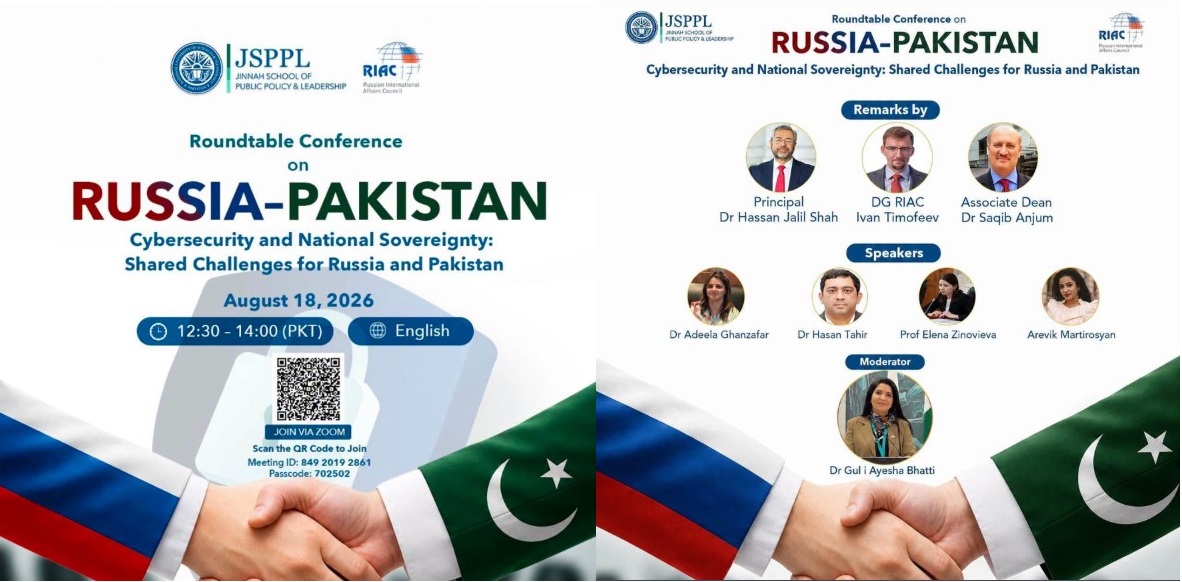
Russian and Pakistani experts convened for a hybrid roundtable dedicated to cybersecurity and information sovereignty, signaling a deepening of cooperation between Moscow and Islamabad in an area that has become central to national security planning worldwide. The event, held on August 18, was jointly organized by the Russian International Affairs Council (RIAC), Pakistan’s National University of Sciences and Technology (NUST), and the Moscow State Institute of International Relations (MGIMO).
The discussion brought together a mix of diplomats, academics, and private-sector specialists from both countries, underscoring the multi-stakeholder nature of modern cybersecurity policy, which increasingly requires coordination between governments, universities, and technology companies.
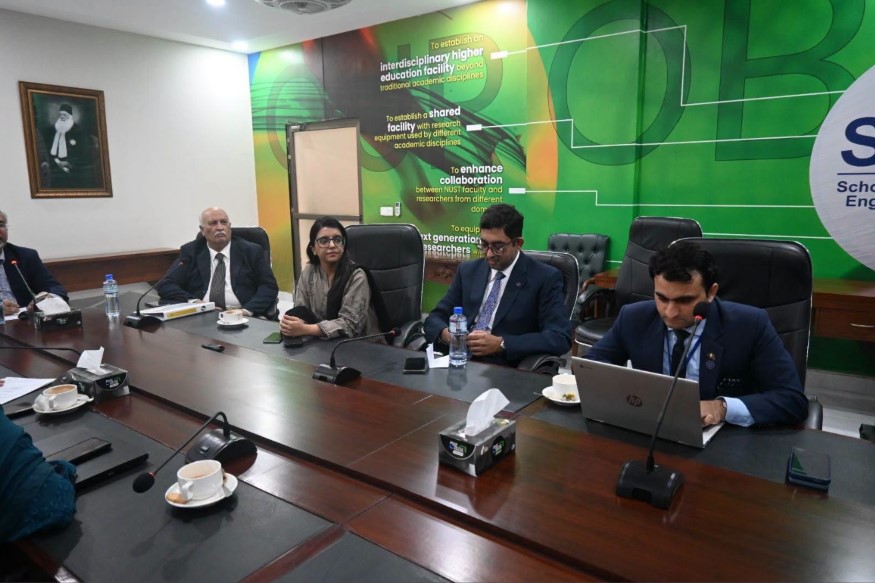
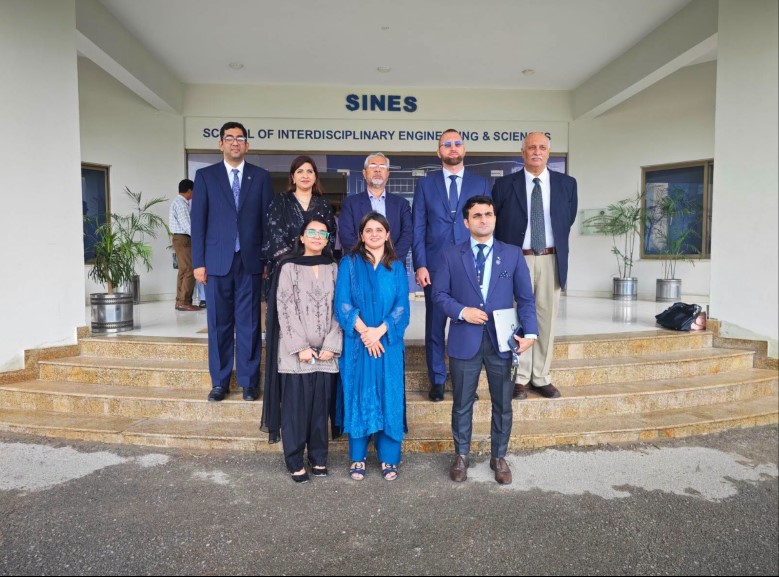
Participants of Hybrid Roundtable
The roundtable featured a notable lineup of participants from both sides. Representing Russia was Dr. Dmitry Kiku, Deputy Director General of RIAC, alongside Gleb Shubin, Cultural Attache at the Russian Embassy in Islamabad, and Egor Rykov, International Business Development Manager at Positive Technologies, one of Russia’s leading cybersecurity firms. Pakistan’s delegation was led by Dr. Hassan Jalil Shah, Principal of the NUST Jinnah School of Public Policy and Leadership. Additional experts from MGIMO and NUST also contributed to the discussion, reflecting the strong academic backbone of the dialogue.
The inclusion of a private-sector cybersecurity representative alongside diplomats and academics is a signal that both countries are approaching the issue from a practical, technology-driven angle rather than purely as a policy discussion.
Key Themes: Information Sovereignty and Shared Priorities
Discussions centered on information sovereignty, a concept that has gained prominence globally as states seek greater control over their digital infrastructure, data flows, and online ecosystems in the face of rising cyber threats. Participants outlined how Moscow and Islamabad each approach cybersecurity policy domestically, comparing frameworks, priorities, and challenges.
Both delegations agreed that there is considerable untapped potential for bilateral cooperation in cybersecurity. As digital infrastructure becomes more central to national economies, defense systems, and public services, experts from both nations pointed to overlapping interests in building resilient, secure digital ecosystems — particularly as global cyber threats grow more sophisticated and borderless in nature.
A Push for Academic and Research Ties
A significant portion of the roundtable focused on strengthening academic and expert exchanges between Russia and Pakistan. Participants stressed the value of joint research initiatives as a foundation for long-term cooperation, allowing scholars, technologists, and policy experts from both countries to collaborate directly on cybersecurity challenges rather than relying solely on government-to-government channels.
This emphasis on academic diplomacy fits a broader pattern in Russia-Pakistan relations, where universities and research institutions — including NUST, MGIMO, and RIAC — have increasingly taken the lead in building people-to-people and institutional connections alongside official diplomatic engagement.
The Data Behind the Diplomacy: Education and Trade
The push for expanded academic exchange is not starting from zero. Russia already hosts one of the larger concentrations of Pakistani students among non-traditional study destinations:
- 8,000+ Pakistani students are currently enrolled across Russian universities, according to Pakistani study-abroad tracking services, with 10,000+ studying medicine specifically across more than 20 institutions.
- Popular destinations include Lomonosov Moscow State University, Saint Petersburg State University, Kazan Federal University, and Tomsk Polytechnic University, spanning fields from medicine and engineering to natural sciences and IT.
- Tuition for Pakistani students remains comparatively low — around $1,000/year for bachelor’s programs and $2,100/year for master’s programs — supplemented by Russian government scholarships (including the Open Doors program) that cover full tuition and provide a monthly stipend.
- Pakistan’s Higher Education Commission (HEC) has continued to coordinate government-backed scholarship intakes for Russian universities, with the 2026–27 cycle covering bachelor’s, master’s, and PhD placements.
Trade figures point to a similar upward trajectory that provides the economic backbone for expanded technology cooperation:
- Bilateral trade turnover reached approximately $1.3 billion in 2025, according to trade analysts, climbing from roughly $697 million in 2021 and crossing the $1 billion mark in 2023.
- Pakistan’s imports from Russia totaled $631.66 million in 2024, led by cereals ($379.73 million) and edible vegetables ($198.24 million), according to UN COMTRADE data compiled by Trading Economics, alongside smaller but strategically significant categories such as fertilizers and pharmaceutical products.
- Energy has become an increasingly important pillar: Pakistan has imported hundreds of thousands of barrels of Russian crude since its first shipment in 2023, with Moscow positioning itself as an alternative supplier amid regional energy disruptions.
- Analysts note that while Russia-Pakistan trade volumes remain small relative to Russia’s trade with China or India, the growth rate has outpaced global trade expansion roughly tenfold in recent years — evidence, observers argue, of a relationship moving from a low base toward deeper structural integration.
Taken together, this data suggests that the cybersecurity roundtable is not an isolated gesture but one piece of a broader, quantifiable expansion of Russia-Pakistan ties across trade, energy, and education — a foundation that officials on both sides now hope to extend into digital cooperation.
Why Russia-Pakistan Interaction Matters
The roundtable arrives at a moment when cybersecurity has moved from a niche technical concern to a top-tier national security and foreign policy issue for countries around the world. For Russia, deepening technology partnerships with South Asian nations aligns with its broader strategy of building alternative networks of cooperation outside traditional Western frameworks. For Pakistan, engaging with an established cybersecurity player like Russia — home to firms such as Positive Technologies — offers access to expertise and technology at a time when the country is working to strengthen its digital infrastructure and cyber defense capabilities.
The hybrid format of the event, combining in-person and virtual participation, also reflects how track-two dialogues have adapted to allow broader participation from experts across both countries without the logistical constraints of fully in-person conferences.
Conclusion: A Widening Partnership Built on Technology, Talent, and Trade
The Islamabad-Moscow roundtable represents more than a single academic exchange — it points to a broader, data-backed trajectory in Russia-Pakistan relations, one increasingly defined by modern tools, techniques, and technology rather than solely traditional diplomatic or security ties. With bilateral trade climbing to roughly $1.3 billion in 2025 and more than 8,000 Pakistani students already building academic and professional ties inside Russian universities, cybersecurity cooperation is emerging not as a standalone initiative but as the next logical extension of a relationship that is already growing across energy, commerce, and education.
Perhaps most notably, the roundtable’s emphasis on joint research and academic partnerships suggests that Russia and Pakistan are laying the groundwork for institutionalized, long-term collaboration rather than one-off dialogues. With universities like NUST and MGIMO, alongside think tanks such as RIAC, driving this engagement, and private cybersecurity firms like Positive Technologies now entering the conversation, the existing pipeline of Pakistani students in Russian STEM and medical programs offers a ready-made talent base for future technology and research partnerships. If sustained, this growing cybersecurity partnership could become a defining pillar of the broader Russia-Pakistan relationship — one built not just on shared strategic interests, but on measurable gains in trade, shared expertise, and educational exchange.
This article is based on information from a roundtable jointly convened by the Russian International Affairs Council (RIAC), NUST, and MGIMO on August 18, supplemented with publicly available trade data (UN COMTRADE via Trading Economics, russiaspivottoasia.com) and education-sector figures (StudyAbroad.pk, Pakistan Today, HEC). Figures are the latest publicly reported estimates as of publication and may be revised as official 2026 data is released.