RCCI Hosts a High-level Chinese Delegation to Foster Business-to-Business linkages between Pakistan,China
RCCI, Chinese Business Delegation Explore Trade, investment Opportunities Across Key Sectors

-
RCCI, Chinese Business Delegation Explore Trade, investment Opportunities Across Key Sectors
-
RCCI President Usman Shaukat calls for expanding bilateral trade and building stronger business-to-business linkages between between Pakistan and China.
By: Muhammad Arif, Editor NSN.Asia
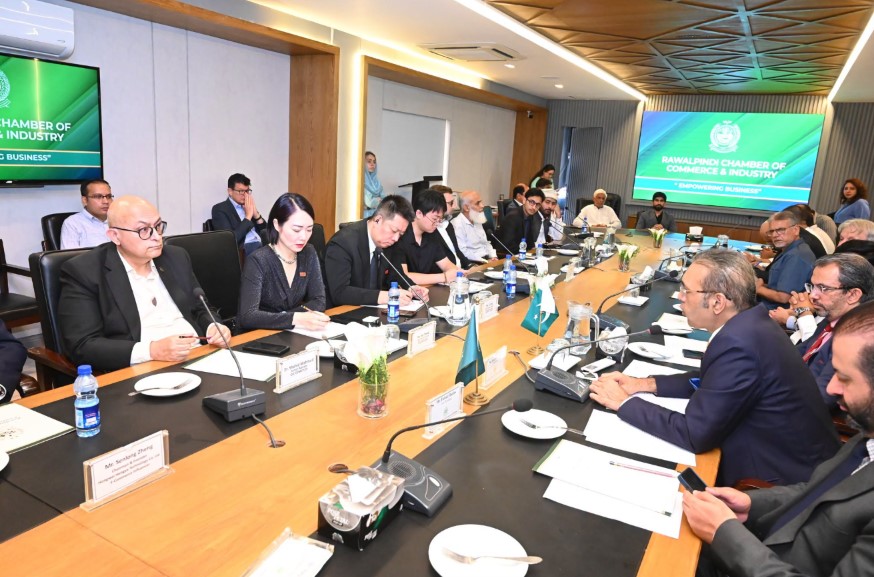
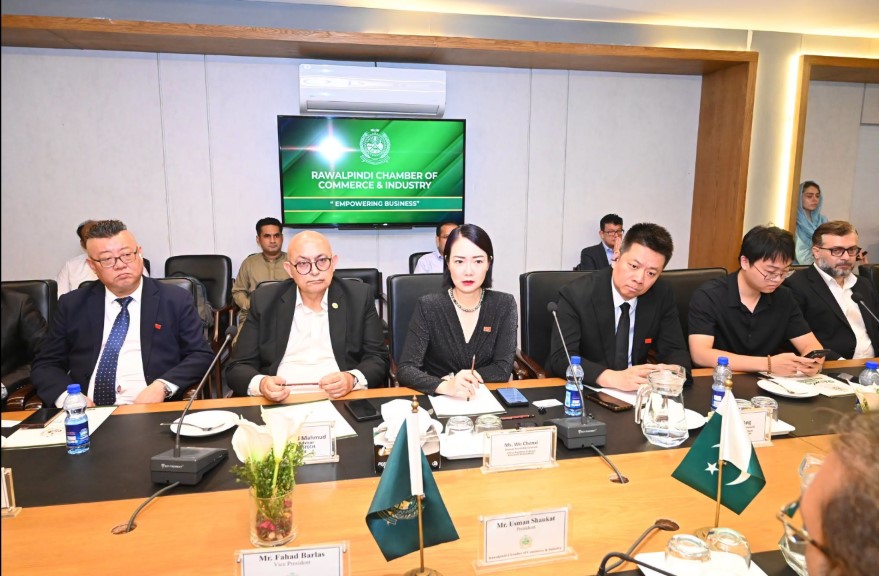
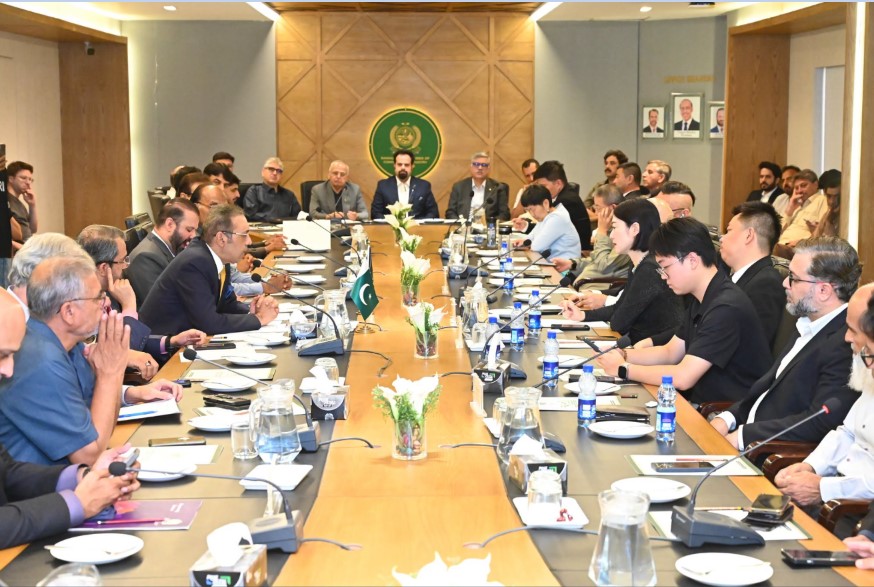
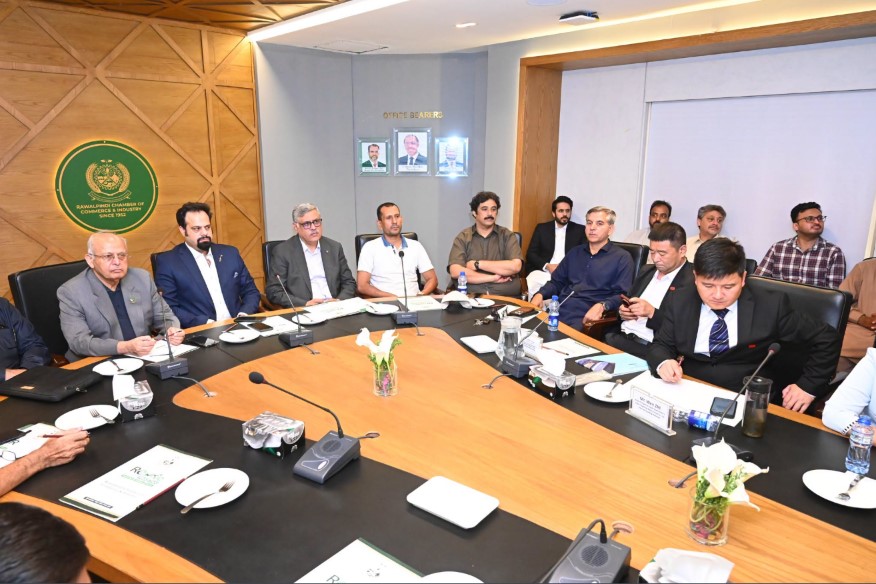
Rawalpindi — The Rawalpindi Chamber of Commerce & Industry (RCCI) hosted a high-level Chinese business delegation at Chamber House for a business-to-business (B2B) collaboration meeting aimed at deepening trade and investment ties between Pakistan and China.
The session was chaired by RCCI President Usman Shaukat, who welcomed the visiting delegation and stressed the importance of expanding bilateral trade and building stronger business-to-business linkages between the two countries.
He was joined by RCCI Senior Vice President Khalid Farooq Qazi, Vice President Fahad Barlas, members of the Executive Committee, and representatives from a cross-section of local business sectors.
Chinese Delegation Spans Ten Industries
The visiting delegation was led by Li Ang, Deputy Secretary-General of the China Business Culture Research Association, and included business leaders and experts drawn from a wide range of industries: steel and building materials, renewable energy, electric vehicles, new energy solutions, aviation and the low-altitude economy, agriculture technology, financial services, investment advisory, cultural exchange, and industrial manufacturing.
That breadth of sectors reflects the direction China–Pakistan economic cooperation has been taking over the past year, moving beyond the large-scale infrastructure projects associated with the corridor’s first phase toward technology, industry and private-sector-led investment.
Trade, Investment and Technology on the Agenda
According to RCCI, the meeting served as a platform for exploring trade opportunities, investment partnerships and technology transfer, alongside broader discussion on strengthening economic cooperation between the two countries. Participants from both sides used the session to identify potential areas of collaboration across the sectors represented by the Chinese delegation, from renewable energy and EVs to agri-tech and financial services.
RCCI leadership framed the meeting as part of the chamber’s ongoing effort to connect Rawalpindi’s business community with international partners and attract investment into the region.
Backgrounder: What Is CPEC 2.0?
The meeting comes as Pakistan and China continue rolling out the second phase of the China-Pakistan Economic Corridor (CPEC), widely referred to as CPEC 2.0. CPEC is the roughly $62 billion flagship project of China’s Belt and Road Initiative, designed to connect Pakistan’s Gwadar and Karachi ports to China’s Xinjiang region.
CPEC’s first phase, launched in 2013, was concentrated on large-scale infrastructure: energy projects, roads and port construction aimed at addressing Pakistan’s core infrastructure gaps. That phase formally gave way to CPEC 2.0 at the 14th Joint Cooperation Committee meeting held in Beijing in September 2025, marking a shift toward people-centric development, technological collaboration and regional economic integration.
Officials on both sides describe the new phase as a move from infrastructure toward industrialization. Pakistani officials have said CPEC 2.0 is centered on high-quality development, with expanded cooperation in industrialization, agriculture, mining and minerals, information technology and human resource development, and that the effort is aligned with Pakistan’s broader “5E” development framework covering exports, digital government, climate, energy and equity.
The revamped corridor is also organized around a wider set of priorities. The updated framework is built around five broad corridors — growth, innovation, green development, livelihood and regional connectivity — with the push gaining political momentum around the 75th anniversary of Pakistan-China diplomatic relations. On the investment side, Pakistan has expanded its roster of approved special economic zones from seven to as many as 44, including 37 newly notified zones, through the Board of Investment.
Chinese officials have echoed the shift in emphasis. The Chinese Ambassador to Pakistan has said cooperation under the upgraded second phase of CPEC is expanding into new areas such as agriculture, mining and social development, alongside growing private-sector involvement in exports, value-added industry and human capital development.
Analysts note the transition is still a work in progress. Some commentary frames 2026 as a pivotal year for CPEC’s ability to move from corridor-building to genuine economy-building, describing early results as “optimistically hesitant.” Security and financing pressures remain part of the picture as well, with some infrastructure components, including sections of the ML-1 railway upgrade, reportedly being explored for alternative funding sources such as the Asian Development Bank.
Engagements like this week’s RCCI-hosted B2B meeting reflect how CPEC 2.0’s broader, multi-sector agenda — spanning renewable energy, EVs, agri-tech and manufacturing — is increasingly playing out at the level of chamber-to-chamber and company-to-company contacts, rather than only through government-to-government infrastructure deals.
Why It Matters
For Rawalpindi’s business community, direct engagement with Chinese delegations offers a channel to sectors — renewable energy, electric vehicles, agri-tech, financial services — that are central to where CPEC’s next phase is headed. RCCI’s leadership indicated the chamber intends to keep building on the connections made during the visit as part of its broader push to expand the city’s trade and investment links with China.