
SIFC Facilitates Major Footwear Investment Deal Under CPEC 2.0
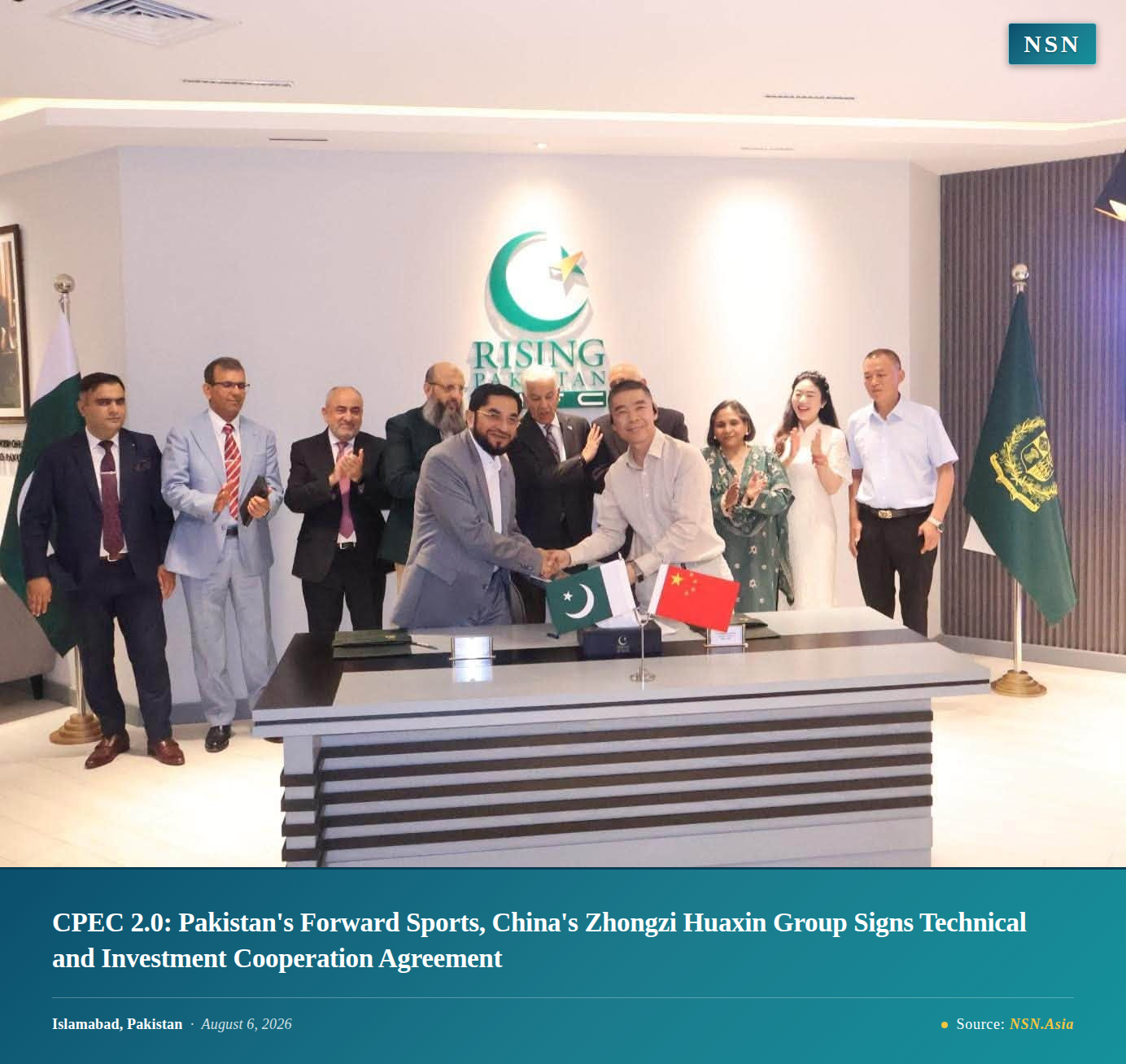
CPEC 2.0: Pakistan's Forward Sports, China's Zhongzi Huaxin Group signs technical and investment cooperation agreement

-
Pakistan, China Deepen Economic Ties as SIFC Facilitates Major Footwear Investment Deal Under CPEC 2.0
-
Pakistan’s Forward Sports, China’s Zhongzi Huaxin Group signs technical and investment cooperation agreement
By: Muhammad Arif, Editor NSN.Asia
Islamabad — In a fresh sign of expanding Pakistan-China economic and technology cooperation under the second phase of the China-Pakistan Economic Corridor (CPEC 2.0), the Special Investment Facilitation Council (SIFC) on Thursday facilitated the signing of a technical and investment cooperation agreement between Pakistan’s Forward Sports and China’s Zhongzi Huaxin Group.
The agreement paves the way for the joint production of world-class sports footwear in Pakistan, combining Pakistani manufacturing capability with Chinese capital and industrial expertise — a partnership model increasingly central to CPEC 2.0’s shift from infrastructure to industrial cooperation, technology transfer, and export-led growth.
About the Partners
Forward Sports is widely recognised as Pakistan’s leading sports goods manufacturer. The company is best known for producing high-quality footballs used at FIFA World Cup tournaments, and it also manufactures sports bags, apparel, and lifestyle footwear for international markets.
Zhongzi Huaxin Group is a diversified Chinese investment and asset management group with established expertise in industrial development, footwear and apparel industrial parks, and regional economic cooperation projects across partner countries.
Signing Ceremony at SIFC
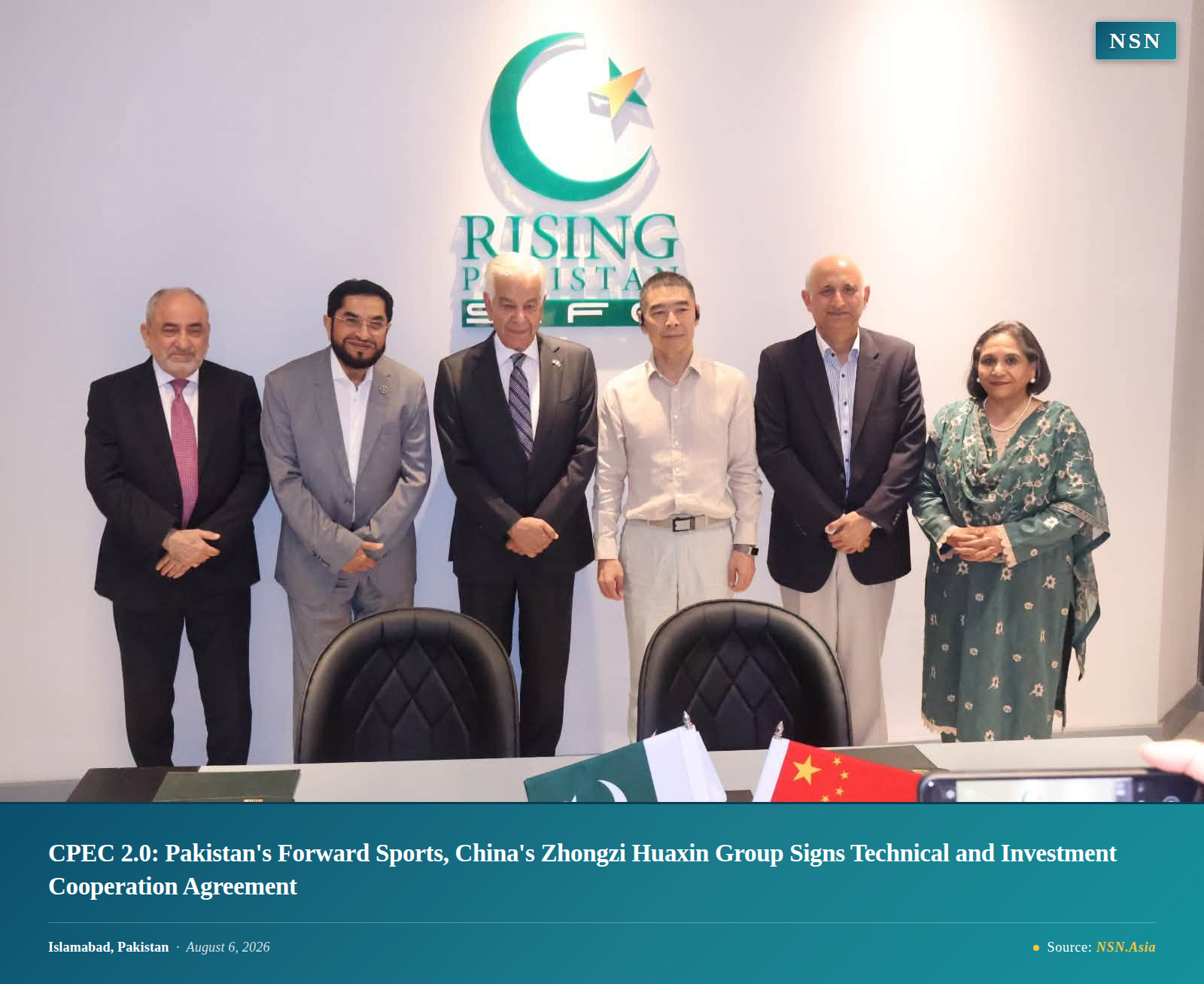
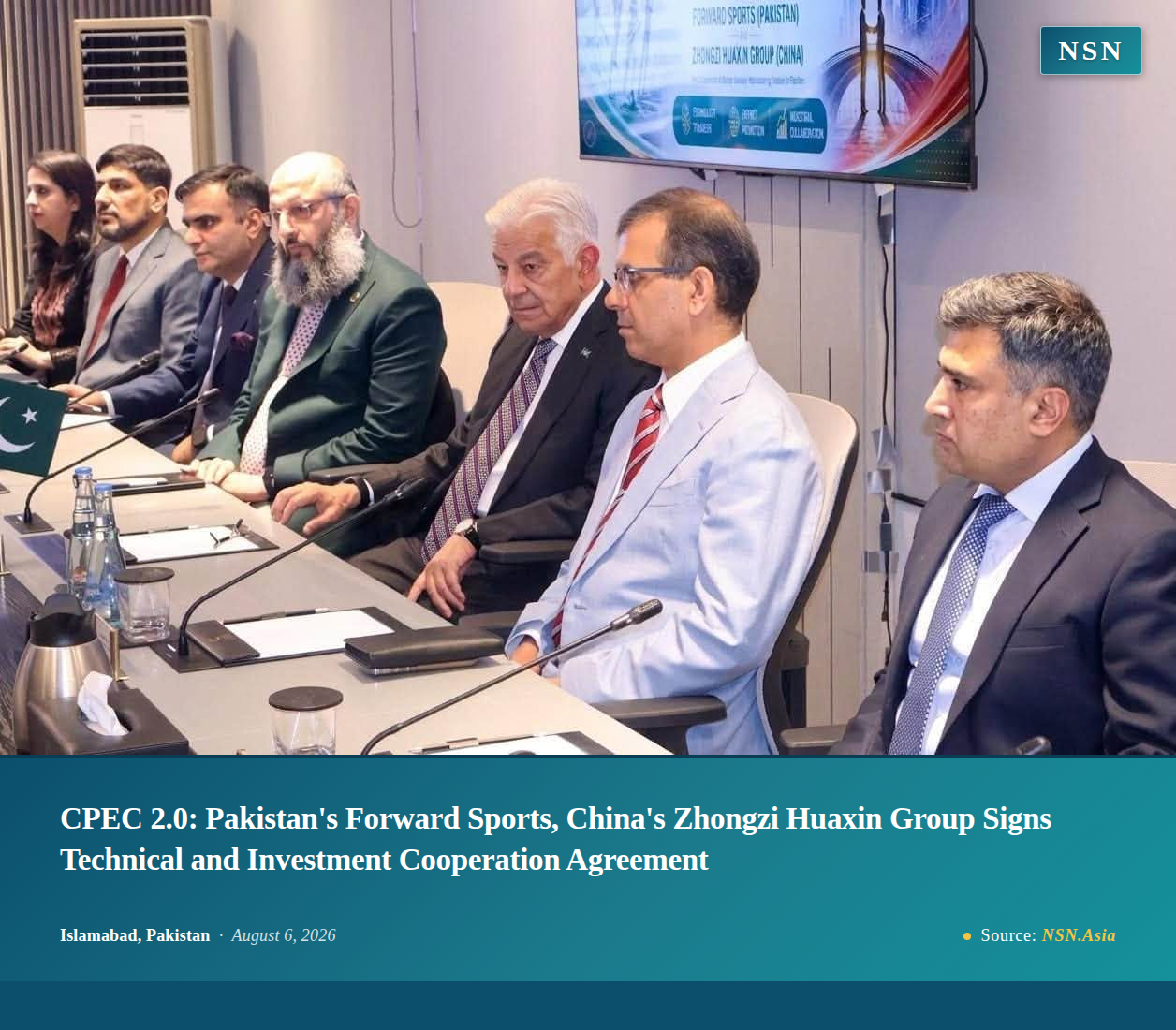
The signing ceremony, held at the SIFC, was attended by senior Pakistani and Chinese stakeholders, including:
- The Minister for Defence
- The Director General, SIFC
- The Chairman, Pakistan Regional Economic Forum
- The Chief Executive Officer, Zhongzi Huaxin Group
- The Chief Executive Officer, Forward Sports
Their presence underscores the strategic weight both governments are placing on private-sector-led industrial cooperation as a pillar of the evolving Pakistan-China economic relationship.
What This Means for CPEC 2.0 and Pakistan’s Economy
Officials say the agreement is expected to deliver benefits across several key areas:
- Technology transfer from Chinese industrial and manufacturing expertise to Pakistan’s footwear sector
- Industrial development, supporting the growth of footwear and apparel manufacturing capacity within Pakistan
- Employment generation, creating jobs across production, supply chain, and export-oriented roles
- Export diversification, helping Pakistan move beyond traditional exports into higher-value manufactured goods
- Greater market share for Pakistan in the growing global footwear industry
By pairing Forward Sports’ manufacturing track record with Zhongzi Huaxin Group’s investment and industrial park experience, the deal reflects the broader CPEC 2.0 strategy of attracting Chinese capital into Pakistan’s special economic zones and export-oriented industries, rather than large-scale infrastructure alone.
Why It Matters
The agreement adds to a growing list of SIFC-facilitated deals aimed at unlocking foreign direct investment in Pakistan’s manufacturing and export sectors. As Pakistan looks to stabilise its economy and boost foreign exchange earnings, partnerships that bring in technology, capital, and access to global supply chains — such as this footwear venture — are being positioned by officials as a template for future Pakistan-China industrial collaboration under CPEC’s next phase.
Backgrounder: What Is CPEC 2.0, and How Does It Fit Into the Belt and Road Initiative?
The China-Pakistan Economic Corridor was launched in 2013 as a flagship project of China’s global Belt and Road Initiative (BRI), envisioned as a network linking China’s Xinjiang region to Pakistan’s Gwadar and Karachi ports on the Arabian Sea. Its first phase concentrated on foundational infrastructure — power plants, highways, and transport links — work credited with easing Pakistan’s chronic energy shortages and improving connectivity between provinces and commercial hubs.
CPEC entered a new phase, widely referred to as CPEC 2.0, following high-level talks between Islamabad and Beijing. The upgraded framework was formally agreed during the seventh round of the Pakistan-China Foreign Ministers’ Strategic Dialogue in Beijing in early January 2026, and it builds on groundwork laid at the 14th Joint Cooperation Committee (JCC) meeting in late 2025. Rather than large-scale infrastructure, CPEC 2.0 shifts the corridor’s focus toward:
- Industrialisation and Special Economic Zones (SEZs) to attract manufacturing investment and boost exports
- Agriculture modernisation, including improved seed varieties, irrigation, and farming technology
- Mining and mineral development
- Information technology, science and technology, and cybersecurity cooperation
- Technical and vocational training
- Continued development of Gwadar Port as a regional trade hub, and the Main Line-1 (ML-1) railway upgrade
- For the first time, an openness to third-country participation in CPEC projects under terms agreed by both Islamabad and Beijing
Officials on both sides describe CPEC 2.0 as a move from “connectivity” to “value addition” — prioritising industrial and technology partnerships, of the kind reflected in the Forward Sports-Zhongzi Huaxin Group agreement, over new roads and power plants. Since CPEC’s inception, Chinese officials cite more than $25 billion in direct investment delivered through the corridor, alongside hundreds of thousands of jobs and thousands of megawatts of added power generation capacity — figures Beijing points to as evidence of the corridor’s role as a model for Belt and Road cooperation more broadly.
The recalibration also comes as 2026 marks the 75th anniversary of Pakistan-China diplomatic relations, with both governments describing themselves as “all-weather strategic cooperative partners” and announcing a year of commemorative engagements alongside the CPEC 2.0 rollout.
Conclusion: A Deepening Economic Partnership
The SIFC-facilitated agreement between Forward Sports and Zhongzi Huaxin Group is a small but telling example of where Pakistan-China relations are headed. As CPEC moves past its infrastructure-heavy first decade, the emphasis is increasingly on industrial partnerships, technology transfer, and export capacity — sectors where private Chinese and Pakistani firms, rather than state-to-state megaprojects alone, are expected to drive growth.
For Pakistan, deals of this kind offer a pathway to diversify exports, create jobs, and attract the kind of foreign investment needed to stabilise a economy still facing inflationary pressure and external debt challenges. For China, they extend the reach of the Belt and Road Initiative into higher-value manufacturing and reinforce Pakistan’s position as a key BRI partner in South Asia.
With CPEC 2.0 still in its early stages and more agreements expected to follow, the footwear venture is likely to be one of several similar announcements in the coming months — each adding to a broader narrative of a Pakistan-China partnership that is expanding beyond roads and power plants into industry, technology, and trade.