
CPEC: Pakistan–China Deepen Cooperation for Building Knowledge Corridor
HEC Chairman Leads High-Level Delegation to China for Education Partnerships

-
CPEC: Pakistan–China Deepen Cooperation for Building Knowledge Corridor
-
Strengthening the CPEC Knowledge Corridor: HEC Chairman Dr. Niaz Ahmad Akhtar Leads High-Level Delegation for Building Pakistan–China Higher Education Partnerships
- China–Pakistan Knowledge Corridor, emphasizes broadenening education, innovation, scientific research, digital transformation, and human capital development in new era.
By Muhammad Arif, Editor NSN.Asia
BEIJING / SHANGHAI — Pakistan and China have taken another significant step toward building a knowledge-driven future under CPEC as a high-level delegation of Pakistan’s Higher Education Commission (HEC), led by Chairman Prof. Dr. Niaz Ahmad Akhtar, concluded a series of strategic engagements with leading Chinese universities, academic organizations, research institutions, and technology companies.
The comprehensive visit marked one of the most significant higher education diplomacy initiatives between the two countries in recent years and reinforced the vision of transforming the China-Pakistan Economic Corridor (CPEC) into a broader China–Pakistan Knowledge Corridor, emphasizing education, innovation, scientific research, digital transformation, and human capital development.
Held during the celebrations of the 75th anniversary of diplomatic relations between Pakistan and China, the engagements demonstrated both nations’ shared commitment to expanding cooperation beyond infrastructure and trade into knowledge-based economic growth.
Knowledge Partnership Beyond Infrastructure
While CPEC has become internationally recognized for connecting Pakistan and China through transport infrastructure, energy projects and industrial cooperation, policymakers increasingly view higher education, research and innovation as the next strategic pillar of bilateral relations.
Recognizing this evolving landscape, Chairman HEC presented an ambitious roadmap titled Pakistan–China Higher Education Partnership 2035, outlining a long-term framework for institutional collaboration.
The proposed partnership is built around five major pillars:
- Language and cultural connectivity
- Talent development
- Research and innovation
- Digital transformation of universities
- Strengthening the CPEC Knowledge Corridor
The roadmap seeks to establish Pakistan and China as long-term academic partners capable of jointly addressing emerging global challenges through scientific collaboration, technology transfer and innovation.
High-Level Talks with China Association of Higher Education
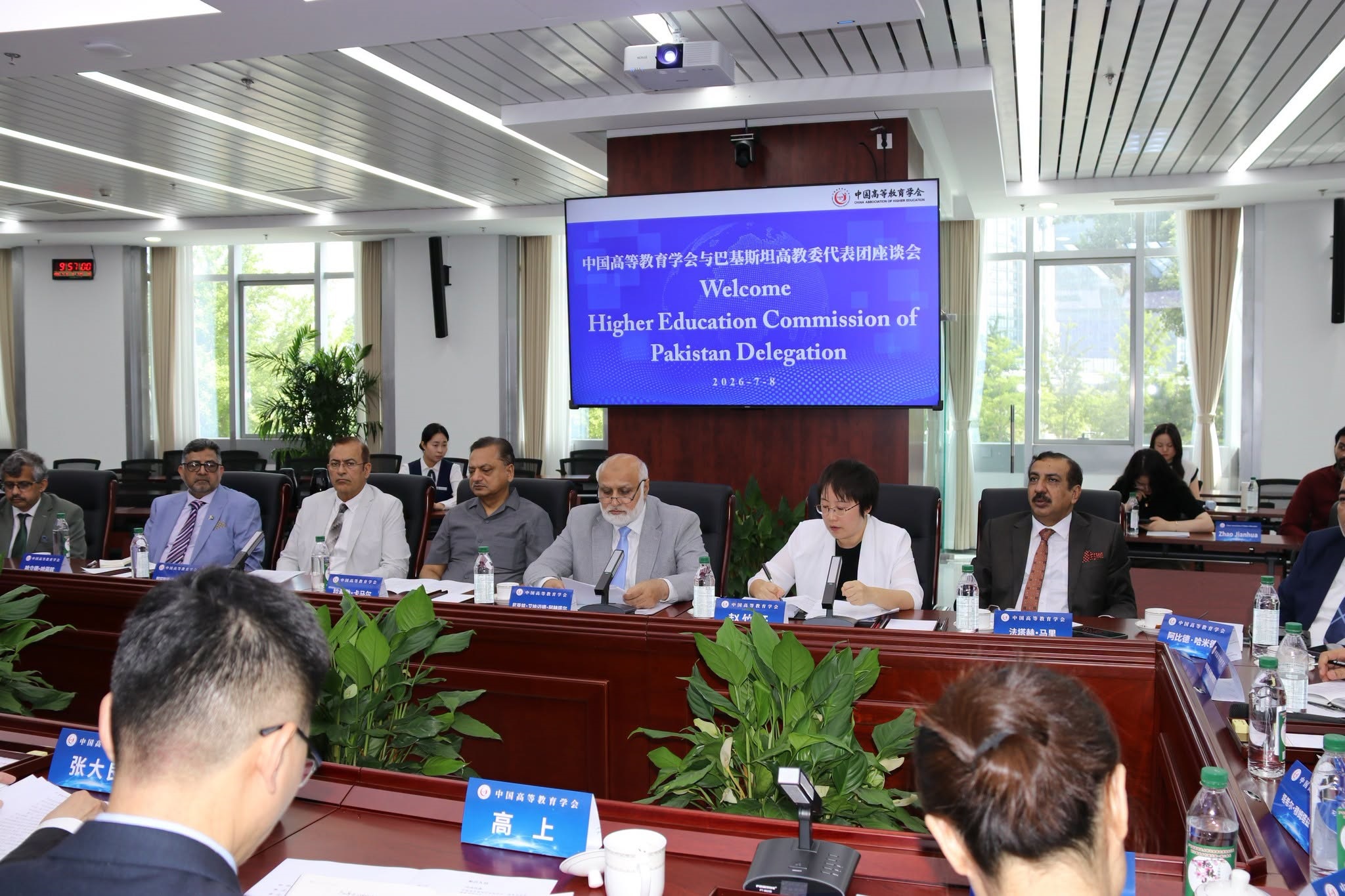
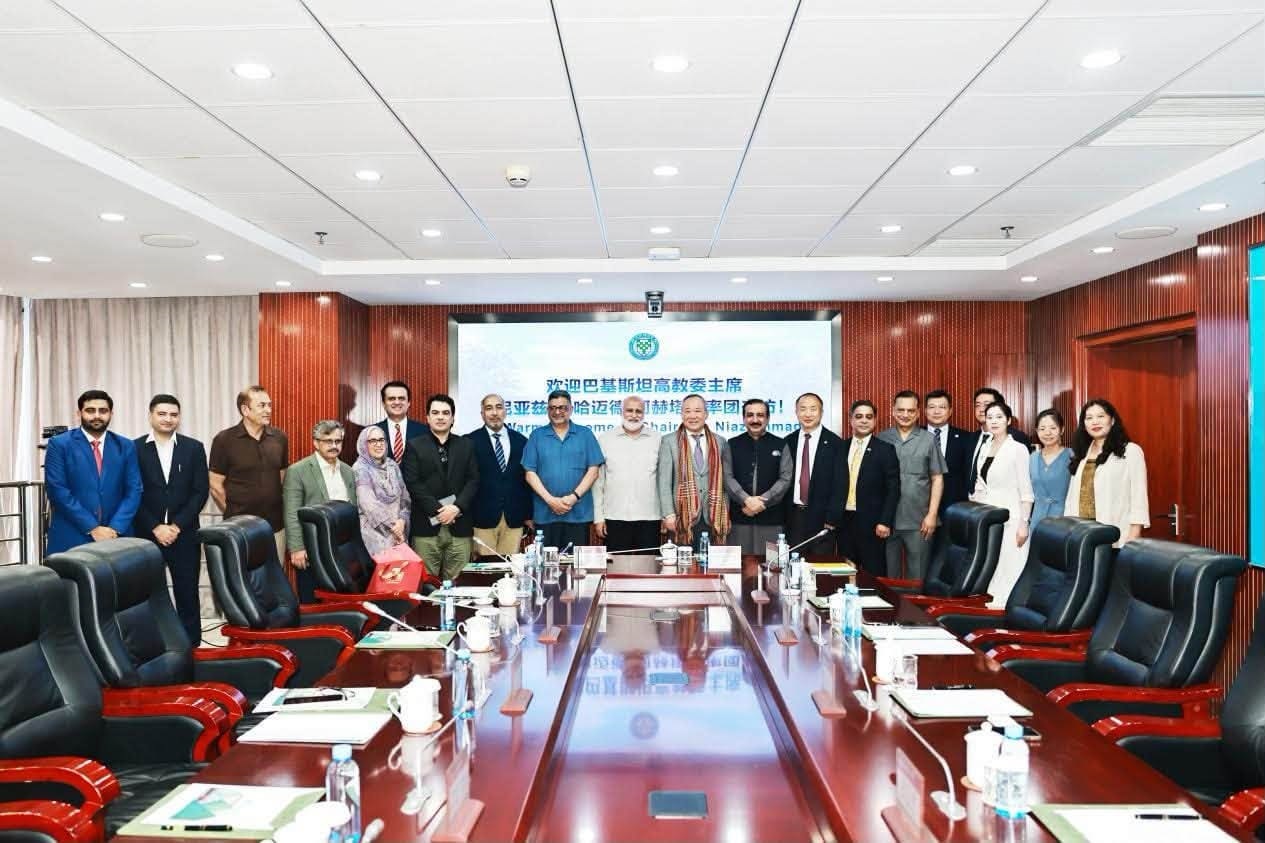
One of the most important engagements took place in Beijing, where the HEC delegation met senior leadership of the China Association of Higher Education (CAHE).
The meeting focused on expanding strategic partnerships between Pakistani and Chinese universities while creating institutional mechanisms for sustained cooperation.
Both sides reaffirmed their commitment to transforming higher education into a central component of Pakistan-China relations and agreed that universities should play a leading role in scientific diplomacy, innovation ecosystems and regional development.
Discussions covered collaboration across numerous strategic sectors including:
- Artificial Intelligence
- Climate change
- Renewable energy
- Water security
- Agriculture
- Public health
- Digital education
- Engineering
- Innovation management
The two organizations also explored expanding:
- Faculty exchanges
- Student mobility
- Joint degree programmes
- University leadership academies
- Smart campuses
- Digital learning ecosystems
Building a China–Pakistan Research Network
A major outcome of the discussions was the proposal by CAHE to establish a China–Pakistan Research and Innovation Network, connecting universities, laboratories and researchers across both countries.
The initiative aims to create thematic research clusters focusing on emerging technologies and global development challenges.
Among the proposed initiatives were:
- AI-focused summer schools
- Joint innovation laboratories
- Collaborative digital learning platforms
- Shared research infrastructure
- Joint supervision of doctoral researchers
- Cross-border innovation projects
Officials agreed to convert policy discussions into practical institutional partnerships capable of producing measurable academic outcomes.
Pakistan–China Higher Education Partnership 2035
Chairman Dr. Niaz Ahmad Akhtar emphasized that Pakistan’s future economic competitiveness depends increasingly on research excellence, digital education and innovation-driven universities.
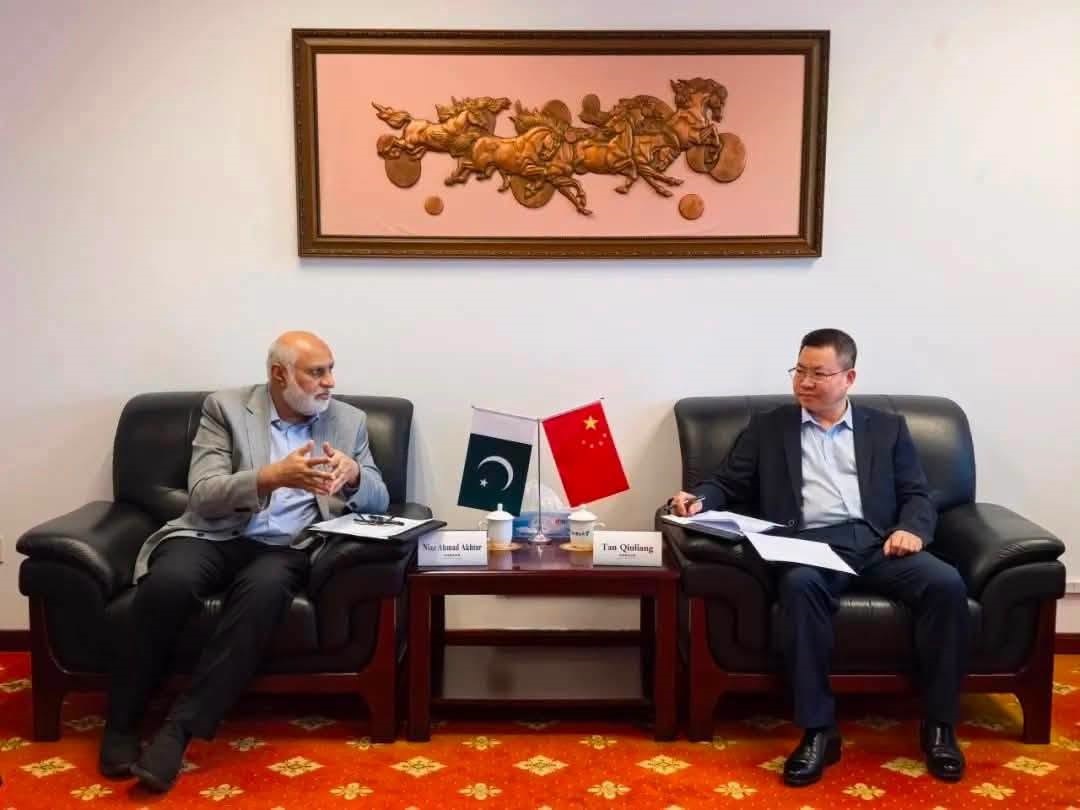
The proposed Higher Education Partnership 2035 envisions long-term collaboration that extends beyond student exchanges to include:
- Joint research funding
- University digital transformation
- Academic leadership development
- Innovation commercialization
- Entrepreneurship ecosystems
- Technology transfer
- Industry-academia collaboration
The initiative also aligns with Pakistan’s efforts to modernize its higher education system while supporting China’s vision of deeper people-to-people connectivity under the Belt and Road Initiative.
World Sinology–China Forum Opens New Academic Opportunities
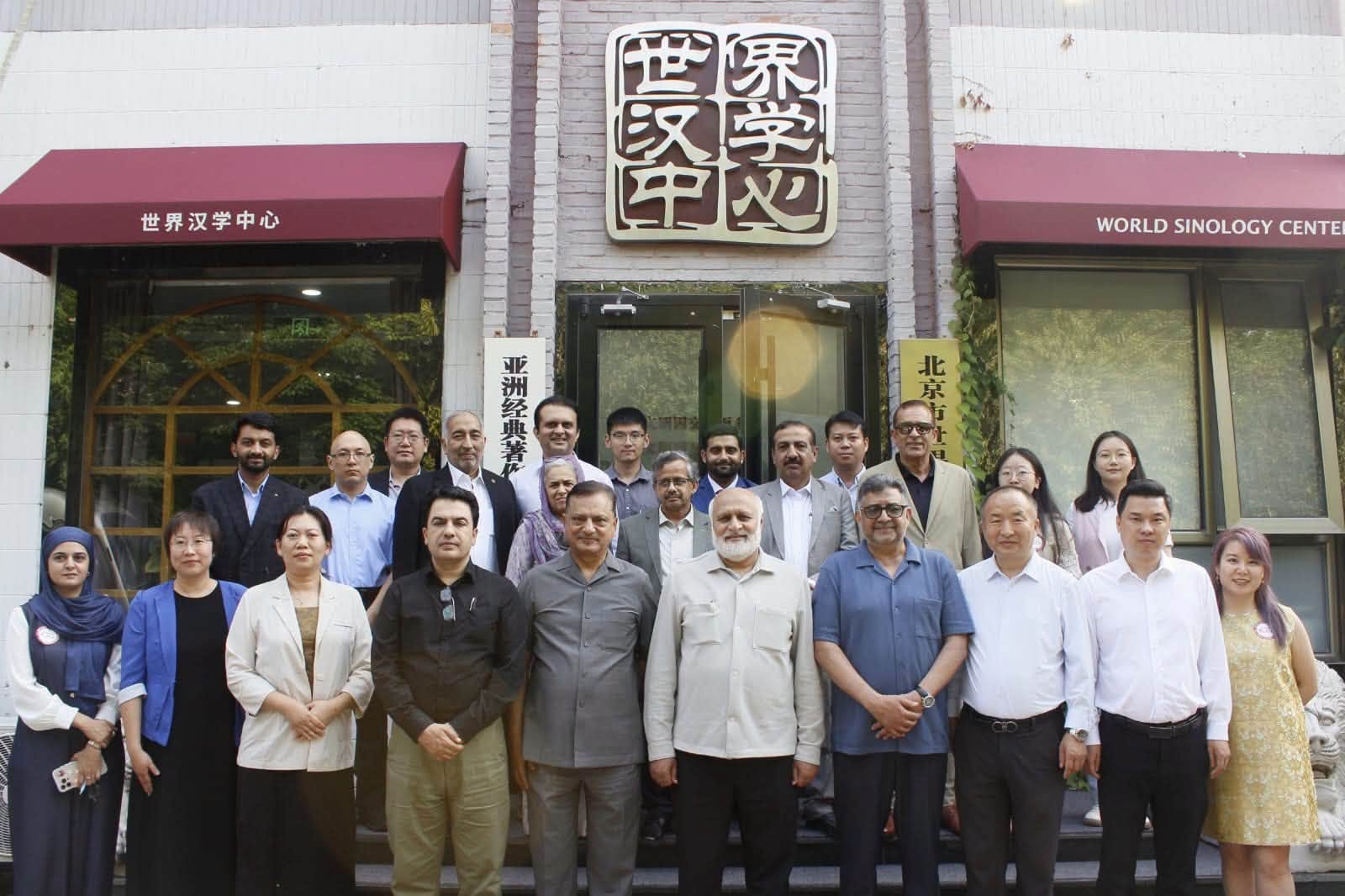
The Pakistani delegation also participated in the prestigious World Sinology–China Forum hosted by Beijing Language and Culture University.
The forum brought together scholars, university leaders and policymakers to discuss the future of Pakistan-China educational cooperation.
The Pakistani delegation included representatives from:
- Bahria University
- National University of Sciences and Technology (NUST)
- COMSATS University Islamabad
- University of Okara
- BUITEMS Quetta
- University of Sindh
- University of Engineering and Technology Peshawar
- Confucius Institute, University of Sargodha
- Senior HEC officials
The discussions focused on creating stronger institutional partnerships capable of supporting both countries’ long-term development priorities.
Proposal for Ten China Research Centres
One of the forum’s most notable proposals came from Professor Xu Baofeng, Director of the World Sinology Centre.
He proposed establishing ten specialized China Research Centres at selected Pakistani universities.
The centres would focus on:
- China studies
- Belt and Road research
- Comparative development
- Artificial Intelligence
- Language education
- Public policy
- Technology innovation
- Joint postgraduate programmes
The proposal also envisages creating a coordinated research network linking Pakistani institutions directly with Chinese universities.
Chairman HEC welcomed the proposal, describing it as an important step toward strengthening academic collaboration and knowledge exchange.
Digital Education and Artificial Intelligence Take Centre Stage
Artificial Intelligence emerged as one of the dominant themes throughout the visit.
Chinese experts demonstrated next-generation AI-powered educational technologies including:
- Intelligent language learning systems
- AI-assisted classrooms
- Adaptive digital learning
- Smart campus management
- Personalized educational platforms
Representatives from Jiuxuewang (NSK) introduced AI-based Chinese language learning systems designed to improve learning outcomes while expanding access to digital education.
Meanwhile, Beijing Language and Culture University Press showcased localized Chinese-language textbooks and digital learning resources designed specifically for international students.
The emphasis reflected growing recognition that future higher education will depend increasingly on AI-enabled learning environments.
North China Electric Power University Strengthens Energy Research Cooperation
Chairman Dr. Niaz Ahmad Akhtar also visited North China Electric Power University (NCEPU) in Beijing.
The discussions focused on expanding cooperation in:
- Sustainable energy
- Power engineering
- Renewable technologies
- Faculty exchanges
- Joint research
- Innovation ecosystems
- Scientific talent development
Given Pakistan’s growing demand for clean energy technologies, collaboration with one of China’s leading energy universities could provide significant opportunities for research partnerships and workforce development.
The meeting also reinforced higher education’s role in supporting the Belt and Road Initiative through scientific cooperation.
Huawei R&D Campus Highlights Digital Transformation
During the Shanghai leg of the visit, Chairman HEC visited Huawei’s Research and Development Campus, where discussions centered on the future of digital transformation in Pakistan’s universities.
Meetings explored cooperation in:
- Artificial Intelligence
- Cloud computing
- Advanced ICT
- Cybersecurity
- Digital infrastructure
- Research collaboration
- Talent development
Huawei expressed interest in expanding opportunities for Pakistani universities and researchers through collaborative innovation programmes and industry-academia partnerships.
The discussions reflected Pakistan’s increasing focus on building digital universities capable of competing in the global knowledge economy.
Expanding Cooperation with Fudan University
At Fudan University, one of China’s leading research institutions, Chairman HEC met Chairperson Qiu Xin, Vice President Chen Zhimin, and senior university leadership.
The discussions covered:
- Joint degree programmes
- Academic mobility
- Collaborative research
- Emerging technologies
- International faculty exchanges
- Innovation partnerships
Both sides agreed to strengthen institutional cooperation while encouraging greater collaboration between researchers and postgraduate students.
New Agreement with Qingdao Hengxing University
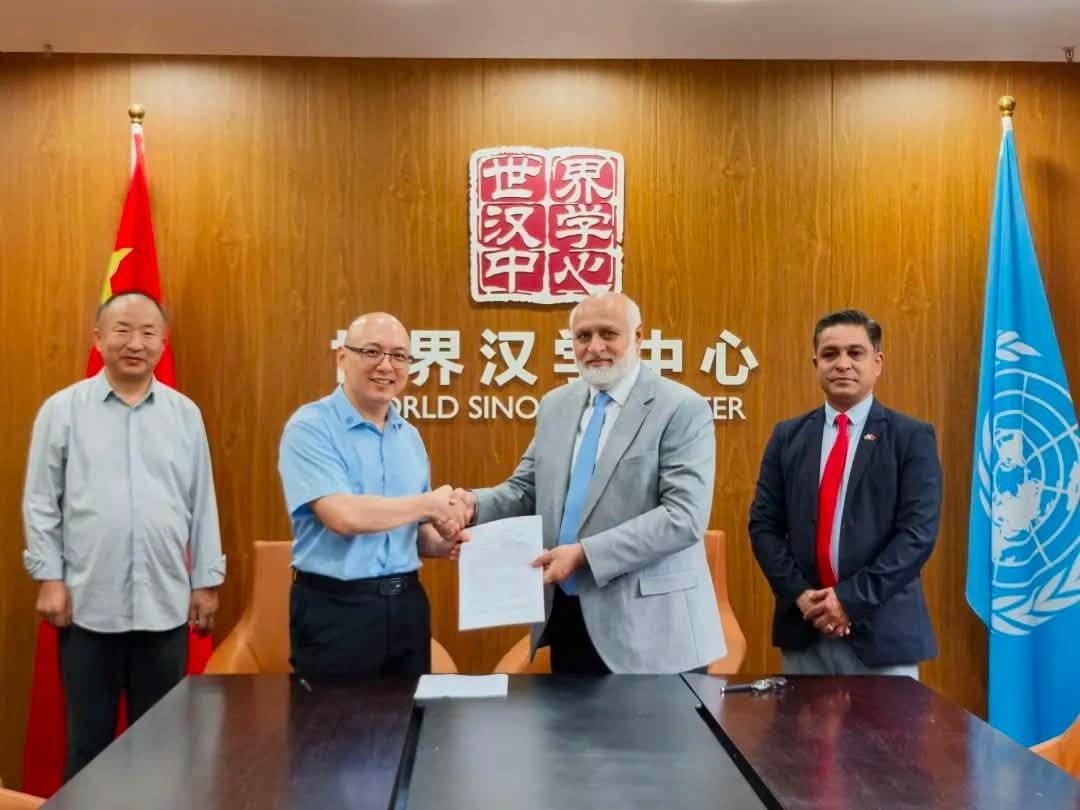
Another major milestone was the signing of an Education Cooperation Agreement between HEC Pakistan and Qingdao Hengxing University of Science and Technology.
The agreement provides a framework for cooperation in:
- Student exchanges
- Faculty mobility
- Joint talent development
- Vocational education
- Industry-academia collaboration
- Educational resource sharing
- Innovation partnerships
The partnership seeks to improve graduate employability while strengthening university-industry linkages across multiple sectors.
CPEC Enters Its Knowledge Economy Phase
Experts increasingly argue that the next phase of CPEC should focus less on physical infrastructure and more on knowledge infrastructure.
Universities, research institutions and innovation ecosystems are expected to become central drivers of Pakistan-China cooperation.
By investing in:
- Artificial Intelligence
- Renewable energy
- Climate science
- Agriculture
- Water security
- Biotechnology
- Digital education
both countries aim to prepare future generations for an increasingly technology-driven global economy.
The Knowledge Corridor concept complements CPEC’s existing infrastructure by building intellectual capital alongside physical connectivity.
Strengthening People-to-People Connectivity
Beyond research and technology, the visit emphasized cultural understanding and educational diplomacy.
Expanded Chinese language education, youth exchanges, joint research programmes and faculty mobility are expected to deepen people-to-people ties between Pakistan and China.
Educational partnerships also contribute to long-term trust-building by fostering sustained collaboration among scholars, scientists and future leaders.
Looking Ahead
The visit concluded with a shared commitment to translating strategic discussions into measurable outcomes.
Future priorities include:
- Launching joint research projects
- Establishing China Research Centres
- Expanding AI education
- Creating digital campuses
- Increasing student exchanges
- Promoting innovation-driven entrepreneurship
- Supporting industry-academia collaboration
- Developing internationally competitive universities
Collectively, these initiatives represent a significant step toward building a resilient China–Pakistan Knowledge Corridor capable of supporting sustainable development, technological advancement and regional prosperity.
As Pakistan and China celebrate 75 years of diplomatic relations, the evolving partnership in higher education underscores a broader vision—one where universities, researchers and innovators become as important to bilateral cooperation as roads, ports and power plants. By aligning education, research and innovation with the goals of the Belt and Road Initiative and CPEC, both nations are laying the foundation for a future driven not only by connectivity, but by knowledge, talent and shared scientific progress.
Backgrounder: The CPEC Knowledge Corridor
The China–Pakistan Economic Corridor (CPEC) has evolved from a flagship infrastructure initiative into a broader framework encompassing education, science, technology, and innovation. The concept of the CPEC Knowledge Corridor aims to strengthen collaboration between universities, research institutions, industry, and policymakers in both countries.
Key objectives include promoting joint research in strategic sectors such as artificial intelligence, renewable energy, climate resilience, water security, public health, agriculture, and advanced manufacturing; expanding student and faculty exchanges; developing joint degree programmes; enhancing digital education; and fostering university–industry partnerships.
The proposed Pakistan–China Higher Education Partnership 2035 aligns with these goals by positioning higher education as a cornerstone of long-term bilateral cooperation. Through initiatives such as China Research Centres, AI-enabled learning platforms, smart campuses, and collaborative innovation networks, Pakistan and China seek to cultivate a highly skilled workforce, accelerate scientific discovery, and contribute to sustainable socio-economic development across the region.