



The United States carried out a 13th consecutive night of airstrikes on Iran early Friday, targeting military infrastructure linked to Tehran’s operations in the Strait of Hormuz, while air raid sirens sounded in Bahrain and the widening conflict threatened to further disrupt global energy supplies and key shipping routes.
The latest wave of strikes lasted just over two hours, ending around 4:30 a.m. local time, according to U.S. Central Command (CENTCOM).
The military said it struck Iranian military command centers, drone storage facilities, communications networks, coastal surveillance sites and maritime assets in an effort to weaken Iran’s ability to threaten commercial shipping in the Gulf.
CENTCOM said the operation was intended to further reduce the danger posed to civilian vessels traveling through the Strait of Hormuz, one of the world’s most important energy corridors, while insisting that the waterway remains open under U.S. military protection despite recent Iranian attacks.
Iranian media reported explosions across several parts of the country, including areas near Ahvaz, Andimeshk and Omidiyeh in the southwestern province of Khuzestan.
Blasts were also reported near Bandar Abbas, Iran’s largest commercial port, and on Qeshm Island, a strategically important base overlooking the Strait of Hormuz that houses Iranian naval assets, including drone boats.
Air defenses were activated in Tehran, according to Nur News, a media outlet close to Iran’s Supreme National Security Council.
Iranian state media said at least four people were killed and nine others were injured in the overnight bombardment. Separate reports said four people died and five were wounded in a missile strike outside Ahvaz, while additional attacks left two people injured in Lorestan province and two more wounded in Bandar Abbas.
Other strikes reportedly hit Isfahan, home to a major air base and one of Iran’s nuclear facilities, as well as Khuzestan and Fars provinces.
The conflict also spilled across the Gulf.
Bahrain activated emergency sirens early Friday and urged residents to seek shelter after detecting incoming fire. Iranian media also claimed attacks reached Bahrain and Jordan, although there was no immediate confirmation from Jordanian authorities.
Kuwait’s armed forces said they intercepted Iranian missiles and drones for a second time, urging residents to follow official safety guidance. Iran’s Tasnim news agency claimed the projectiles targeted a military base used by both Kuwaiti forces and the U.S. Air Force, though the reports could not be independently verified.
The regional conflict expanded further after Yemen’s Iran-backed Houthi rebels said Thursday they had targeted two Saudi oil tankers in the Red Sea, raising fears that another critical maritime chokepoint could be drawn into the fighting.
The Bab el-Mandeb Strait, linking the Red Sea to the Gulf of Aden, carries roughly 12% of global trade and about one-quarter of the world’s container traffic moving between Europe and Asia through the Suez Canal.
Maritime intelligence firm Lloyd’s List Intelligence warned that Houthi attacks threaten Saudi oil exports from the Red Sea port of Yanbu, creating a second major disruption alongside the ongoing instability in the Strait of Hormuz.
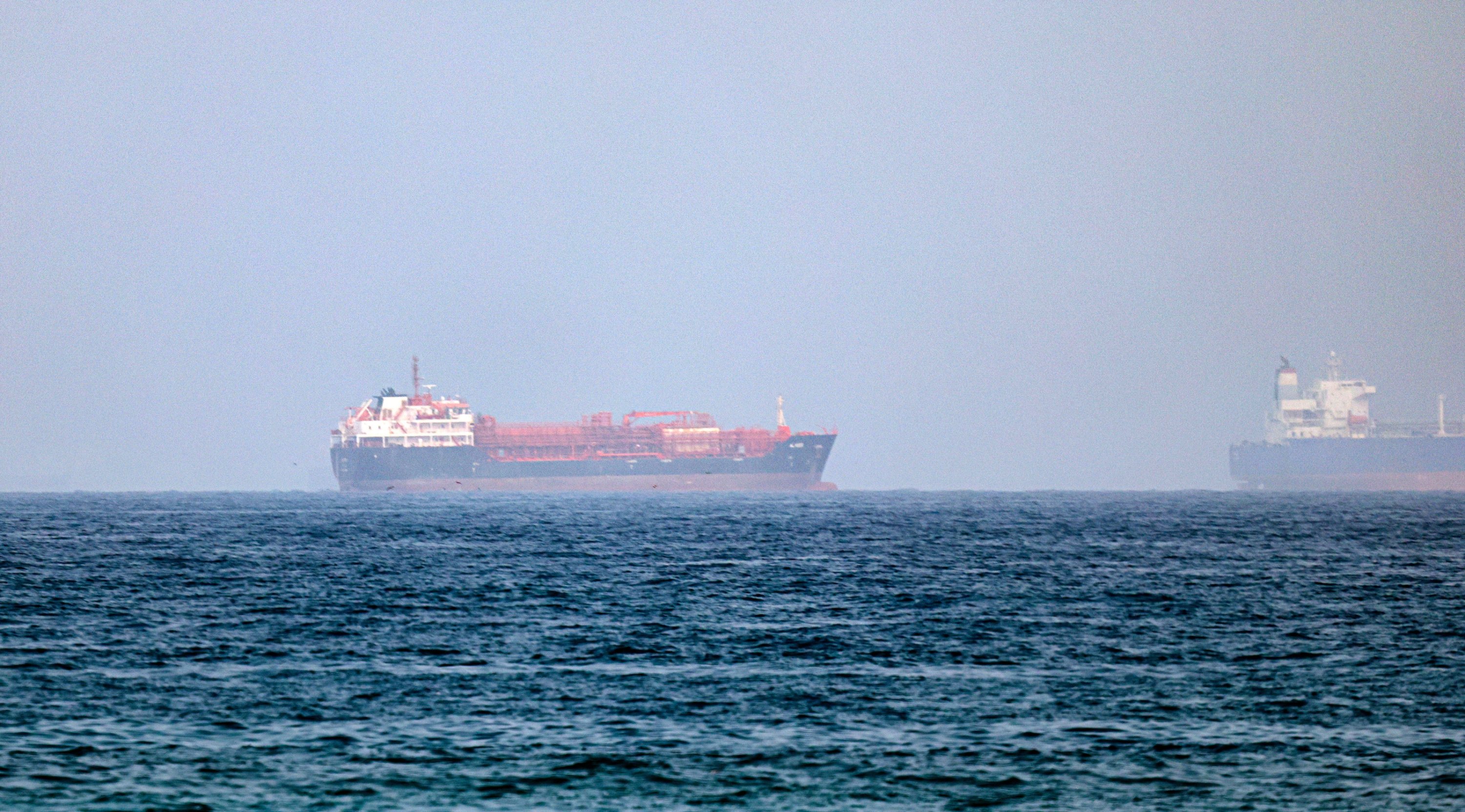
Saudi Arabia has increasingly relied on pipelines to transport crude to Yanbu after shipping through the Persian Gulf became increasingly dangerous.
The latest escalation follows Iranian attacks on commercial vessels in the Strait of Hormuz earlier this month, prompting an expanded U.S. military campaign aimed at restoring security along the vital shipping lane. Roughly one-fifth of global oil and gas supplies typically pass through the strait.
The economic impact continued to grow as Brent crude, the international oil benchmark, climbed more than 6% to around $100 a barrel, its highest level since May after a short-lived peace agreement between Washington and Tehran collapsed.
Iran has maintained that it has the right to regulate traffic through the Strait of Hormuz and has suggested imposing transit fees, ending decades of toll-free passage. Tehran has also targeted vessels using a shipping corridor monitored by U.S. forces that was intended to keep commercial traffic outside Iranian control.
Diplomatic efforts continued despite the intensifying military campaign.
Iraqi Prime Minister Ali al-Zaidi traveled to Tehran on Thursday, urging both sides to pursue dialogue and promising that Iraqi territory would not be used to launch attacks against Iran. Iraq has sought to balance its close ties with both Washington and Tehran. Al-Zaidi also met President Donald Trump earlier this month in Washington.
Trump warned the Houthis they would face “major military punishment” if attacks on commercial shipping continue.
The U.S. president also announced that frozen Iranian assets held by the United States would be used to compensate owners of ships and cargo damaged during the conflict.
“Please let this statement serve to represent, until further notice, that from this point forth, any and all damages done to Ships, Cargo, or anything related thereto, will be paid for by Iranian Money that the United States has in its possession, and controls,” Trump wrote on social media.
Trump did not explain the legal authority that would allow the administration to seize and distribute the funds, saying only that it would be “the fair and equitable thing to do.”
Iranian Foreign Minister Abbas Araghchi rejected the proposal, warning on X that confiscating another country’s assets would undermine global financial stability.
“Once governments normalize confiscation, no one’s assets are safe,” Araghchi wrote. “Ensuing chaos will not be pretty or peaceful.”


