

Summertime usually promises longer days, blue skies, outdoor meals and the pleasure of being outside, soaking up the sun. In China, though, the summer heat can be a lot to handle. When temperatures climb into the mid-to-high 30 degrees Celsius, daily life becomes a search for shade to escape the scorching sun.
To an outsider, some of these habits can look puzzling at first: passersby wrapped in sun-proof “armor,” grandmothers insisting on cooling teas, or friends recommending mung bean soup with the confidence of a TCM pro. But for those who’ve been here long enough, these rituals become part of everyday summer living. Here are some of the quirkiest, and most original, ways Chinese people beat the summer heat.
Armor-like sun gear
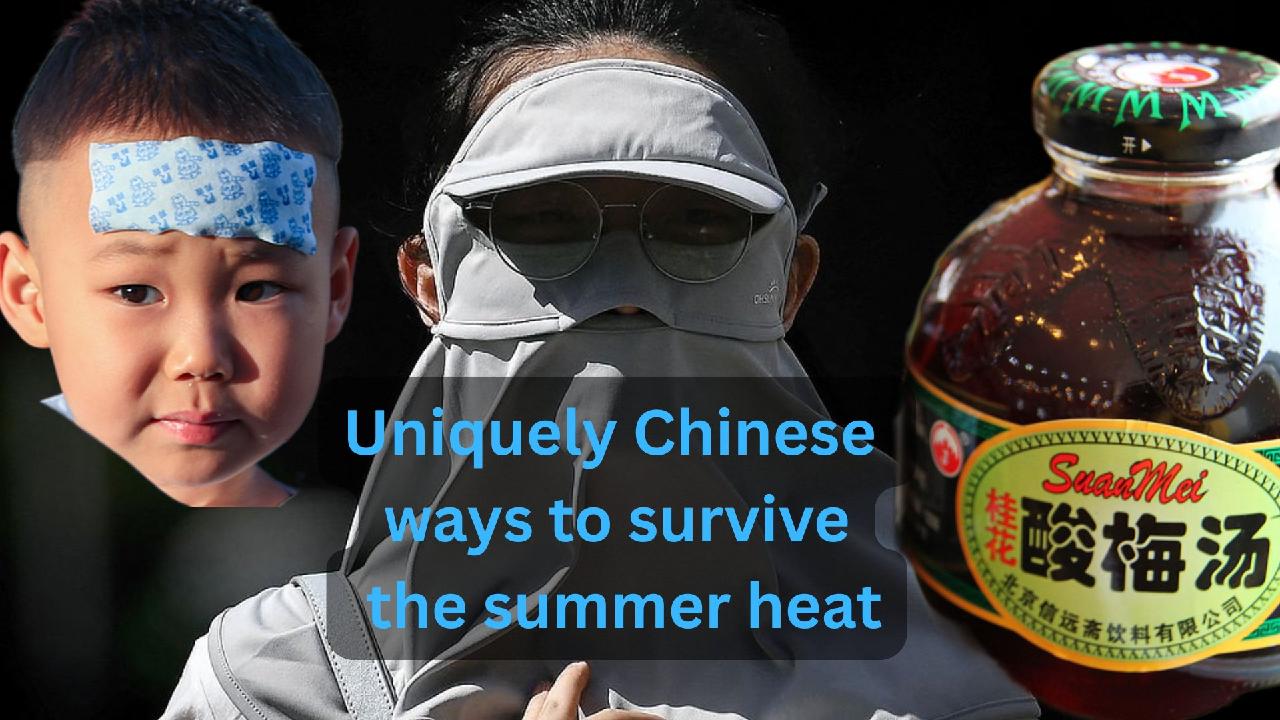
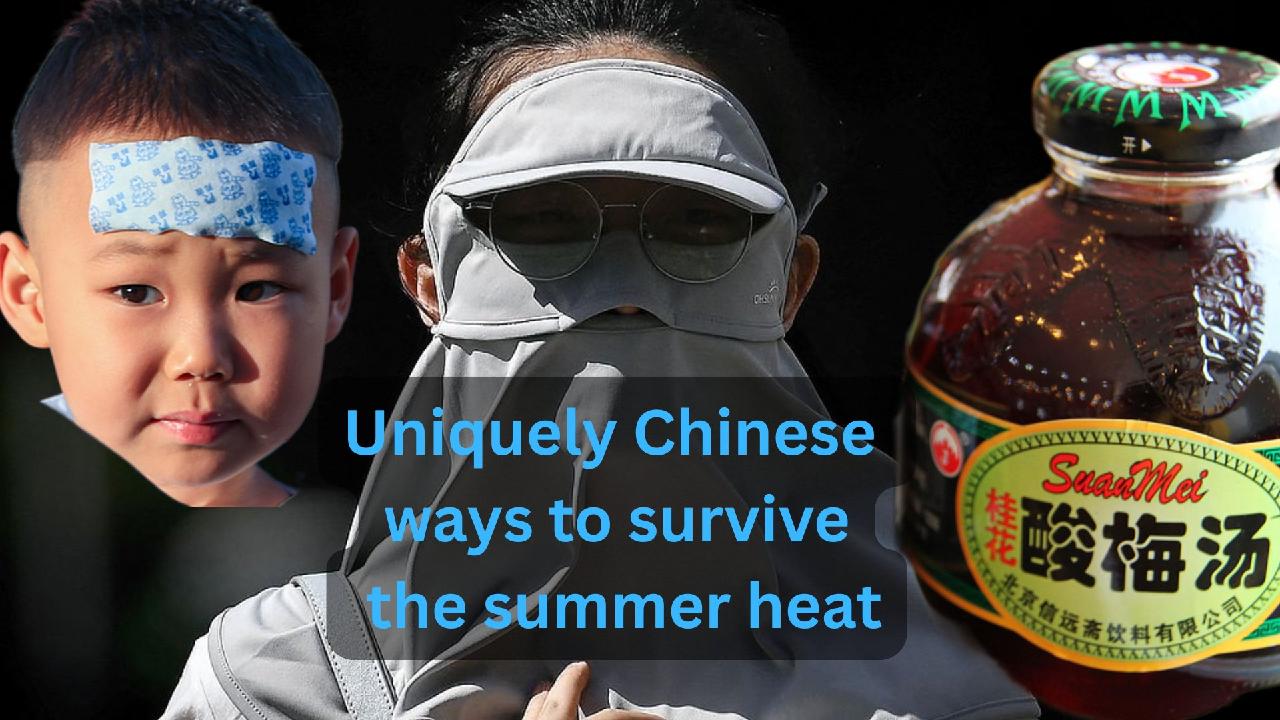
One Chinese summer strategy is not what many outside of the country would expect: covering up. On sunny days, pedestrians and cyclists may appear in arm sleeves, UV jackets, wide-brimmed hats, masks, neck covers, sunglasses and umbrellas. The result can look almost futuristic, and even a little intimidating – less beachwear, more heat wave battle gear.
<img src='https://news.cgtn.com/news/2026-07-10/Uniquely-Chinese-ways-to-survive-the-summer-heat-1ODbqyVGbte/img/4bb3ad0848504ce992cb7b43e46ca540/4bb3ad0848504ce992cb7b43e46ca540.jpeg' alt='Packing on layers of sun-protective clothing is a common phenomenon in China to avoid direct contact with the sun. /VCG'
This approach to sun protection is partly about avoiding sunburn and tanning, but also about staying physically cooler by creating shade directly on the body.
Cooling head strips
On especially humid days, you may see people wearing cooling patches or strips across the forehead or the back of the neck. They are the kind of thing that might be marketed elsewhere for fevers or headaches, but in summer they become a portable comfort tool, and they’re compact and easy to keep in a bag, quick to apply and refreshingly cold.
<img src='https://news.cgtn.com/news/2026-07-10/Uniquely-Chinese-ways-to-survive-the-summer-heat-1ODbqyVGbte/img/f67beb49b2bf49fba29c306bc9b21fc4/f67beb49b2bf49fba29c306bc9b21fc4.jpeg' alt='Cooling gel patches are said to be an effective way to cool the body during unbearable heat spells. /VCG'
These patches, usually made of a gel that helps absorb body heat and provide a cooling effect, perfectly fit the Chinese approach to summer as an on-the-go solution to the heat. Whether on the forehead, neck, wrists or stomach, these patches create moments of relief while moving through the city.
Palm-leaf and nifty electronic fans
Fans are one of the oldest and most dependable heat hacks in China. Traditional palm-leaf fans still appear in parks, courtyards and neighborhood shops, especially in the hands of older residents. They are cheap, silent, battery-free and lightweight.
<img src='https://news.cgtn.com/news/2026-07-10/Uniquely-Chinese-ways-to-survive-the-summer-heat-1ODbqyVGbte/img/cd8eb3173c5f46e9be9050442b928e08/cd8eb3173c5f46e9be9050442b928e08.jpeg' alt='Mini fans are easily found both in stores and online in China, ranging in color, size and speed. /VCG'
Their modern equivalents are everywhere too: mini electric fans clipped to phones, hung around necks, propped on office desks or carried on the subway. Easily found online or in stores, one of these nifty gadgets is a must-have for many.
Cooling drinks: suanmeitang, chrysanthemum tea, jinyinhua water and mung bean soup
In China, cooling down often starts from the inside. One of the most beloved summer drinks is suanmeitang, or sour plum drink, a deep ruby, sweet-tart beverage commonly made with smoked plums, hawthorn, licorice, rock sugar and sometimes osmanthus. It is served chilled and is especially popular with rich or spicy foods.
<img src='https://news.cgtn.com/news/2026-07-10/Uniquely-Chinese-ways-to-survive-the-summer-heat-1ODbqyVGbte/img/1dad27f6d56f4a488246bd2ddc1f17a8/1dad27f6d56f4a488246bd2ddc1f17a8.jpeg' alt='Suanmeitang, a sour plum drink, is a popular option for a "cooling" drink during Chinese summers. /VCG'
Other cooling drinks include chrysanthemum tea and jinyinhua, or honeysuckle flower water, both associated in traditional Chinese food therapy with clearing heat. The idea behind this is that hot weather creates internal heat, and certain herbs, flowers and foods are believed to help bring the body back into balance.
Mung bean soup
Mung bean soup, or ludou tang, is one of the most classic Chinese summer remedies. At its simplest, it is made by simmering mung beans with water and a little sugar, then serving it warm, room temperature or chilled.
<img src='https://news.cgtn.com/news/2026-07-10/Uniquely-Chinese-ways-to-survive-the-summer-heat-1ODbqyVGbte/img/142a9d39edab4ffdbc97aac825844075/142a9d39edab4ffdbc97aac825844075.jpeg' alt='Mung beans are renowned in traditional Chinese medicine for their cooling benefits, and are often used for soups during summer. /VCG'
The idea comes from traditional Chinese medicine, where mung beans are considered cooling. Modern recipes vary by region. Some versions are brothy, others thick and dessert-like, and Cantonese versions may become a sweet tong sui or soup.
Bamboo mats and floor cooling
At home, cooling can move from the street to the bed. Bamboo sleeping mats are a traditional summer staple: smooth, firm, naturally cool to the touch and far less heat-trapping than thick fabric bedding. Some people lay them over a mattress, others spread them directly on the floor for maximum contact with a cooler surface.
<img src='https://news.cgtn.com/news/2026-07-10/Uniquely-Chinese-ways-to-survive-the-summer-heat-1ODbqyVGbte/img/f6f004b4719f46fc8d7a73a1f338a2d7/f6f004b4719f46fc8d7a73a1f338a2d7.jpeg' alt='Bamboo sheets are popular during those warm summer night as they promote airflow and and effective cooling. /VCG'
The appeal is low-tech, and bamboo allows more airflow than heavy bedding and gives the skin a cooler surface to rest against. Bamboo mats are brought out once temperatures rise and stored away again when autumn arrives.