Pakistan Champions Connectivity as Gateway to Regional Prosperity
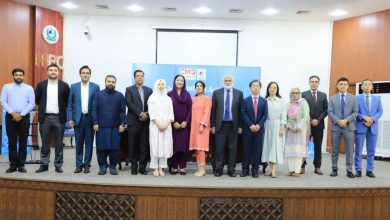
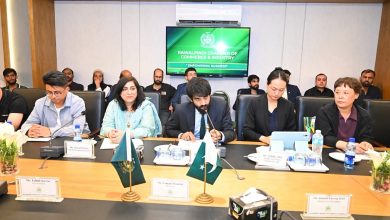
M𝐢𝐧𝐢𝐬𝐭𝐞𝐫𝐬 a𝐧𝐝 d𝐞𝐥𝐞𝐠𝐚𝐭𝐞𝐬 from across t𝐡𝐞 r𝐞𝐠𝐢𝐨𝐧 came together at 𝐑𝐓𝐌𝐂 𝟐𝟎𝟐𝟓 to shape t𝐡𝐞 f𝐮𝐭𝐮𝐫𝐞 o𝐟 c𝐨𝐧𝐧𝐞𝐜𝐭𝐢𝐯𝐢𝐭𝐲 a𝐧𝐝 c𝐨𝐨𝐩𝐞𝐫𝐚𝐭𝐢𝐨𝐧 for sustainable transport, logistics.

-
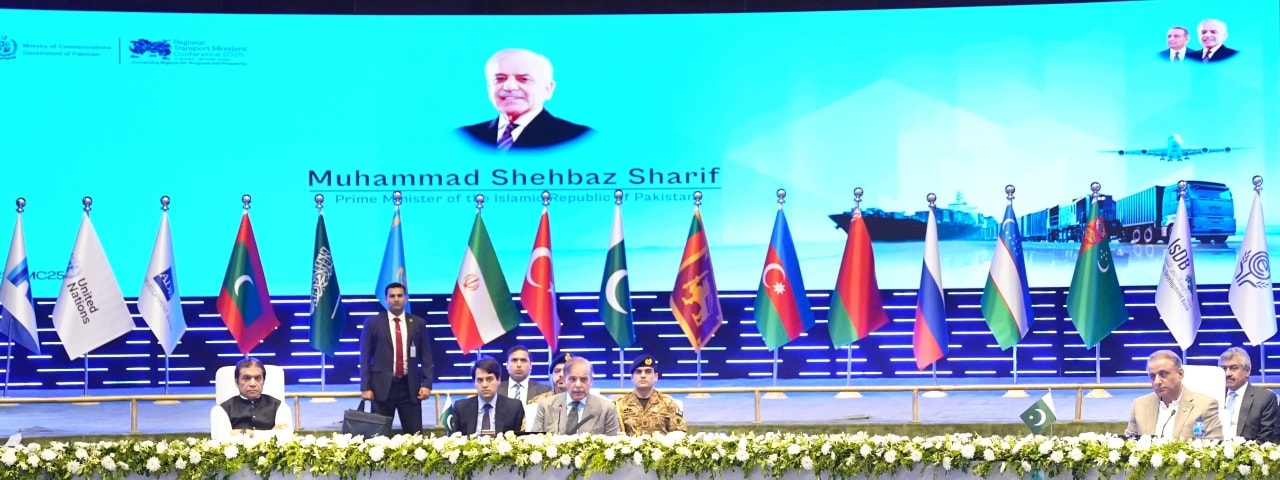
Pakistan Champions Connectivity as Gateway to Regional Prosperity at Regional Transport Ministers’ Conference 2025 that concludes in Islamaba.
-
M𝐢𝐧𝐢𝐬𝐭𝐞𝐫𝐬 a𝐧𝐝 d𝐞𝐥𝐞𝐠𝐚𝐭𝐞𝐬 from across t𝐡𝐞 r𝐞𝐠𝐢𝐨𝐧 came together to shape t𝐡𝐞 f𝐮𝐭𝐮𝐫𝐞 o𝐟 c𝐨𝐧𝐧𝐞𝐜𝐭𝐢𝐯𝐢𝐭𝐲 a𝐧𝐝 c𝐨𝐨𝐩𝐞𝐫𝐚𝐭𝐢𝐨𝐧 for sustainable transport, logistics.
-
Connectivity as a Catalyst for Regional Growth
By Muhammad Arif, Editor NSN.Asia
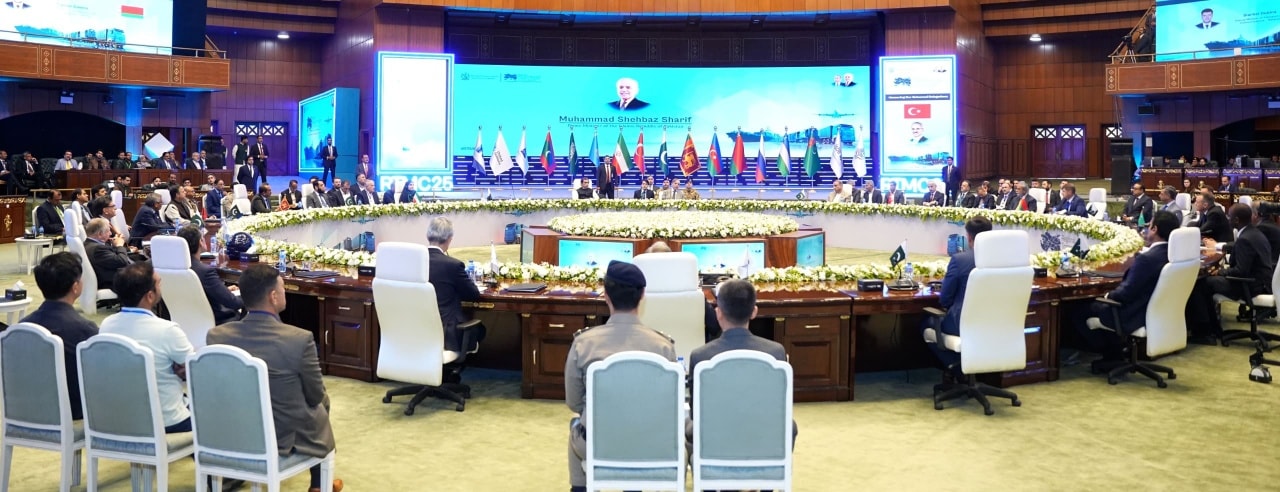
Islamabad: Pakistan was presented as” Champion of Connectivity”, building a gateway to regional prosperity in a landmark gathering that underscored the strategic importance of regional integration as Pakistan hosted the two-day Regional Transport Ministers’ Conference 2025 at the Jinnah Convention Centre in Islamabad.
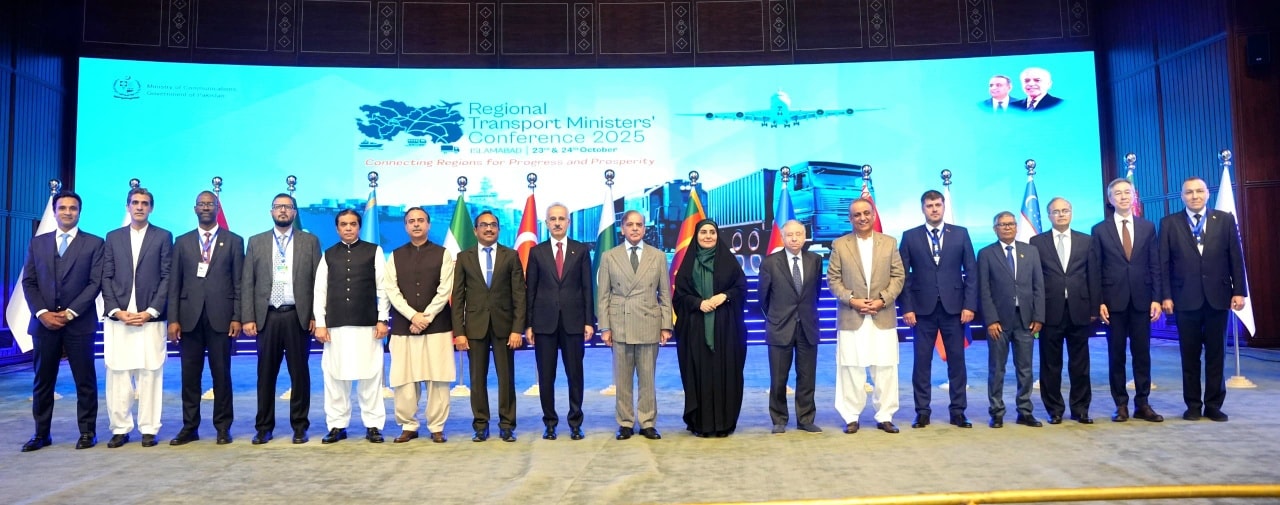
The event convened transport ministers, policy makers, and development partners from 27 countries and 11 international organizations, including the Asian Development Bank (ADB), Economic Cooperation Organisation (ECO), and International Road Transport Union (IRU), to chart a collaborative roadmap for sustainable connectivity across South, Central, and West Asia.
The RTMC Islamabad 2025, hosted by Pakistan’s Ministry of Communications, united the transport leaders from 27 countries to advance regional connectivity, cooperation, and socio-economic integration.
- Pakistan’s Role in Connectivity Projects
Pakistan Prime Minister Shehbaz Sharif, addressing the closing session, declared regional trade and transport cooperation a “win-win proposition” that promises “rich dividends and lasting peace for all.” He emphasized that Pakistan stands as a “unique tri-junction” linking China, Central Asia, and the Middle East, and called for collective development through stronger economic linkages.
“Together we sow the seeds of cooperation so that we may harvest the fruits of development and prosperity for our people and the region beyond,” said the Prime Minister. “May Allah Almighty give us the strength to work together and move in unison to make this vision a reality.”
Prime Minister Shehbaz Sharif addressed the conference, showcasing Pakistan’s strategic position as a connectivity hub linking China, Central Asia, and the Middle East. He highlighted the significance of the China-Pakistan Economic Corridor (CPEC) and announced the start of its second phase, CPEC 2.0.
The Prime Minister mentioned ongoing projects like the Trans-Afghan Railway and the Islamabad-Tehran-Istanbul Railway Corridor to boost regional trade.
- 🌐 Connectivity as a Catalyst for Regional Growth
The conference theme, “Regional Connectivity: Opportunities for the Region”, reflected growing consensus among participating nations that integrated transport networks are essential for unlocking economic potential, reducing poverty, and fostering peace. Delegates discussed multimodal connectivity across road, rail, air, and maritime sectors, with a focus on logistics harmonization, infrastructure investment, and digital integration.
Pakistan’s Ministry of Communications highlighted that regional connectivity is not merely about infrastructure—it is about empowering economies, linking communities, and creating shared prosperity. The conference called for enhanced cooperation in cross-border transport agreements, streamlined customs procedures, and resilient supply chains to withstand global disruptions.
- 🚧 CPEC: The Cornerstone of Regional Integration
A central pillar of the discussions was the China-Pakistan Economic Corridor (CPEC), which Prime Minister Sharif described as a “gateway of connectivity, opportunity, and cultural exchange.” He announced that Pakistan has entered the second phase of CPEC—dubbed CPEC 2.0—which will focus on business-to-business partnerships, industrial cooperation, and regional trade facilitation.
“CPEC has been a transformative experience for this region,” said the Prime Minister. “It has brought markets and people together across China, Central and South Asia, and the Middle East by linking Gwadar Port with China’s western provinces.”
The second phase of CPEC aims to expand transnational rail and road networks, including the ML-1 railway upgrade, the Karachi Circular Railway revival, and new dry ports to facilitate inland trade. These projects are expected to reduce freight costs, improve transit times, and enhance Pakistan’s role as a regional logistics hub.
- Main Line-1 (ML-1) railway project: connecting Central Asia to Pakistan’s deep-sea ports
One of the flagship components of Pakistan’s regional connectivity vision is the Main Line-1 (ML-1) railway project, a transformative upgrade of the country’s north-south rail corridor under the CPEC framework. Stretching from Karachi to Peshawar, the ML-1 project will modernize over 1,800 kilometers of track, enabling high-speed freight and passenger movement. Crucially, the upgraded line is envisioned to extend its logistical reach toward Afghanistan via Peshawar and Torkham, creating a vital overland trade artery that connects Central Asia to Pakistan’s deep-sea ports. This east-west linkage not only enhances Afghanistan’s access to maritime trade but also positions Pakistan as a transit hub for regional commerce, integrating the economies of Uzbekistan, Tajikistan, and beyond into a cohesive transport network. As Minister for Railways and Communications noted during the conference, “ML-1 is not just a railway upgrade—it’s a strategic spine for regional integration and economic diplomacy.”
- 🏗️ Strategic Projects and Multilateral Support
The conference also spotlighted several ongoing and proposed projects that exemplify regional cooperation:
– Central Asia–South Asia Transport Corridor (CASA-TC): A proposed multimodal corridor linking Uzbekistan, Afghanistan, and Pakistan to facilitate trade and energy exchange.
– TIR Convention Expansion: Pakistan’s active participation in the UN’s Transports Internationaux Routiers (TIR) system was praised for enabling secure and efficient cross-border trucking.
– Digital Freight Corridors: Delegates discussed the role of digital platforms in tracking cargo, reducing paperwork, and enhancing transparency.
Representatives from the ADB and ECO reaffirmed their commitment to financing and technical support for regional transport initiatives. The IRU emphasized the importance of harmonized regulations and driver training to ensure safety and efficiency.
🗣️ Voices from the Region for Connetivity
Transport ministers from Kazakhstan, Iran, Turkey, and Afghanistan shared their perspectives on the need for inclusive and resilient connectivity. The Iranian delegate called for “depoliticized corridors” that prioritize economic cooperation over geopolitical rivalry. Turkey’s representative stressed the importance of maritime linkages and port modernization.
Afghanistan’s acting transport minister expressed hope that regional connectivity would help stabilize the country’s economy and integrate it into broader trade networks. “We see Pakistan not just as a neighbor, but as a gateway to opportunity,” he said.
- 📈 Economic and Diplomatic Implications
Experts at the conference noted that regional connectivity has far-reaching implications beyond trade. It enhances energy security, promotes cultural exchange, and strengthens diplomatic ties. For Pakistan, it offers a chance to reposition itself as a facilitator of peace and progress in a volatile region.
The conference concluded with a joint communiqué reaffirming commitment to regional transport cooperation, infrastructure investment, and policy harmonization. Delegates agreed to establish a permanent secretariat in Islamabad to monitor progress and coordinate future initiatives.
🛤️ Pakistan’s Role as a Regional Connector
Pakistan’s geographic location—bordering China, India, Afghanistan, and Iran—makes it uniquely positioned to serve as a regional connector. Its ports, highways, and railways can link Central Asia to the Arabian Sea, offering landlocked countries access to global markets.
Prime Minister Sharif emphasized that Pakistan’s vision is not transactional but transformational. “We do not seek connectivity for ourselves alone,” he said. “We seek it for the region, for our neighbors, and for future generations who deserve peace, prosperity, and opportunity.
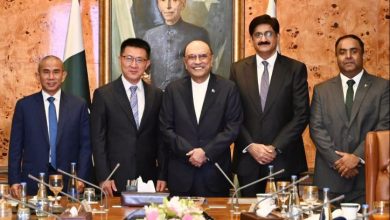
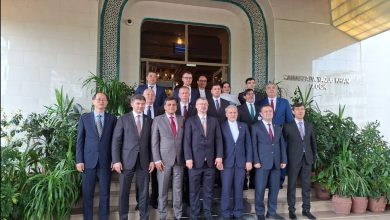
Agreements: Bilateral meetings were held on the sidelines of the event. Pakistan and Iran agreed to strengthen cooperation in railways and regional connectivity. Pakistan also explored a logistics partnership with Türkiye.
Public Expo: A transport and infrastructure expo was organized from October 25–26, following the conference, to showcase modern transport systems and development projects.
Digital Connectivity: Discussions also covered the growing role of digital connectivity, innovation, and technological integration in the transport sector.