SCO Chairmanship 2027:Pakistan to Boost Eurasian Connectivity
SCO Chairmanship 2027:Pakistan to Boost Peace, Cooperation, Connectivity in Eurasia following the Shanghai Spirit

-
SCO Chairmanship 2027:Pakistan to Boost Peace, Cooperation, Connectivity in Eurasia following the Shanghai Spirit
-
SCO Chairmanship 2027: As Pakistan assumes SCO chairmanship, experts at an Islamabad seminar explore how the Shanghai Spirit and Gwadar can boost Eurasian connectivity
-
Shanghai Spirit of mutual respect, dialogue, consensus and peaceful cooperation to promote regional stability, connectivity and shared prosperity.
-
Gwadar: The Gateway Linking Pakistan to Central Asia and Eurasia
By: Muhammad Arif, Editor NSN.Asia
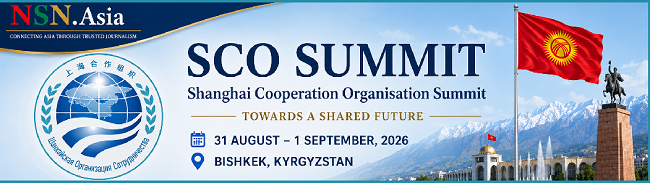
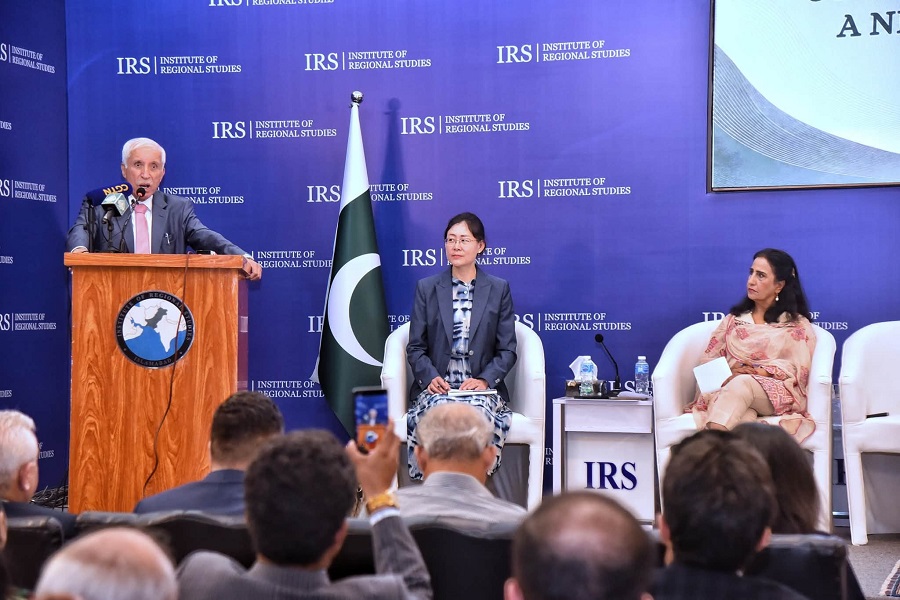
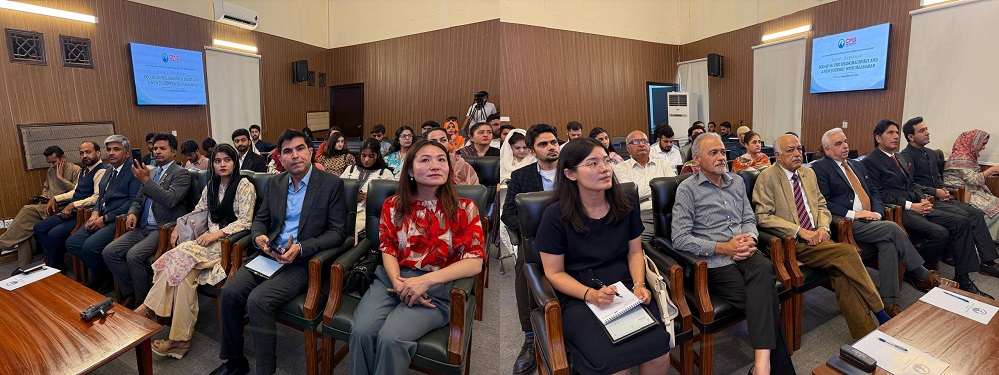
ISLAMABAD — Pakistan formally assumed the rotating chairmanship of the Shanghai Cooperation Organisation (SCO) on September 1, 2026, at the Bishkek Summit, marking a pivotal moment in the country’s engagement with the Eurasian regional order. On the very day this transition took place, the Institute of Regional Studies (IRS), Islamabad, in collaboration with China Media Group (CMG), hosted a seminar titled “SCO at 25: The Shanghai Spirit and a New Journey with Islamabad,” bringing together diplomats, policymakers, academics and media representatives to examine what Pakistan’s new leadership role means for regional peace, cooperation and development.
Federal Minister Highlights Lessons from China’s Development Model
Federal Minister for the Board of Investment, Mr. Qaiser Ahmed Sheikh, attended as Chief Guest and used the platform to call for a renewed national focus on peace, dialogue, economic cooperation and sustained development. He emphasized that Pakistan stands to gain significantly by studying the Shanghai Spirit alongside China’s own economic transformation.
Citing China’s success in lifting nearly 800 million people out of poverty, the Minister urged policymakers to closely examine the mechanisms behind this achievement and extract lessons applicable to Pakistan’s development trajectory. He stressed that peaceful resolution of disputes, expanded regional connectivity and deeper economic cooperation must remain central pillars of Pakistan’s foreign and economic policy as it takes on the SCO chair.
Gwadar: The Gateway Linking Pakistan to Central Asia and Eurasia
A key highlight of the Minister’s address was the strategic potential of Gwadar Port to strengthen Pakistan’s links with Central Asia and the wider Eurasian landmass. Positioned at the mouth of the Persian Gulf and developed as the flagship node of the China-Pakistan Economic Corridor (CPEC), Gwadar offers landlocked Central Asian states — as well as western China — the shortest and most direct maritime access route to global markets.
As Pakistan assumes SCO leadership, Gwadar’s role takes on renewed significance. A fully operationalized Gwadar could serve as a critical trade and energy corridor connecting the Arabian Sea to Kashgar, and from there onward to Central Asian capitals such as Dushanbe, Tashkent and Bishkek. Analysts at the seminar noted that realizing this potential requires accelerated infrastructure development, streamlined customs and transit regimes, and closer coordination among SCO member states on connectivity financing — precisely the kind of cooperative, consensus-driven approach the Shanghai Spirit was designed to encourage.
By positioning Gwadar as a hub within the SCO’s broader connectivity agenda, Pakistan can transform its geography from a peripheral concern into a central Eurasian asset, linking South Asia, Central Asia, the Middle East and China through trade, energy and logistics networks.
Understanding the Shanghai Spirit: Mutual Respect, Dialogue and Consensus
Opening the seminar, Ambassador Jauhar Saleem, President of IRS, reflected on decades of diplomatic experience, noting that most negotiated formulations of regional cooperation fail to survive changing political tides. The Shanghai Spirit, he observed, has not only endured for 25 years but has actively prospered — precisely because it does not require member states to resemble one another politically, economically or culturally.
This distinctive feature of the Shanghai Spirit — anchored in mutual respect, equality, consultation, respect for diverse civilizations and the pursuit of common development — was repeatedly underscored throughout the seminar as the foundation of the SCO’s durability. Senator Mushahid Hussain Sayed, Chairman of the Pakistan-China Institute, delivered the keynote address, reinforcing that the SCO’s model of dialogue over confrontation and consensus over coercion offers a viable template for resolving regional tensions across Eurasia.
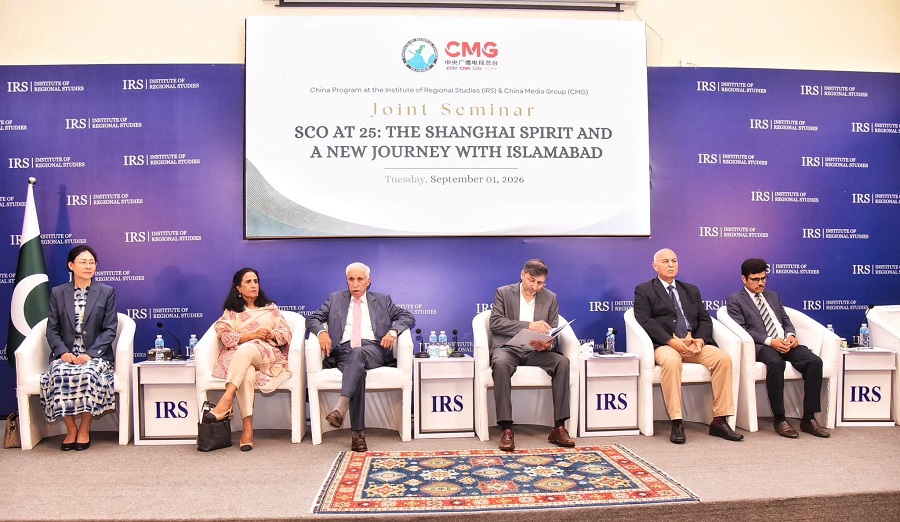
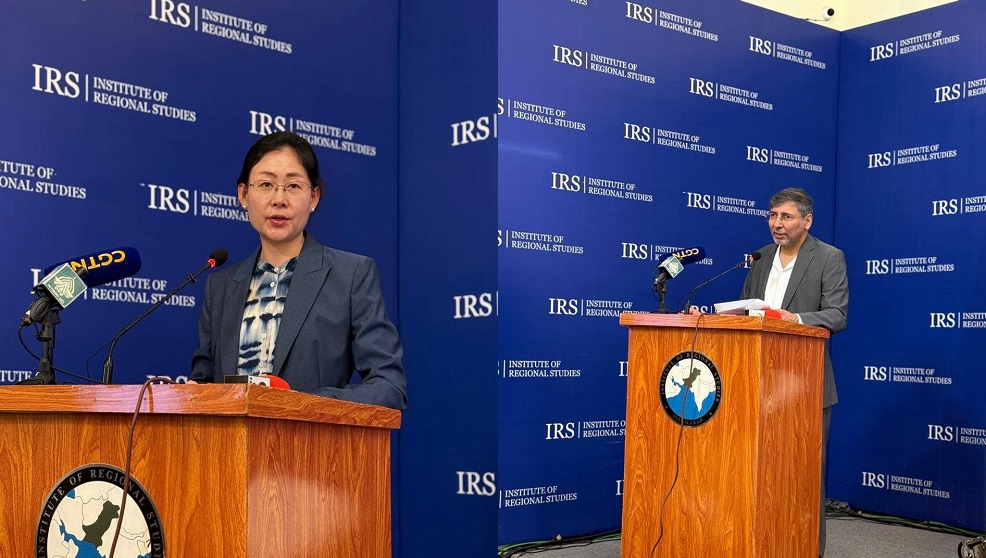
Ms. Zhuang Xinyan, Counselor at the Embassy of the People’s Republic of China, offered special remarks highlighting China’s continued commitment to the SCO framework as a vehicle for shared prosperity rather than zero-sum competition.
The panel discussion featured Ambassador Naela Chohan, Dr. Muhammad Khan, Dr. Shafqat Munir Ahmad of the Sustainable Development Policy Institute (SDPI), and Mr. Muhammad Ramzan Ali of PTV, who collectively examined how the values of the Shanghai Spirit — peaceful cooperation, non-interference and joint development — can be translated into practical policy outcomes for regional stability and connectivity.
Dr. Usman Chohan of IRS offered concluding remarks, followed by a vote of thanks from Mr. Tasawar Zaman Babar, Director Program and PR at CGTN Urdu, China Media Group. Ms. Nabila Jaffer, Head of the China Program at IRS, co-organized and moderated the proceedings, ensuring a wide-ranging exchange of perspectives from academia, diplomacy and media.
Why the Shanghai Spirit Matters for Regional Stability
Participants agreed that as global geopolitical fault lines deepen, the SCO’s founding principles offer a rare working model of multilateral cooperation grounded not in ideological alignment but in practical consensus-building. For a diverse membership spanning China, Russia, India, Pakistan and the Central Asian republics, the Shanghai Spirit’s emphasis on dialogue over confrontation has allowed the organisation to manage — rather than suppress — differences among its members.
Speakers noted that Pakistan’s chairmanship arrives at a moment when connectivity, counter-terrorism cooperation and economic integration are more urgent than ever across Eurasia. Applying the Shanghai Spirit’s principles to challenges such as trade facilitation, energy security and infrastructure financing could help unlock the SCO’s full potential as a driver of shared prosperity.
Conclusion: A New Chapter as Pakistan Takes the SCO Chair
As the Shanghai Cooperation Organisation marks 25 years since its founding in 2001, Pakistan’s assumption of the rotating chairmanship represents both a milestone and a responsibility. The Bishkek Summit handover, coinciding with the Islamabad seminar, symbolically links Pakistan’s leadership to the broader Eurasian project of peace, connectivity and cooperative development that the Shanghai Spirit embodies.
With strategic assets like Gwadar Port positioning the country as a natural bridge between South Asia, Central Asia and China, and with policymakers signaling renewed commitment to dialogue-based regional diplomacy, Pakistan’s SCO chairmanship offers an opportunity to advance a shared vision of stability, connectivity and prosperity across the Eurasian region — carrying forward the Shanghai Spirit’s quarter-century legacy into its next chapter.
This article is based on proceedings from the seminar “SCO at 25: The Shanghai Spirit and a New Journey with Islamabad,” held on September 1, 2026, jointly organised by the Institute of Regional Studies (IRS), Islamabad, and China Media Group (CMG).