Pakistan Assumes the Chairmanship of the SCO Plus at Bishkek
Islamabad takes the helm of the Shanghai Cooperation Organization, setting the stage to host the bloc’s next Heads of State Summit in 2027

-
Pakistan assumes the chairmanship of the SCO Plus at Bishkek
-
Islamabad takes the helm of the Shanghai Cooperation Organization, setting the stage to host the bloc’s next Heads of State Summit in 2027
-
PM Shehbaz Sharif unveils action plan themed “Turning Vision into Action, Connectivity, Innovation and Shared Prosperity” as Islamabad takes the helm at the Bishkek summit
-
Pakistan’s Contribution to Eurasia’s Peaceful Development
-
By: Muhammad Arif, Editor NSN.Asia
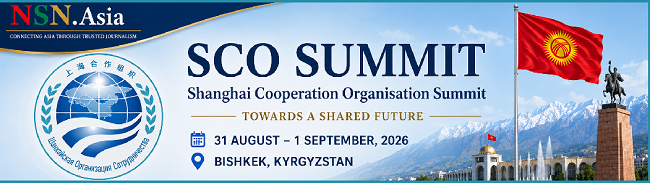
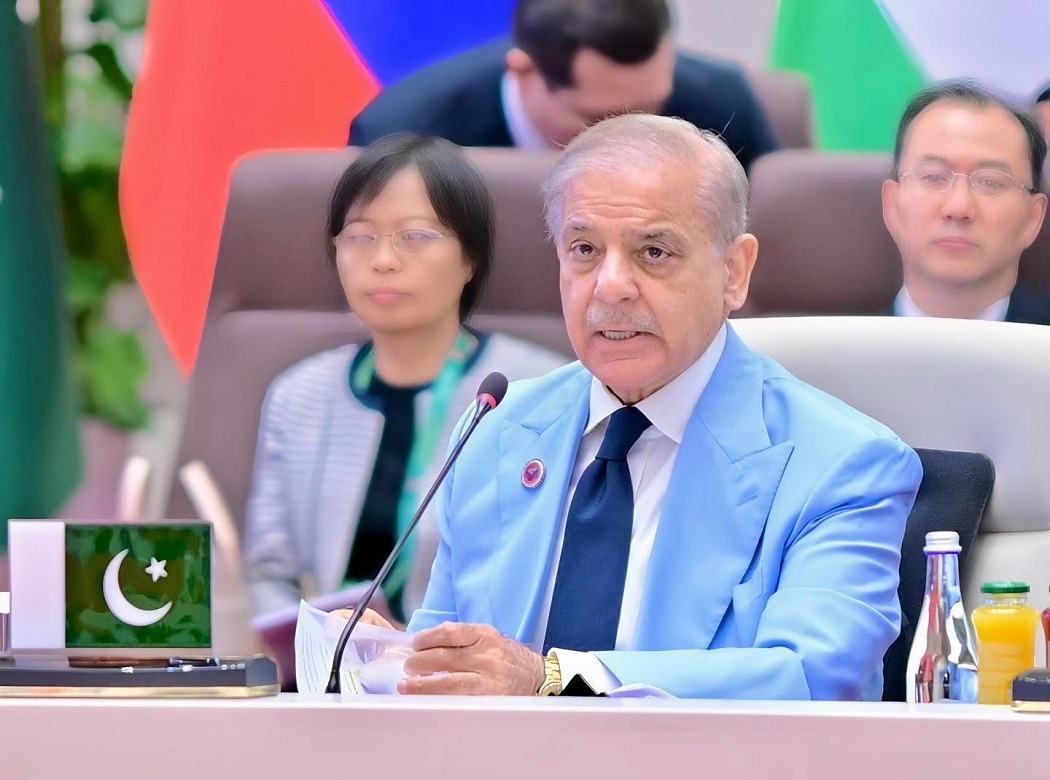
Bishkek/Kyrgyzstan : Pakistan has formally assumed the chairmanship of the SCO Plus, taking over the mantle at the Council of Heads of State Summit in Bishkek, Kyrgyzstan. Prime Minister Muhammad Shehbaz Sharif, addressing the summit, said Pakistan takes on the role “with a clear resolve to advance regional peace, prosperity and cooperation, uphold the UN Charter, support reform of the UN, protect shared water resources, combat terrorism, and prioritize IT and AI, energy development, poverty reduction, disaster management, health, culture and sports.”
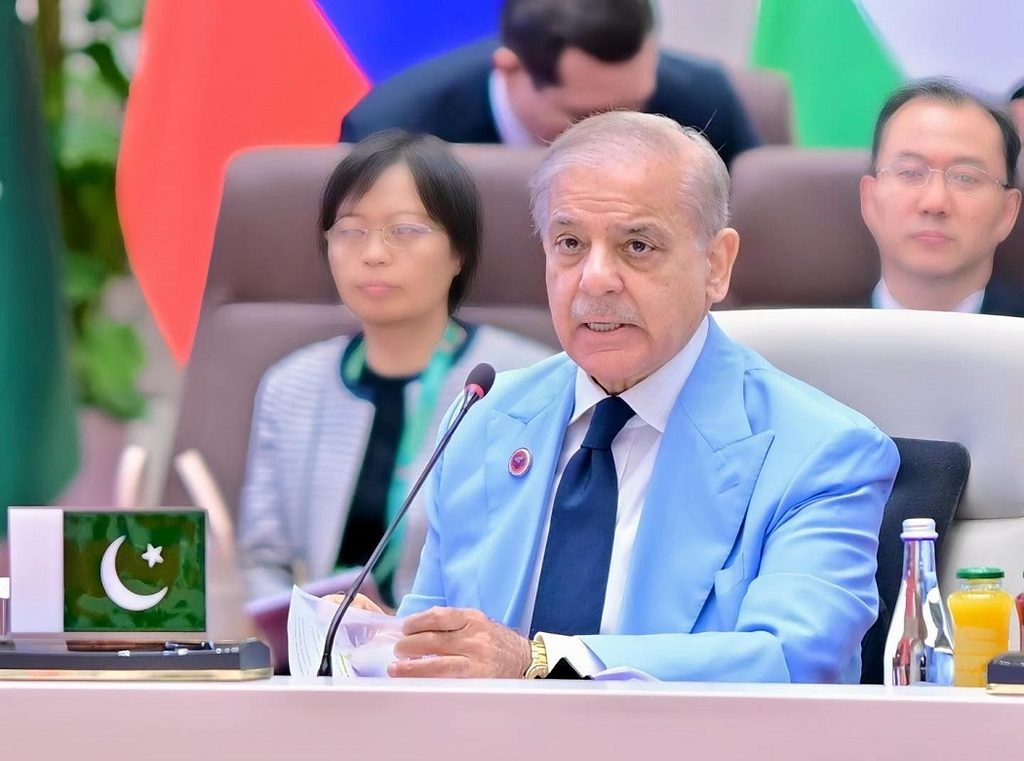
The handover positions Islamabad to steer the SCO’s agenda over the coming year, marking one of Pakistan’s most prominent turns on the multilateral stage since it joined the organization as a full member in 2017.
Pakistan’s Role as Host and Chair of the SCO
Outlining the priorities of Pakistan’s tenure, PM Shehbaz Sharif told the summit: “As Pakistan assumes the chairmanship of the SCO, we are proposing an action plan that shall prioritize key sectors including IT and AI, energy development, poverty reduction, disaster management, health, culture and sports. Pakistan’s SCO chairmanship shall be pursued under the theme ‘Turning Vision into Action, Connectivity, Innovation and Shared Prosperity.’ We undertake this responsibility with humility, hope and abiding faith that connectivity will bring our peoples closer, innovation will open new doors of opportunity and shared prosperity will reach every home.”
As chair, Pakistan takes on responsibility for coordinating the SCO’s ministerial meetings, working groups, and preparatory sessions over the coming year, while steering the thematic priorities laid out in Islamabad’s action plan. Chairing nations typically use the position to spotlight issues of particular national and regional interest, and Pakistan has signaled it will emphasize counterterrorism cooperation, regional connectivity, and expanded trade and economic integration across South and Central Asia.
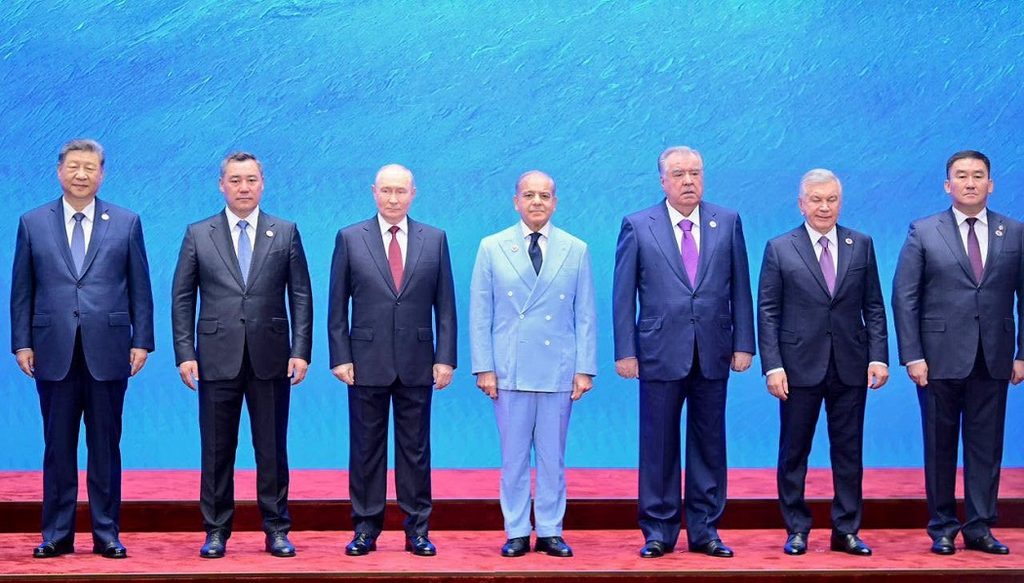
The chairmanship places Pakistan at the center of high-level Eurasian diplomacy, working alongside heads of state from across the SCO’s ten-member bloc — including China, Russia, India, Kazakhstan, Kyrgyzstan, Tajikistan, Uzbekistan, Iran, and Belarus — a grouping that spans South Asia, Central Asia, the Middle East, and Eastern Europe.
Speaking separately at the SCO Plus Meeting 2026 in Bishkek, PM Shehbaz Sharif underscored connectivity as central to his government’s regional vision: “For years, I have strongly advocated regional connectivity as the key to our prosperity. Today, connectivity is no longer a choice. It is a strategic imperative. The recent crisis has also proven that diversified transport networks, secure energy corridors and resilient supply chains are indispensable to our collective security. The China-Pakistan Economic Corridor continues to serve as a gateway linking the regional economies to the Arabian Sea.” He added that “as the permanent chair of the Special Working Group of the SCO on poverty reduction, Pakistan will continue to strengthen social protection and promote inclusive and sustainable development across the SCO region.”
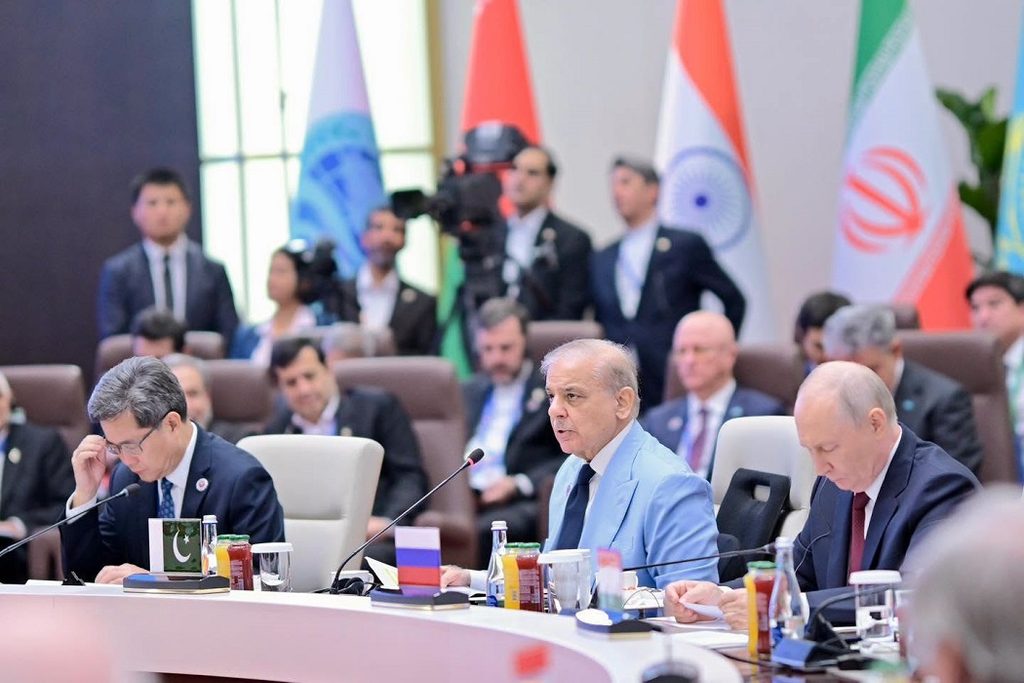
For Pakistan, the chairmanship carries both opportunity and complexity. It offers a platform to reinforce ties with key partners like China, while also managing the SCO’s characteristic dynamic of bringing together member states with unresolved bilateral tensions — most notably its own relationship with fellow SCO member India — under one cooperative framework. Analysts note that Pakistan’s tenure will be watched closely for how it balances national priorities with the consensus-driven, non-confrontational diplomatic style the SCO has cultivated among its members.
Pakistan’s assumption of the chair also comes with practical responsibilities: convening senior officials’ meetings, foreign ministers’ councils, and sectoral dialogues on security, trade, and cultural cooperation throughout the year, building toward the transfer of the chairmanship at the next summit.
Pakistan’s Contribution to Eurasia’s Peaceful Development
Beyond the ceremonial weight of the chairmanship, Pakistan has increasingly positioned itself as a contributor to Eurasia’s broader connectivity and stability agenda — a role it is expected to lean into during its tenure at the SCO’s helm. Central to this is the China-Pakistan Economic Corridor (CPEC), the flagship project of China’s Belt and Road Initiative (BRI), which links Pakistan’s deep-water port at Gwadar to western China through a network of highways, energy projects, and industrial zones. Islamabad has consistently framed CPEC not merely as a bilateral undertaking but as a node in a wider Eurasian connectivity architecture, one that ties South Asia into overland trade routes stretching toward Central Asia, the Middle East, and beyond.
Digital connectivity has emerged as another pillar of Pakistan’s regional contribution. Investments in fiber-optic infrastructure, cross-border data corridors, and e-commerce facilitation are increasingly framed by Islamabad as extensions of the same connectivity logic underpinning CPEC and the BRI — efforts to knit Eurasia together not just through physical trade routes but through digital trade and communication links as well. Pakistani officials have pointed to these initiatives as part of a broader push to position the country as a transit and digital hub bridging South Asia with Central Asian and Chinese markets.
Pakistan has also cast itself as a stakeholder in regional peace and stability, arguing that its own security cooperation — including counterterrorism coordination through SCO mechanisms — supports the broader stability needed for Eurasian connectivity projects to succeed. Officials in Islamabad frequently note that sustained economic corridors like CPEC depend on a secure operating environment, and that Pakistan’s engagement on counterterrorism and border security within the SCO framework is therefore inseparable from its economic connectivity ambitions. As chair, Pakistan is expected to use this framing to advocate for closer coordination between the SCO’s security and economic tracks, presenting connectivity and stability as mutually reinforcing goals for the wider region.
News Backgrounder: The Shanghai Cooperation Organization
The SCO was formally established in 2001, evolving out of the “Shanghai Five” mechanism created in the 1990s by China, Russia, Kazakhstan, Kyrgyzstan, and Tajikistan to resolve border disputes and ease military tensions among post-Soviet neighbors. Since then, it has grown from a narrow security arrangement into a ten-member bloc spanning South Asia, Central Asia, the Middle East, and Eastern Europe.
Membership now includes China, Russia, Kazakhstan, Kyrgyzstan, Tajikistan, Uzbekistan, India, Pakistan, Iran, and Belarus — with India and Pakistan admitted in 2017, Iran in 2023, and Belarus in 2024.
Mandate: The organization’s scope has broadened considerably beyond its original security focus to encompass:
- Security cooperation, including coordinated counterterrorism efforts and confidence-building measures among member states
- Economic cooperation, including trade facilitation, regional connectivity projects, and discussions around a proposed SCO development bank
- Cultural cooperation, including exchange programs and joint cultural initiatives across the region
The chairmanship of the SCO rotates annually among member states, with the chairing country responsible for hosting that year’s Council of Heads of State Summit and setting priorities for the organization’s work throughout its term.
Conclusion
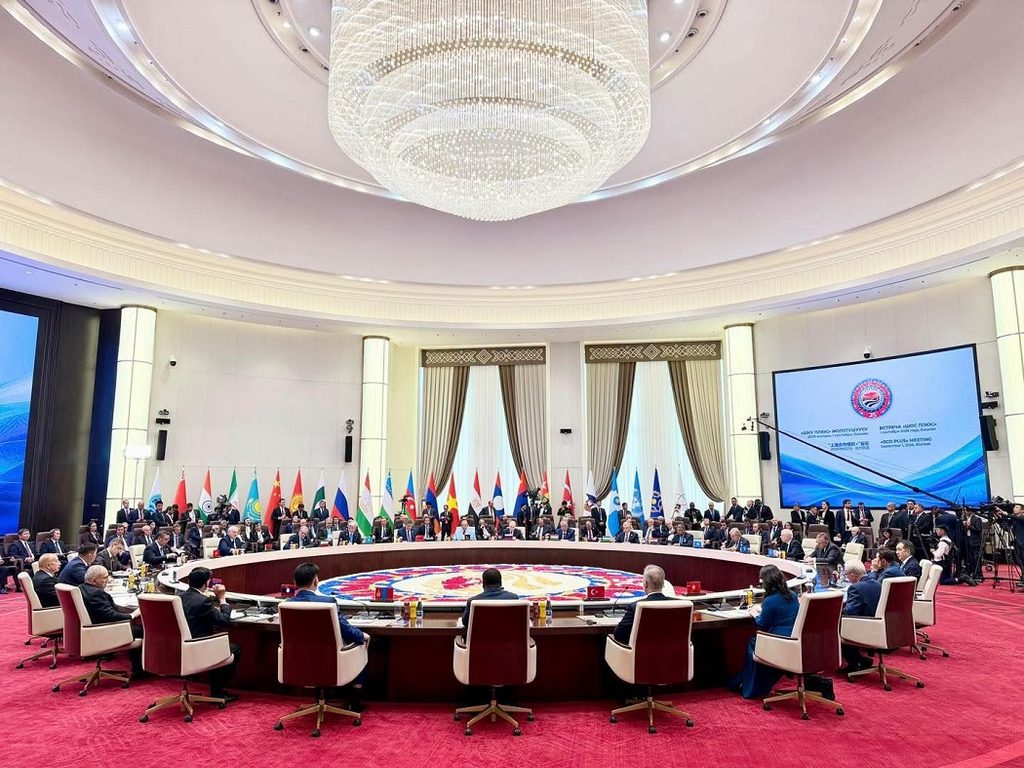
Pakistan’s assumption of the SCO Plus chairmanship, under the theme “Turning Vision into Action, Connectivity, Innovation and Shared Prosperity,” marks a significant milestone in its engagement with the organization, positioning Islamabad to shape the bloc’s priorities in the year ahead. As PM Shehbaz Sharif told the Bishkek summit, Pakistan takes on the role with “humility, hope and abiding faith that connectivity will bring our peoples closer, innovation will open new doors of opportunity and shared prosperity will reach every home.” As the SCO continues to grow in both membership and mandate, Pakistan’s tenure at the helm offers a test of the organization’s core premise — that dialogue across security, economic, and cultural lines can hold together a diverse group of states, including some with longstanding bilateral tensions. For Pakistan, and for the wider region, the chairmanship underscores the SCO’s continuing role as a driver of Eurasian regional connectivity and cooperation, linking South Asia, Central Asia, and beyond within a single cooperative framework.
Pakistan’s Role as Host of SCO 2027
As chair, Pakistan takes on responsibility for coordinating the SCO’s ministerial meetings, working groups, and preparatory sessions in the lead-up to the 2027 summit, while also setting thematic priorities for the year ahead. Chairing nations typically use the position to spotlight issues of particular national and regional interest, and Pakistan is expected to emphasize themes central to its own foreign policy agenda — including counterterrorism cooperation, regional connectivity, and expanded trade and economic integration across South and Central Asia.
Hosting the 2027 summit will place Pakistan at the center of high-level Eurasian diplomacy, welcoming heads of state from across the SCO’s ten-member bloc — including China, Russia, India, Kazakhstan, Kyrgyzstan, Tajikistan, Uzbekistan, Iran, and Belarus — to Islamabad or another host city for a gathering that brings together countries spanning South Asia, Central Asia, the Middle East, and Eastern Europe.
For Pakistan, the chairmanship carries both opportunity and complexity. It offers a platform to reinforce ties with key partners like China, while also managing the SCO’s characteristic dynamic of bringing together member states with unresolved bilateral tensions — most notably its own relationship with fellow SCO member India — under one cooperative framework. Analysts note that Pakistan’s tenure will be watched closely for how it balances national priorities with the consensus-driven, non-confrontational diplomatic style the SCO has cultivated among its members.
Pakistan’s assumption of the chair also comes with practical responsibilities: convening senior officials’ meetings, foreign ministers’ councils, and sectoral dialogues on security, trade, and cultural cooperation throughout the year, all building toward the transfer of the chairmanship at the 2027 summit itself.
News Backgrounder: The Shanghai Cooperation Organization
The SCO was formally established in 2001, evolving out of the “Shanghai Five” mechanism created in the 1990s by China, Russia, Kazakhstan, Kyrgyzstan, and Tajikistan to resolve border disputes and ease military tensions among post-Soviet neighbors. Since then, it has grown from a narrow security arrangement into a ten-member bloc spanning South Asia, Central Asia, the Middle East, and Eastern Europe.
Membership now includes China, Russia, Kazakhstan, Kyrgyzstan, Tajikistan, Uzbekistan, India, Pakistan, Iran, and Belarus — with India and Pakistan admitted in 2017, Iran in 2023, and Belarus in 2024.
Mandate: The organization’s scope has broadened considerably beyond its original security focus to encompass:
- Security cooperation, including coordinated counterterrorism efforts and confidence-building measures among member states
- Economic cooperation, including trade facilitation, regional connectivity projects, and discussions around a proposed SCO development bank
- Cultural cooperation, including exchange programs and joint cultural initiatives across the region
The chairmanship of the SCO rotates annually among member states, with the chairing country responsible for hosting that year’s Council of Heads of State Summit and setting priorities for the organization’s work throughout its term.
Conclusion
Pakistan’s assumption of the SCO chairmanship marks a significant milestone in its engagement with the organization, positioning Islamabad to shape the bloc’s priorities in the run-up to the 2027 summit. As the SCO continues to grow in both membership and mandate, Pakistan’s tenure at the helm offers a test of the organization’s core premise — that dialogue across security, economic, and cultural lines can hold together a diverse group of states, including some with longstanding bilateral tensions. For Pakistan, and for the wider region, the chairmanship underscores the SCO’s continuing role as a driver of Eurasian regional connectivity and cooperation, linking South Asia, Central Asia, and beyond within a single cooperative framework.