ConnectivityCentral AsiaEventsNewsNSNPhotosSilk Road
SCO2026: Bishkek Summit from Aug 31–Sept 1, 2026, with Connectivity Atop the Agenda
Why SCO2026 Summit's Focus on Connectivity Matters

-
Bishkek Summit 2026: SCO Leaders to Meet August 31–September 1 with Connectivity Atop the Agenda
-
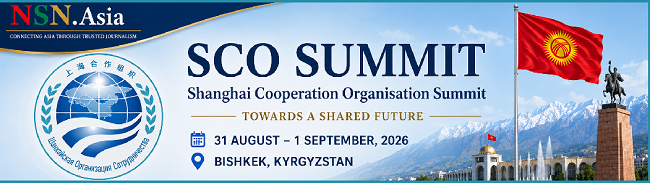
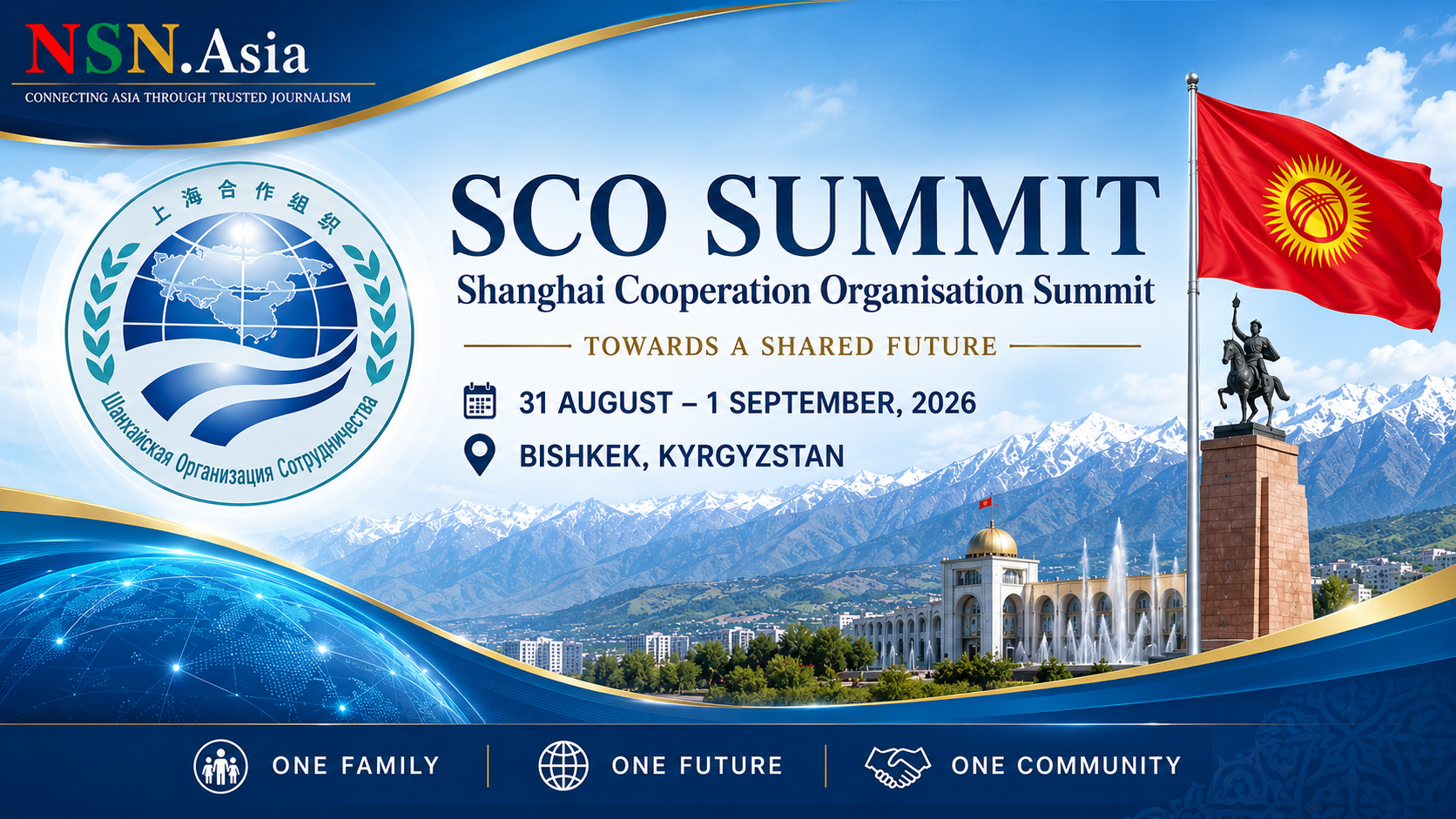
SCO2026: Heads of state from the Shanghai Cooperation Organisation are set to gather in Bishkek, Kyrgyzstan, on August 31–September 1, 2026, for a summit built around transport corridors, energy security, digital cooperation and a proposed regional development bank — with Eurasian connectivity emerging as the meeting’s defining theme.
-
Why SCO2026 Summit’s Focus on Connectivity Matters
By Muhammad Arif, Editor NSN.Asia
Background: How Bishkek Came Together for SCO2026
Kyrgyzstan took over the Shanghai Cooperation Organisation’s rotating chairmanship this year, succeeding China, whose 2025 summit in Tianjin strengthened trade and infrastructure ties between Beijing and the Central Asian republics. As host and chair for 2026, Kyrgyzstan built its year-long program around regional stability, transport links, economic cooperation, digital technology and sustainable development — priorities that now culminate in the Bishkek summit.
Preparations reached their final stage last month, when SCO foreign ministers met in Cholpon-Ata, Kyrgyzstan, to finalize a package of documents on trade, transport connectivity, energy, digitalisation and cultural and humanitarian ties. Russian Foreign Minister Sergey Lavrov confirmed that ministers approved the package, along with a joint statement, for submission to heads of state in Bishkek. Kyrgyzstan’s President Sadyr Japarov has spent the past year engaging fellow leaders directly on the summit’s priorities, including a meeting with China’s Xi Jinping to review plans for deepening cooperation ahead of the handover of the chairmanship.
The SCO2026 summit brings together an organization that now spans much of the Eurasian landmass — China, Russia, India, Pakistan, Iran, Belarus and the Central Asian states — making questions of trade routes, energy grids and digital infrastructure central to what leaders will discuss in Bishkek.
What Leaders Will Discuss in Bishkek
Based on the ministerial preparations and Kyrgyzstan’s chairmanship priorities, the Bishkek agenda is expected to center on:
-
Transport connectivity — Advancing potential road and rail links between China, Central Asia, Russia, South Asia and West Asia, a long-standing priority for a bloc whose members span nearly the entire Eurasian continent.
-
A proposed SCO development bank — Establishing a dedicated financial mechanism to fund infrastructure and small-business projects across member states.
-
Energy cooperation — Discussions on energy security, cross-border infrastructure and renewable power among a bloc that includes both major energy producers and large consumers.
-
Digitalisation and artificial intelligence — Kyrgyzstan has pushed initiatives on AI, cybersecurity and digital infrastructure, with these issues, alongside healthcare and international information security, expected to reach the leader-level agenda.
-
Climate and water security — A sensitive issue for Central Asia, where shared river systems and glacial melt affect multiple member states simultaneously.
-
Security cooperation — The bloc’s founding mandate continues through the Regional Anti-Terrorist Structure, with member states having worked through the year on coordinated border and counterterrorism operations ahead of the summit.