Pakistan’s New Envoy to Beijing Gilani Calls on DPM Dar as Islamabad Looks to CPEC 2.0
Ambassador-designate Ali Asad Gilani calls on DPM Ishaq Dar as Pakistan and China mark 75 years of ties and shift focus to CPEC 2.0

-
Pakistan’s New Envoy to Beijing: Ambassador-designate Gilani Calls on DPM Dar as Islamabad Looks to CPEC 2.0
-
As Pakistan China celeberate 75 Years of an “All-Weather” Relationship, the new envoy is expected to evolve Pakistan China ties into one of the most durable bilateral partnerships in modern international diplomacy
By: Muhammad Arif, Editor NSN.Asia
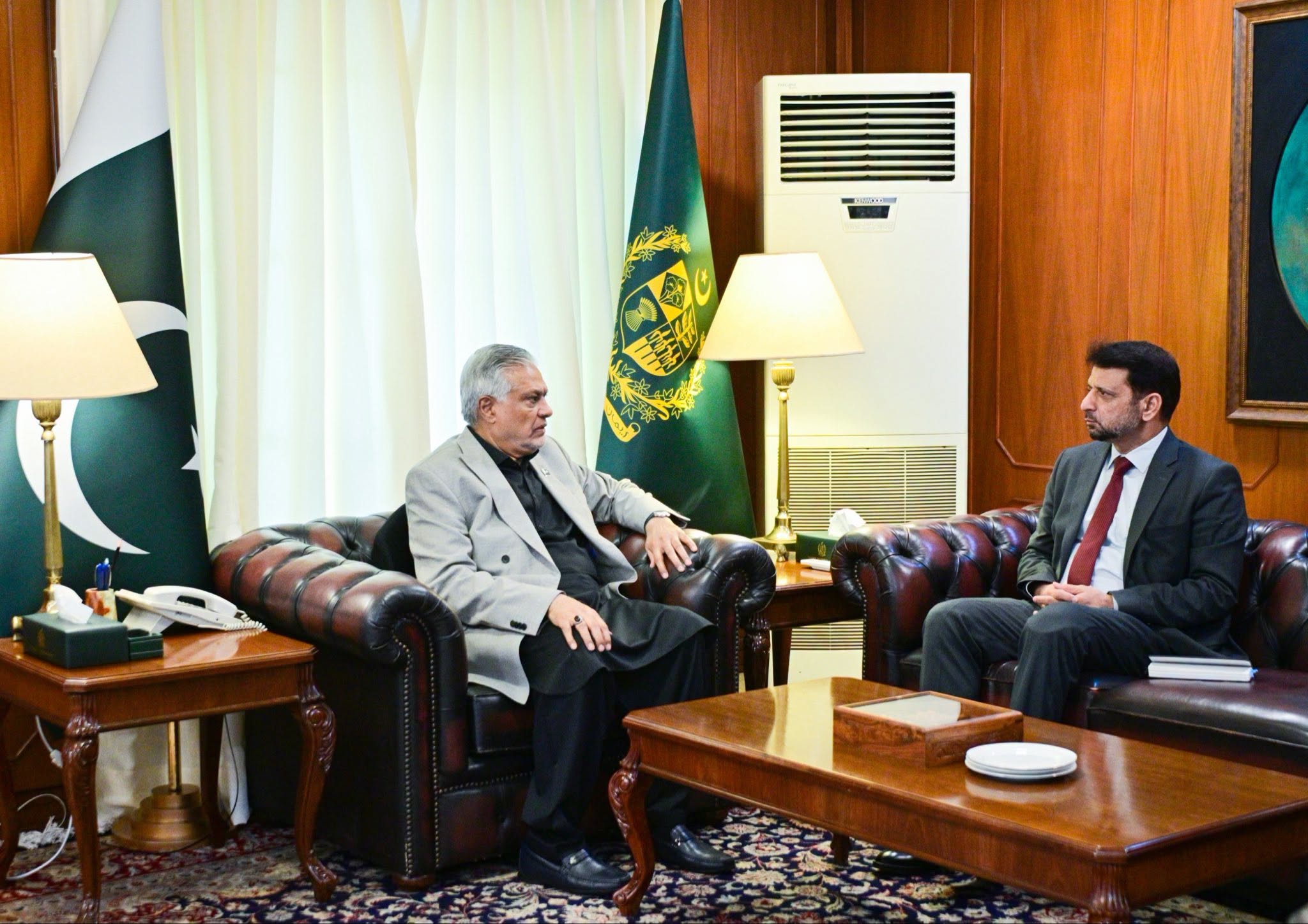
Islamabad: Pakistan’s Ambassador-designate to China, Ambassador Ali Asad Gilani, called on Deputy Prime Minister and Foreign Minister Senator Mohammad Ishaq Dar in Islamabad, in what marks a symbolically important handover as Islamabad prepares to install new leadership at one of its most consequential diplomatic postings. The meeting, brief in format but heavy in substance, offered a window into how Pakistan intends to steward its relationship with Beijing at a moment when both countries are marking 75 years of diplomatic ties and looking ahead to a more economically driven next chapter of cooperation.
The Meeting: A Vote of Confidence for Beijing’s Next Envoy
During the call-on, DPM/FM Dar congratulated Ambassador-designate Gilani on his appointment and used the occasion to underscore what he described as the “special importance” Pakistan attaches to its long-standing relationship with China. Dar specifically emphasized the need to further deepen the All-Weather Strategic Cooperative Partnership across a wide spectrum of areas — trade and investment, connectivity, the China-Pakistan Economic Corridor (CPEC), agriculture, science and technology, education, and people-to-people exchanges.
Dar also took the opportunity to appreciate Gilani’s prior service as Additional Secretary (Asia Pacific) within Pakistan’s Ministry of Foreign Affairs, a role that placed him at the center of Islamabad’s engagement with China and the wider Asia-Pacific region. Citing that experience, the Deputy Prime Minister expressed confidence that Gilani would bring valuable institutional knowledge to his new post, and wished him a successful tenure in Beijing. Additional biographical detail on Ambassador-designate Gilani’s career has been published by Silk Road News and is available for readers seeking a fuller profile of the incoming envoy.
While the meeting itself was procedural in nature — a customary courtesy call ahead of an envoy’s departure for post — its timing and content carry weight. Pakistan is, in effect, signaling continuity and seriousness of purpose in its China relationship at precisely the moment the bilateral partnership is being asked to evolve from a construction-and-connectivity phase into a broader, more diversified economic partnership.
A Backgrounder: 75 Years of an “All-Weather” Relationship
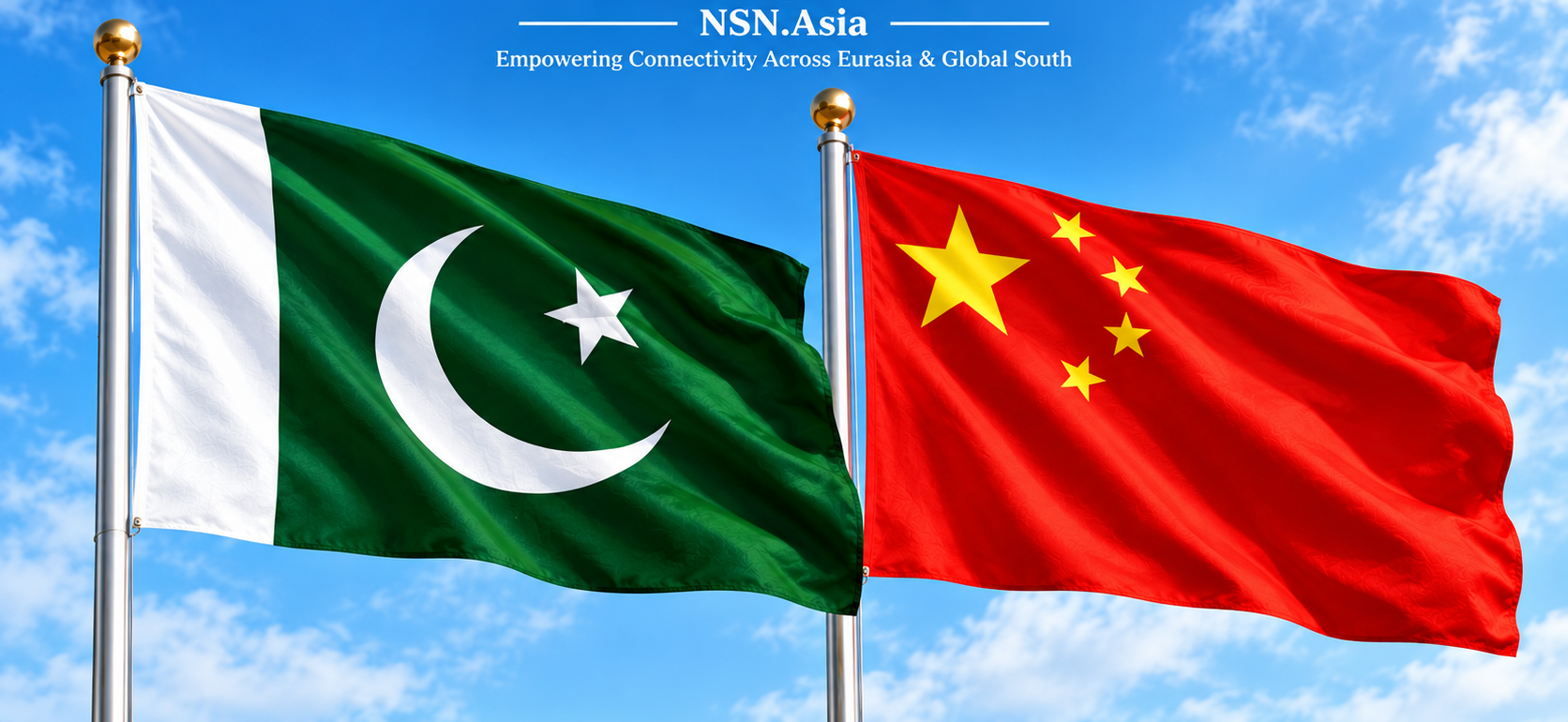
Pakistan and China formally established diplomatic relations in 1951, and over the ensuing 75 years the relationship has evolved into one of the most durable bilateral partnerships in modern international politics — routinely described by officials on both sides as “all-weather” and “iron-clad.” What began as a Cold War-era relationship rooted in shared strategic interests, particularly vis-à-vis India, gradually broadened into deep cooperation across defense, infrastructure, trade, and diplomatic coordination at multilateral forums.
The relationship has weathered significant regional and global shifts — the end of the Cold War, the post-9/11 security environment, and more recently, intensifying US-China strategic competition — without any major rupture. Pakistan has consistently backed China’s core interests on issues such as Taiwan, Xinjiang, and Tibet, while China has offered Pakistan sustained diplomatic cover at the United Nations Security Council, particularly on Kashmir-related matters, along with substantial military hardware transfers and, since 2015, the anchor investment of the China-Pakistan Economic Corridor.
The 75th anniversary milestone has become an occasion for both governments to publicly reaffirm the relationship’s strategic depth, with a string of high-level visits, academic and cultural exchanges — including recent joint scholarly initiatives between Pakistani and Chinese universities — and renewed rhetorical commitments to deepen ties “across all domains.”
From CPEC to CPEC 2.0: A Shift in Strategic Emphasis
The original phase of CPEC, launched in 2015 as part of China’s Belt and Road Initiative, was defined largely by big-ticket infrastructure: power plants, highways, and the flagship development of Gwadar Port. That first phase delivered substantial physical infrastructure but also left Pakistan grappling with debt servicing pressures and criticism — both domestic and international — over financing transparency and the pace of Chinese-funded project rollouts.
CPEC 2.0, the term now widely used by officials in both Islamabad and Beijing, represents a deliberate pivot away from that earlier, infrastructure-heavy model toward a framework centered on industrial cooperation, agricultural modernization, special economic zones, and relocated Chinese manufacturing capacity. The stated goal is to move CPEC from a corridor of concrete and steel to a corridor of production, trade, and technology transfer — one intended to plug Pakistan’s underdeveloped industrial base into Chinese supply chains and export markets.
Dar’s explicit mention of trade and investment, agriculture, and science and technology in his meeting with Gilani reflects this shift almost precisely. These are not the sectors that defined CPEC’s first decade; they are the sectors expected to define its second. For Islamabad, the appeal is straightforward — an industrial and agricultural upgrade that could help address chronic trade deficits and low export competitiveness. For Beijing, CPEC 2.0 offers a mechanism to diversify manufacturing exposure amid rising costs at home and mounting geopolitical friction over trade routes elsewhere in Asia.
Geoeconomics: The Way Forward
The broader significance of Gilani’s appointment, and of Dar’s framing of the relationship during their meeting, lies in what it suggests about how Pakistan intends to position itself in an increasingly geoeconomically contested region. As global supply chains realign in response to US-China tensions, as Gulf states diversify their own economic partnerships eastward, and as connectivity projects across Central and South Asia multiply, Pakistan’s ability to convert its geography — sitting at the junction of South Asia, Central Asia, and the Arabian Sea — into genuine economic leverage will depend heavily on execution, not rhetoric.
Several factors will determine whether CPEC 2.0 delivers on its promise. First, Pakistan’s macroeconomic stability, security environment — particularly around Chinese personnel and projects, which have faced repeated militant attacks in recent years — and its ability to offer a predictable regulatory environment will shape how much additional Chinese industrial and private capital actually materializes beyond state-to-state commitments. Second, Gwadar Port’s long-delayed potential as a regional transshipment and energy hub remains contingent on both security guarantees and complementary infrastructure that has yet to be fully realized. Third, Pakistan’s success in diversifying its economic partnerships — deepening ties with Gulf states, pursuing IMF-backed reform, and courting other foreign direct investment — will determine whether it approaches Beijing from a position of strength or overdependence.
For the incoming ambassador, these dynamics translate into a demanding brief. Gilani’s institutional experience in Asia-Pacific affairs positions him to manage the diplomatic architecture of the relationship, but the more consequential test will be whether Islamabad can translate high-level political commitments — the kind reaffirmed in Tuesday’s meeting — into the tangible industrial, agricultural, and technological outcomes that CPEC 2.0 promises. Seventy-five years of political and strategic alignment between Pakistan and China have proven remarkably resilient; the coming years will test whether that alignment can be converted into the kind of deep economic integration both sides say they now want. If it succeeds, Pakistan stands to gain a genuine geoeconomic anchor in an increasingly multipolar Asia. If it stalls, the relationship risks remaining what critics have long argued it partly still is — strategically deep, but economically underdelivered.