Pakistan, Tsinghua Launch “Indus and Yangtze” Book
Pakistan's Embassy in Beijing and Tsinghua University launch "Indus and Yangtze," marking 75 years of Pakistan-China diplomatic relations.

-
Pakistan, Tsinghua Launch “Indus and Yangtze” Book
-
Pakistan’s Embassy in Beijing, and Tsinghua University launch “Indus and Yangtze,” marking 75 years of Pakistan-China diplomatic relations.
-
Book launch coincides with the 75th anniversary of the establishment of diplomatic relations between Pakistan and China
By: Muhammad Arif, Editor NSN.Asia
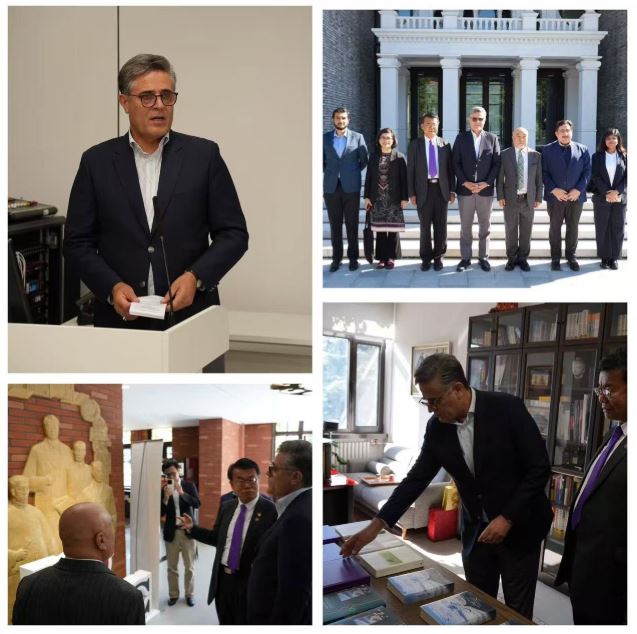
Beijing: Beijing played host this week to a milestone cultural and academic event as the Embassy of Pakistan, the Pakistan Center for Culture and Communication, and the School of Journalism and Communication at Tsinghua University jointly launched the book Indus and Yangtze: A Journey of Two Rivers from One Origin. The launch, timed to coincide with the 75th anniversary of the establishment of diplomatic relations between Pakistan and China, brought together diplomats, scholars, researchers, and students for a wide-ranging celebration of the two countries’ historical and cultural ties.
A Multilingual Tribute to Shared History
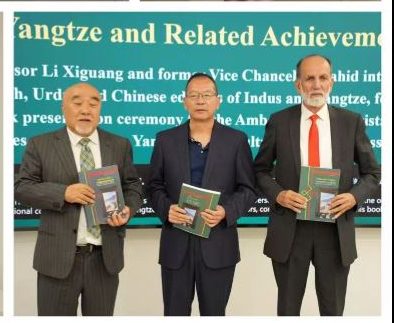
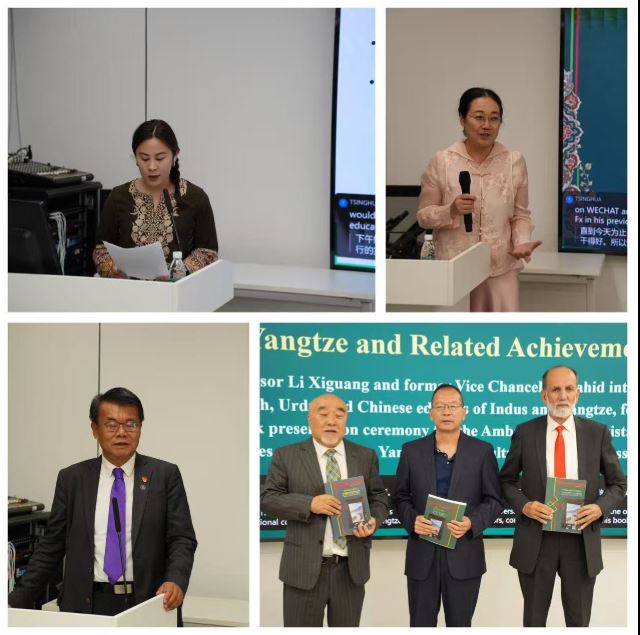
The centerpiece of the event was the unveiling of the book in three languages — English, Urdu, and Chinese — reflecting its ambition to reach audiences across both nations. The volume was edited by Professor Li Xiguang, former Executive Vice Dean of the School of Journalism and Communication at Tsinghua University, and Professor Zahid Anwer, former Vice Chancellor of the University of Peshawar. In their remarks, the editors focused on the shared historical and cultural connections linking the civilizations of the Indus and Yangtze river basins, framing the book as a scholarly contribution toward deeper mutual understanding between the peoples of Pakistan and China.
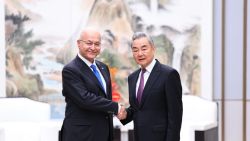
H.E. Khalil Hashmi, Ambassador of Pakistan to China, headlined the launch with a keynote address welcoming the multilingual monograph. He commended Professor Li, Professor Anwer, and their research teams for what he described as extensive work uncovering the geographical, historical, economic, and cultural linkages tied to the two river systems that have shaped both civilizations.
Beyond the Book: A Showcase of Research and Oral History
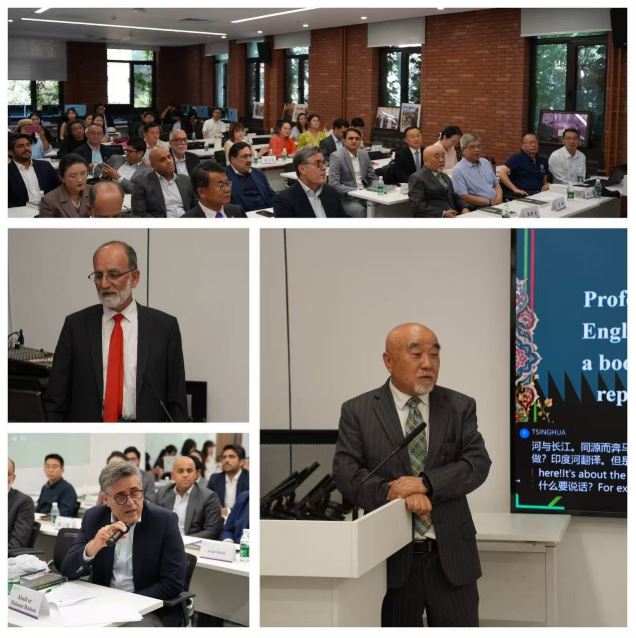
The launch event extended well beyond the book itself, functioning as a broader showcase of Chinese academic engagement with Pakistan studies. Presentations from Dr. Wen Sanmei and Dr. Liu Bei highlighted the expanding depth and diversity of Pakistan-focused research being conducted at Chinese universities and research institutions.
One of the day’s standout contributions was “An Oral History of the Builders of the Karakoram Highway,” presented by Lecturer Zhang Jing. The project documents firsthand accounts from those who worked on constructing the Karakoram Highway — the landmark road linking Pakistan and China through some of the world’s most challenging mountain terrain — and was accompanied by documentary footage that brought these personal histories to the audience in vivid detail.
Another major presentation centered on the Yarkand River Valley — Exploring the Ancient Route to Pakistan project, led by Professor Guo Xiaoke and Li Zhenyuan. Combining field research, historical inquiry, and documentary filmmaking, the project traces ancient routes and exchanges that historically connected the two regions, offering a deeper look at the centuries-old links predating modern diplomatic relations.
Professor Li Xiguang also presented additional research on historical Pakistan-China exchanges, including a study titled “The Westward Route in Search of the Dharma to the Kingdom of Uddiyana,” which traced the long history of cultural interaction and movement across Central and South Asia — underscoring that the connections between the two nations stretch back far beyond the formal establishment of diplomatic ties 75 years ago.
A Gathering of Scholars and Institutions
The event drew a notable roster of senior academics and institutional representatives, reflecting the breadth of Chinese scholarly interest in Pakistan. Among those contributing to the dialogue were Shi Anbin, Party Secretary of the School of Journalism and Communication at Tsinghua University; Yao Yuanjun, Senior Advisor and Deputy Secretary-General of the Yangtze River Culture Promotion Association; Zhang Heqing; Professor Xiang Debao of Beijing Foreign Studies University; Professor Guo Xiaoke of Communication University of China; Chen Ruihua, Director of the Pakistan Study Center at Nankai University; Zhang Chaowen, Director of the Pakistan Study Center at Sichuan University; and Guo Yaling, Director of the Pakistan Study Center at Hebei Normal University.
Representatives from the CITIC Foundation for Reform and Development Studies, the Yangtze River Culture Promotion Association, and various other academic and cultural institutions also took part, underscoring the cross-institutional nature of the commemorative programme.
A Partnership Built on Three Pillars
In his address, Ambassador Hashmi used the occasion to reflect on the broader arc of Pakistan-China relations, describing the partnership as resting on three interconnected pillars: government-to-government cooperation, business-to-business engagement, and people-to-people ties. He specifically called for expanded university-to-university cooperation, greater student and faculty exchange programmes, deeper collaboration in STEM fields, expanded language learning initiatives, and continued cultural engagement between the two nations.
The Ambassador’s remarks reinforced a recurring theme of the event: that the Pakistan-China relationship, often discussed in terms of infrastructure projects and strategic cooperation, is equally rooted in decades of scholarly, cultural, and historical connection that predate — and underpin — the formal diplomatic relationship marking its 75th year.
Preserving Memory, Building New Bridges
Organizers framed the gathering as an effort to do two things simultaneously: preserve shared historical memory and create new intellectual bridges between Pakistan and China. By combining formal scholarship with oral history, documentary storytelling, and academic dialogue, the event offered a multidimensional look at a relationship that extends well beyond diplomacy and trade.
The commemorative programme closed on a lighter, more informal note, with a dinner featuring Pakistani cuisine that gave attendees a further opportunity for cultural exchange and conversation — a fitting coda to a day dedicated to celebrating 75 years of connection between the two countries.