NSNCooperationGlobal PakistanGreen AsiaNewsPakistan-China CooperationSilk Road

Pakistan, Silk Road Fund Discuss Investment in Green CPEC

Silk Road Fund Chairperson Meets Pakistan's Finance Minister in Islamabad to discuss investment, CPEC, energy, infrastructure and green Silk Road opportunities

Story Highlights
  • Silk Road Fund Chairperson Meets Pakistan's Finance Minister in #Islamabad to discuss #investment, #CPEC, #energy, infrastructure and green #SilkRoad opportunities. /
  • Pakistan, Silk Road Fund Discuss Investment Green CPEC Development
  • Silk Road Fund Chairperson Zhu is in Islamabad to discuss investment, CPEC, energy, infrastructure and green Silk Road opportunities
  • Silk Road Fund Signals Interest in investing in Green CPEC Projects
By: Muhammad Arif, Editor NSN.Asia
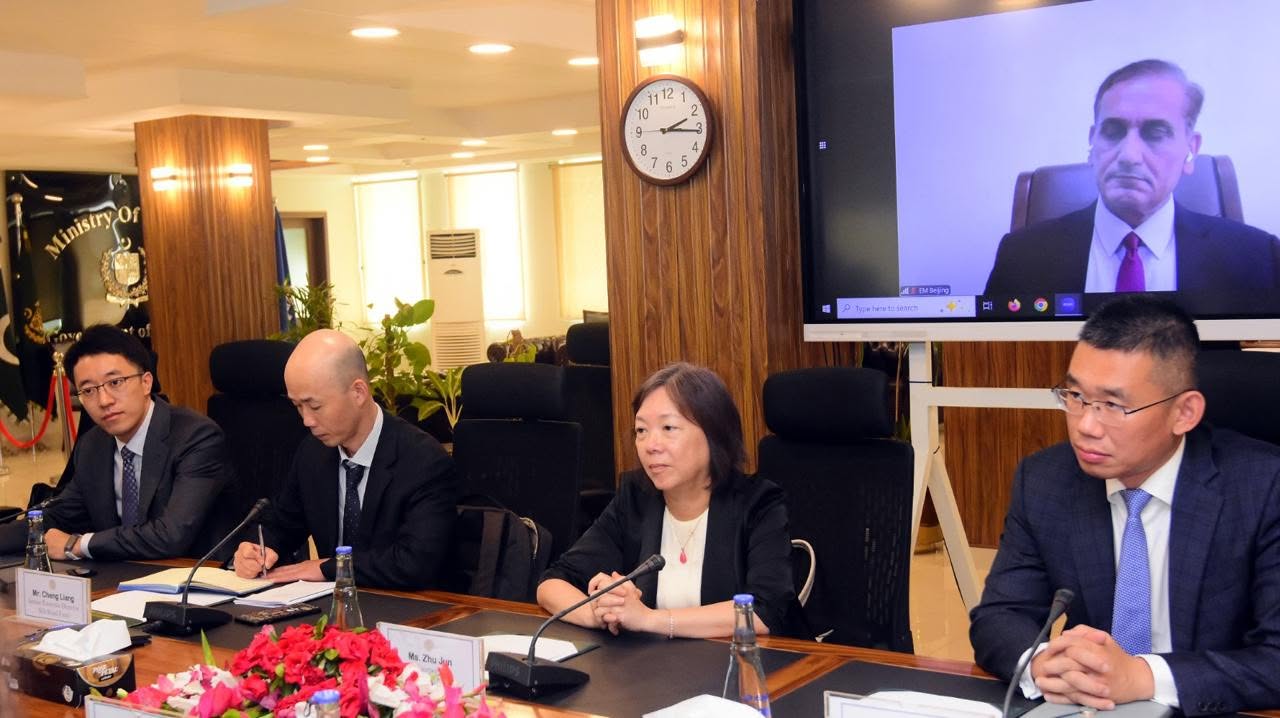
ISLAMABAD: Federal Minister for Finance and Revenue Senator Muhammad Aurangzeb held a high-level meeting with a delegation of the Silk Road Fund (SRF) led by its Chairperson, Ms. Zhu Jun, in Islamabad, with discussions focusing on investment opportunities, economic cooperation, infrastructure, energy and Pakistan’s evolving private-sector investment landscape.
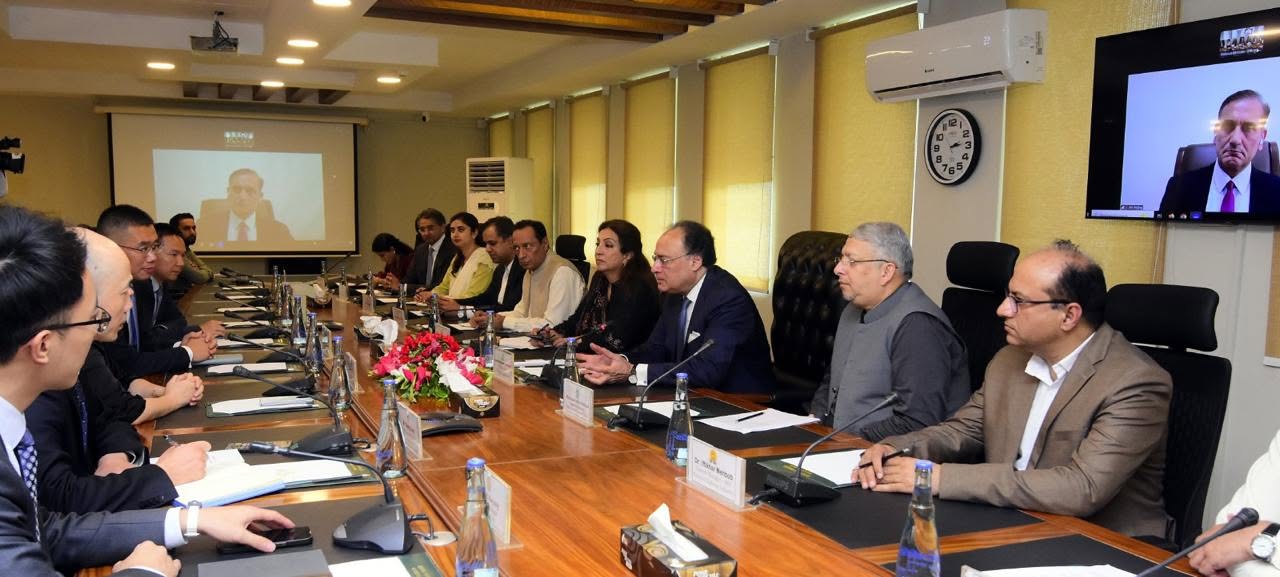
Pakistan Finance Minister Meets Silk Road Fund Delegation, Discusses Investment Opportunities and Economic Cooperation NSN Asia 2026 B
The meeting comes as Pakistan seeks to consolidate macroeconomic stability while attracting long-term domestic and international capital for productive investment. The discussions also highlighted opportunities arising from the government’s reform agenda, privatization programme and efforts to improve the business environment.
Finance Minister Muhammad Aurangzeb welcomed the Silk Road Fund delegation and briefed participants on Pakistan’s recent economic progress, including improvements in fiscal discipline, external-account stability, foreign-exchange reserves and the broader macroeconomic outlook.
He emphasized that the government’s immediate objective is to preserve economic stability while moving ahead with structural reforms capable of supporting sustainable and export-oriented growth.
  • Pakistan Highlights Economic and Structural Reforms
During the meeting, Aurangzeb outlined government initiatives aimed at strengthening domestic resource mobilization, broadening the tax base and improving tax administration through digitalization.
The minister also highlighted reforms in the energy sector, where Pakistan continues to seek greater efficiency, financial sustainability and private-sector participation. The government’s emphasis on export-led growth and a more predictable business environment was presented as an important component of its strategy to attract long-term investment.
Aurangzeb said stronger policy predictability, institutional frameworks and cross-sector reforms could create a more conducive environment for international investment.
For Pakistan, greater engagement with international institutional investors such as the Silk Road Fund could help mobilize capital for infrastructure development, industrial expansion and productive economic activity.
The World Bank has similarly identified increased productive private investment, business-environment reforms, cleaner energy and stronger resilience as important elements of Pakistan’s longer-term development strategy.
Pakistan Finance Minister Meets Silk Road Fund Delegation, Discusses Investment Opportunities and Economic Cooperation NSN Asia 2026 B
Silk Road Fund Signals Interest in Pakistani Projects
The Silk Road Fund delegation expressed interest in continued engagement with Pakistan and acknowledged progress in strengthening the country’s macroeconomic fundamentals.
Ms. Zhu Jun said the delegation had been particularly impressed by the quality and potential of several private-sector projects it had initially reviewed, as well as the capabilities of Pakistan’s private sector.
She indicated that the Fund was interested in exploring additional investment opportunities in Pakistan, particularly in infrastructure, energy, private-sector development and projects capable of generating wider economic and social benefits.
The positive assessment is significant because Pakistan is seeking to shift from dependence on short-term financial stabilization toward a more investment-driven model of economic growth.
The meeting also examined opportunities emerging from Pakistan’s ongoing power-sector reforms, including transmission and distribution, as well as broader measures designed to improve efficiency and attract investment.
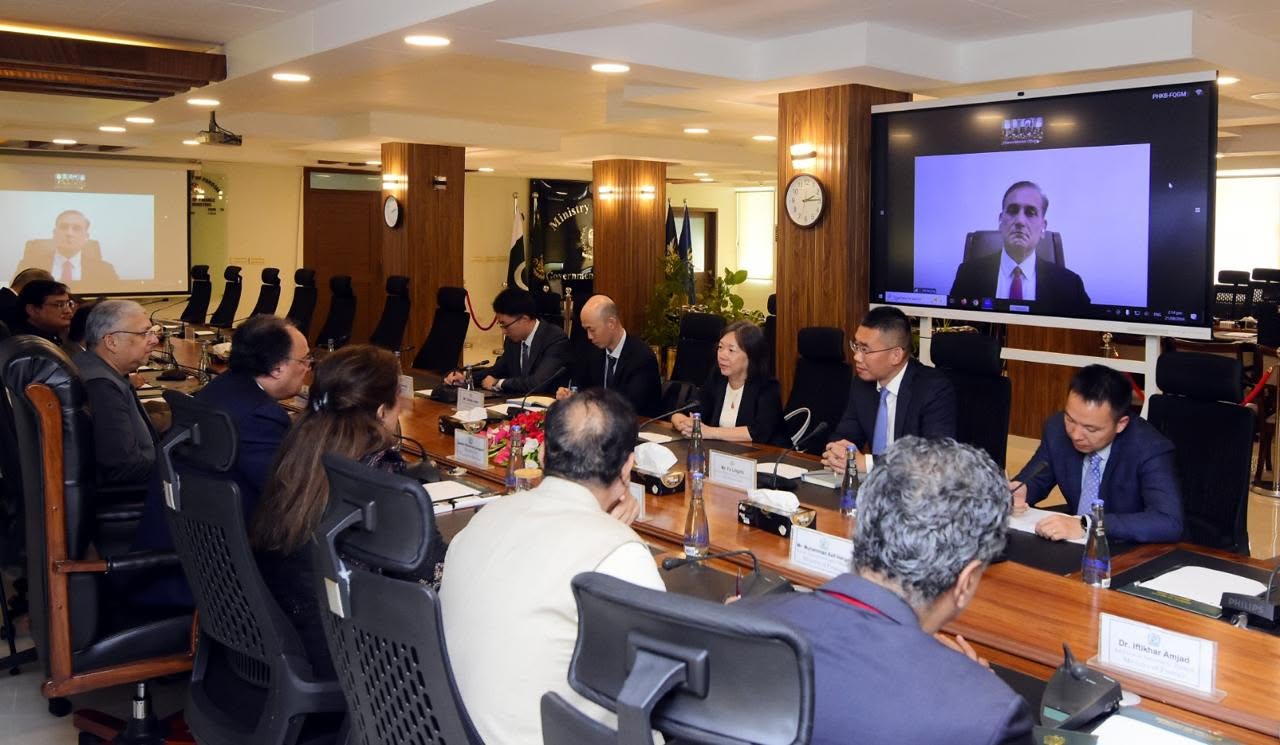
Pakistan Finance Minister Meets Silk Road Fund Delegation, Discusses Investment Opportunities and Economic Cooperation NSN Asia 2026 B
Infrastructure and Energy at the Centre of Cooperation
Energy remains one of the most important areas for future Pakistan-China economic cooperation.
Pakistan’s electricity sector faces interconnected challenges involving generation costs, transmission constraints, distribution losses, circular debt and the integration of renewable energy. Investment in modern transmission infrastructure and efficient distribution systems could therefore have a direct impact on industrial competitiveness and economic growth.
Recent international financing initiatives underline the scale of the opportunity. In July 2026, the World Bank approved financing for Pakistan’s Grid Stability Enhancement Project, designed to modernize the national transmission network, improve reliability and facilitate greater integration of clean energy. The programme is expected to help unlock currently constrained renewable generation and support additional private-sector renewable-energy investment.
For investors such as the Silk Road Fund, this creates potential opportunities at the intersection of infrastructure modernization, energy security and the transition toward cleaner power.
Silk Road Fund and the Belt and Road Initiative
The Silk Road Fund is a Chinese medium- and long-term investment institution established in Beijing on December 29, 2014. It was created as an important financial mechanism supporting the Belt and Road Initiative (BRI), with a mandate covering infrastructure, energy and resources, industrial cooperation and financial cooperation. The Fund says it operates according to market principles and international professional standards, with an emphasis on sustainable investment returns.
The Fund was initially announced with US$40 billion in capital, contributed by Chinese institutions including the State Administration of Foreign Exchange, China Investment Corporation, China Development Bank and Export-Import Bank of China.
Its significance extends beyond individual projects. By providing equity investment, debt financing and other investment instruments, the Fund can participate in projects alongside companies, financial institutions and other investors.
The Silk Road Fund has also described sustainable development as part of its expanding investment focus, alongside infrastructure, energy, industrial cooperation and financial cooperation.
Silk Road Fund’s Pakistan Connection
Pakistan has particular significance in the Fund’s history. In April 2015, the Silk Road Fund, China Three Gorges Corporation and Pakistan’s Private Power & Infrastructure Board signed a memorandum of cooperation, marking the Fund’s first overseas investment-related engagement.
The Fund’s involvement in Pakistan therefore predates many of the later phases of China-Pakistan economic cooperation and forms part of the broader financial architecture supporting connectivity and development under the BRI.
Within the China-Pakistan Economic Corridor (CPEC), the potential role of institutional investment is particularly important as Pakistan moves toward the next generation of projects focused on industrialization, agriculture, technology, logistics, exports and energy.
The future opportunity is not simply about financing physical infrastructure. It is increasingly about connecting infrastructure with productive economic activity—industrial zones, supply chains, digital connectivity, logistics networks, renewable energy and export-oriented manufacturing.
CPEC and a New Investment Cycle
The latest engagement between Pakistan and the Silk Road Fund could contribute to a broader transition in CPEC from infrastructure-led development toward investment-led economic transformation.
Pakistan’s challenge is to convert connectivity into competitiveness.
That means developing projects that are commercially viable, environmentally sustainable and capable of generating employment, exports and technology transfer. It also requires stronger coordination between government institutions, the private sector and international investors.
The Finance Minister therefore stressed the importance of building stronger links between international institutional capital and credible, commercially viable Pakistani projects.
He encouraged continued engagement among Pakistani authorities, the private sector and the Silk Road Fund to identify investable opportunities and advance areas of mutual interest.
Why the Silk Road Fund Matters for Asia
The Fund’s broader geographic mandate covers South Asia, Central Asia, Southeast Asia, West Asia, North Africa and Europe. Its investment portfolio encompasses infrastructure, energy and resources, industrial cooperation, financial cooperation and sustainable development.
This makes the Silk Road Fund part of a wider Asian development and connectivity ecosystem in which transport corridors, energy networks, industrial capacity and trade routes increasingly intersect.
For Pakistan, its geographic position between China, Central Asia, South Asia and the Arabian Sea gives infrastructure and logistics investment a potentially regional dimension.
Greater investment in ports, railways, roads, energy systems, digital infrastructure and industrial supply chains could strengthen Pakistan’s role as a connectivity hub while supporting broader economic integration across Eurasia.
The Green Silk Road Opportunity
The next phase of cooperation should, however, place green development at the centre of the investment agenda.
Pakistan is highly exposed to climate-related risks, while its energy system requires modernization and greater resilience. The country therefore has an opportunity to align infrastructure investment with climate resilience, renewable energy, energy efficiency, sustainable transport, water security and environmentally responsible industrial development.
A Green Silk Road approach could turn Pakistan-China investment cooperation into a platform for combining economic growth with environmental sustainability.
Future CPEC and Silk Road Fund-supported projects can prioritize solar and wind power, modern electricity grids, climate-resilient infrastructure, electric mobility, sustainable logistics, water-efficient agriculture, green industrial zones and low-carbon technologies.
This would also complement Pakistan’s wider development needs. The World Bank’s current Pakistan framework places cleaner energy, climate resilience and increased productive private investment among its key development outcomes.
Conclusion: From Connectivity to Sustainable Prosperity
The meeting between Finance Minister Muhammad Aurangzeb and Silk Road Fund Chairperson Zhu Jun signals renewed potential for deeper investment cooperation between Pakistan and China.
The immediate focus is on infrastructure, energy, privatization and private-sector projects. But the larger opportunity is more ambitious: to transform Pakistan’s connectivity into sustainable economic growth.
For CPEC and the wider BRI, the next chapter should increasingly be measured not only by roads, power plants and physical connectivity, but by jobs created, exports generated, technology transferred, communities empowered and environmental impacts reduced.
A stronger partnership between Pakistan’s private sector, international institutional investors and the Silk Road Fund can help build that future.
The Green Silk Road should therefore become a defining principle of the next phase—linking investment, connectivity and economic development with climate resilience and sustainable prosperity across Pakistan and Asia.
— End —
Delegation Members
The Silk Road Fund delegation included Mr. Fu Lingzhi, Deputy Head of the Legal Department; Mr. Cheng Liang, Senior Executive Director, Department IV; Mr. Wang Fuwei, Executive Director, Investment Department; and Ms. Mi Keyang, Senior Manager, Investment Department.
Senior officials from Pakistan’s Finance Division, Economic Affairs Division and Special Investment Facilitation Council also attended the meeting.

ARIF NSN

Muhammad Arif is a journalist repoting on Asian Affairs, with focus on connectivity in Eurasia. He holds Ph.D degree in Global Journalism from HBU, China, and teaches Journalism at a university in Islamabad. He is multilingual, speaks Eurasian languages—such as Chinese, Arabic, Spanish, Persian, and Russian —for his reporting assignments.
Back to top button