Pakistan, China Agree to Deepen Youth Cooperation
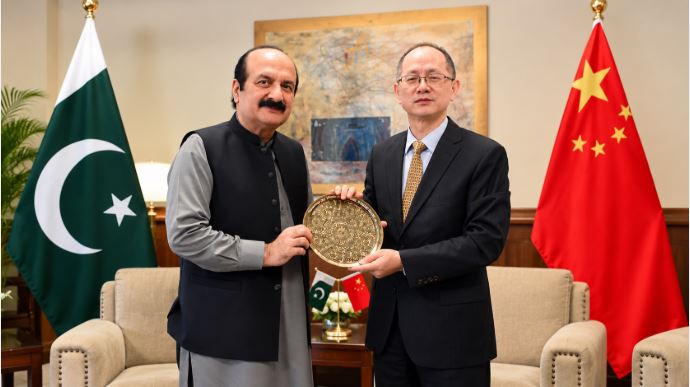
Pakistan and China agree to strengthen youth cooperation in education, skills, employment, technology and innovation as PMYP Chairman Rana Mashhood Ahmed Khan meets Chinese envoy Shi Yuanqiang in Islamabad

-
Pakistan, China Agree to Deepen Youth Cooperation
-
Pakistan and China agree to strengthen youth cooperation in education, skills, employment, technology and innovation as PMYP Chairman Rana Mashhood Ahmed Khan meets Chinese envoy Shi Yuanqiang in Islamabad.
-
Rana Mashhood Ahmed Khan Pushes for a Chinese Universities Education Expo in Pakistan
By: Muhammad Arif, Editor NSN.Asia
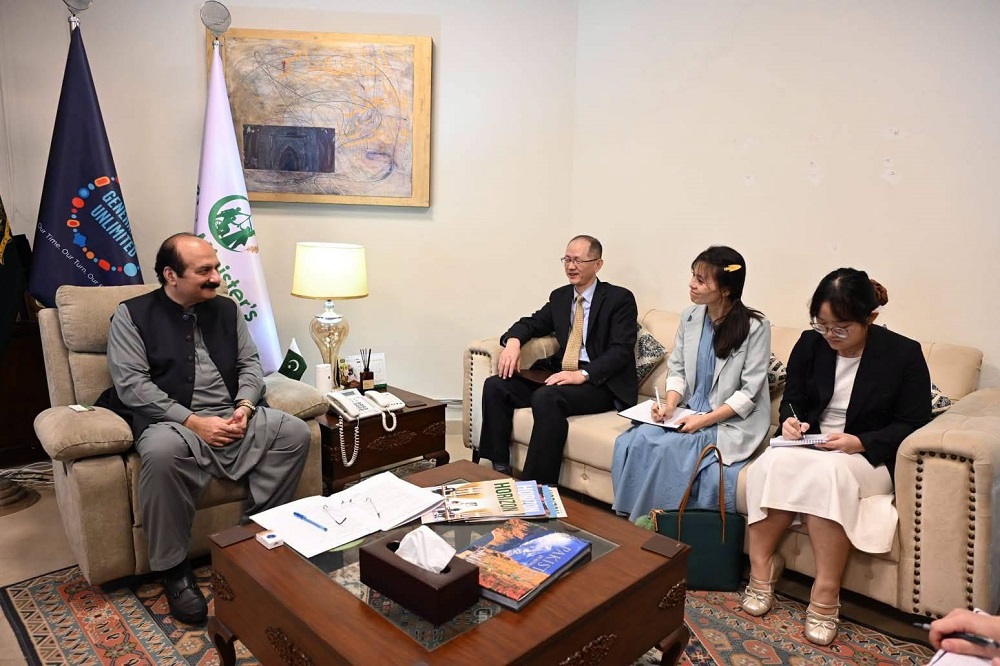
Islamabad: A high-level meeting was held at the Prime Minister’s Office between Chairman of the Prime Minister’s Youth Programme (PMYP), Rana Mashhood Ahmed Khan, and Shi Yuanqiang, Charge d’Affaires of the Embassy of the People’s Republic of China, to discuss avenues for strengthening Pakistan–China cooperation in youth development, education, skills, employment, technology, innovation, research and youth exchanges.
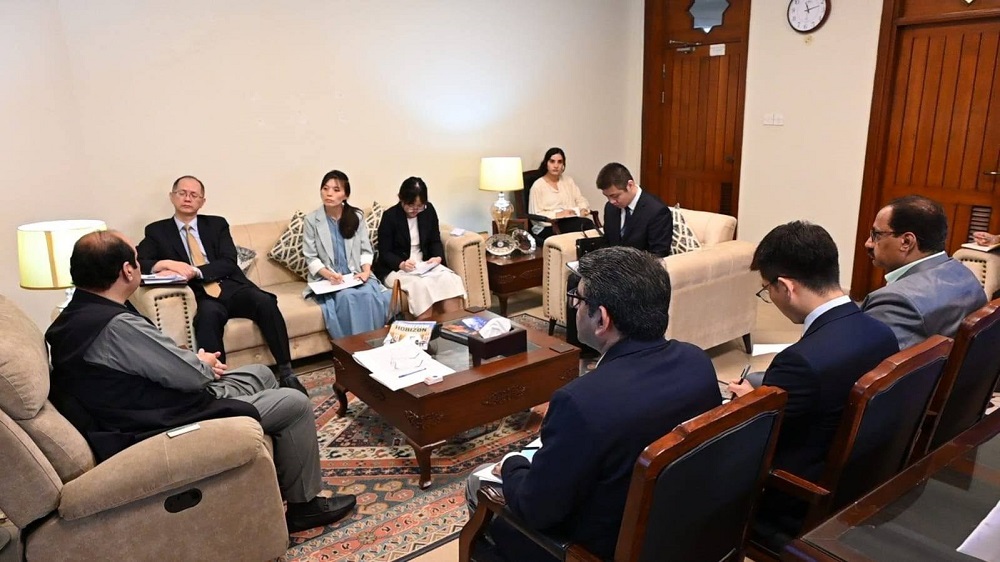
Chairman Rana Mashhood Ahmed Khan extended a warm welcome to Shi Yuanqiang and the accompanying Chinese delegation. The meeting was also attended by PMYP Joint Secretary Dr. Muhammad Ali Malik, along with other senior officers from the Programme.
Push for a Chinese Universities Education Expo in Pakistan
Opening the discussion, Chairman Rana Mashhood Ahmed Khan highlighted the strong and growing interest among Pakistani youth in pursuing higher education at Chinese universities. He proposed the organization of a dedicated Chinese Universities Education Expo in Pakistan, where leading Chinese institutions could directly engage with Pakistani students, showcase academic programmes and scholarships, and provide first-hand information on admission pathways.
He described the initiative as an education-focused platform functioning much like a job fair — bringing universities and prospective students together under one roof to simplify access to information and opportunity.
Reinforcing the “Iron Brother” Relationship Through Youth Engagement
The Chairman reaffirmed Pakistan’s commitment to deepening the longstanding Pakistan–China “iron brother” relationship, placing particular emphasis on people-to-people and youth-to-youth engagement. He stressed the importance of expanding exchanges in culture, technology, research, education and skills development to create meaningful, forward-looking opportunities for young people in both countries.
Rana Mashhood Ahmed Khan also revealed that PMYP Secretariats have already been established in China, a development he described as reflective of the growing institutional engagement between the two countries in the youth sector.
He expressed appreciation to the Government and people of China for their continued support to Pakistan, acknowledging the role of China’s advanced technology and capabilities in strengthening bilateral cooperation. Highlighting progress in the space sector, he noted that Pakistan’s first astronaut is expected to join China’s space station by the end of this year — a milestone he called a significant marker of Pakistan–China cooperation in science, technology and space exploration.
China Praises Digital Youth Hub, Seeks Wider Collaboration
Speaking at the meeting, Shi Yuanqiang emphasized the unique and enduring nature of Pakistan–China relations, reiterating the characterization of the two nations as “iron brothers.” He underlined the importance of expanding youth exchanges in culture, technology and research to promote greater interaction, mutual understanding and long-term collaboration between the younger generations of both countries.
The Chinese envoy specifically praised the Digital Youth Hub (DYH), a flagship initiative of the Prime Minister’s Youth Programme, describing it as an innovative and centralized platform that connects young people with diverse opportunities in one place. He commended PMYP for developing a mechanism that effectively engages, connects and empowers youth across the country.
Shi Yuanqiang further expressed China’s interest in exploring greater involvement of Chinese universities, companies, development organizations and private-sector partners with the Digital Youth Hub — a step that could significantly expand the range of opportunities available to Pakistani youth.
PMYP’s 4Es Framework and National Youth Employment Policy
Chairman Rana Mashhood Ahmed Khan briefed the Chinese delegation on PMYP’s flagship initiatives operating under its 4Es Framework — Education, Employment, Engagement and Environment. These include the Prime Minister’s Youth Skills Development Programme, Prime Minister’s Youth Laptop Scheme, Prime Minister’s Youth Business & Agriculture Loan Scheme, Prime Minister’s National Innovation Award, Prime Minister’s National Volunteer Corps, the Digital Youth Hub, Talent Hunt & Youth Sports League, and the Green Youth Movement.
He underscored the importance of collaboration on Pakistan’s National Youth Employment Policy, particularly in expanding employment, skills development, entrepreneurship and international opportunities for Pakistani youth. To this end, he proposed a structured mechanism with the Chinese Embassy to identify relevant opportunities through Chinese institutions, universities, companies and development organizations.
Joint Secretary PMYP Dr. Muhammad Ali Malik added that the Programme would work closely with the Chinese government on the National Youth Employment Policy, exploring areas of cooperation that could directly contribute to employment generation, skills development and professional opportunities for young Pakistanis.
Way Forward: Focal Persons and a Formal Cooperation Framework
As a concrete way forward, both sides agreed to designate focal persons to maintain regular communication, facilitate coordination and identify actionable areas of collaboration. It was further proposed that the two sides work towards developing a formal framework of cooperation with the Embassy of China, covering the National Youth Employment Policy and broader youth employment opportunities.
The meeting concluded on a note of shared commitment to deepen Pakistan–China cooperation in the youth sector, with both sides expressing optimism about translating the two countries’ longstanding friendship into practical, meaningful opportunities for young people.
Conclusion
The discussions between the Pakistan Prime Minister’s Youth Programme and the Chinese Embassy mark another step forward in institutionalizing Pakistan–China cooperation beyond traditional economic and strategic domains. As both nations look to equip their youth for an increasingly technology-driven future, sustained collaboration in education, skills development, employment generation, research and innovation will be essential. Initiatives such as the proposed Chinese Universities Education Expo, the Digital Youth Hub and a structured youth employment framework represent tangible pathways for turning the “iron brother” relationship into lasting opportunities for the younger generations of both countries. Continued high-level engagement, backed by clear implementation mechanisms and dedicated focal persons, will be key to ensuring that this momentum translates into measurable outcomes — reinforcing Pakistan–China friendship as a partnership that actively invests in the future of its youth.