


<img src='https://news.cgtn.com/news/2026-07-16/Tech-innovation-unlocks-new-growth-momentum-for-China-s-economy-1OOMQp36DmM/img/cd5babf9d9e147e5a7472515d1132e08/cd5babf9d9e147e5a7472515d1132e08.jpeg' alt='Multiple vessels are under construction at Nantong Xiangyu Marine Equipment Co., Ltd., with production proceeding in a busy and orderly manner, Nantong, Jiangsu Province, east China, July 15, 2026. /VCG'
China’s technology-driven industrial transformation is emerging as a key source of economic resilience, as advances in artificial intelligence (AI), high-end manufacturing and the aerospace information industry continue to generate new growth momentum despite a complex global economic environment.
Official data released on Wednesday point to China’s steady economic performance supported by expanding digital infrastructure, robust exports of high-tech products and accelerating commercialization of frontier technologies.
According to the National Bureau of Statistics, China’s GDP grew 4.7% year on year in the first half of 2026, while industrial production maintained stable expansion, highlighting the economy’s continued transition toward innovation-led growth.
Meanwhile, data released by the General Administration of Customs showed that China’s total goods trade reached 25.47 trillion yuan (about $3.55 trillion) in the first six months of the year, up 16.9% from a year earlier. Exports of technology-intensive products, including electronic components, computer parts and intelligent manufacturing equipment, remained among the fastest-growing categories, reflecting robust international demand for China’s advanced manufacturing capabilities.
<img src='https://news.cgtn.com/news/2026-07-16/Tech-innovation-unlocks-new-growth-momentum-for-China-s-economy-1OOMQp36DmM/img/953c2e60a3e04a07934cb5224c2a4f10/953c2e60a3e04a07934cb5224c2a4f10.jpeg' alt='The world's first high-voltage AC/DC prefabricated power supply station for a computing center (known as the "Compute Power Island") is officially unveiled on June 6, 2026, Laoshan District, Qingdao, Shandong Province, east China. /VCG'
Computing power becomes the foundation of the ‘AI economy’
The rapid commercialization of large AI models has significantly increased demand for computing infrastructure, making digital hardware and computing networks a strategic pillar of industrial development.
China has accelerated the construction of national computing infrastructure through projects such as the “Eastern Data, Western Computing” initiative, which optimizes the allocation of computing resources across regions while improving energy efficiency and network coordination.
According to the China Academy of Information and Communications Technology (CAICT), computing power has become a core production factor in the digital economy, alongside data and algorithms. Continued investment in intelligent computing centers and high-speed data transmission networks is expected to support the next stage of AI deployment across manufacturing, healthcare, finance and public services.
Yu Xiaohui, president of CAICT, has argued that AI development is moving from model innovation toward industrial application, with computing infrastructure set to determine the pace of technological diffusion. In his view, integrated computing networks are becoming critical infrastructure for cross-industry digital transformation.
<img src='https://news.cgtn.com/news/2026-07-16/Tech-innovation-unlocks-new-growth-momentum-for-China-s-economy-1OOMQp36DmM/img/68bdde86d9bc4f5aa617c81b7a8ed2fd/68bdde86d9bc4f5aa617c81b7a8ed2fd.jpeg' alt='Workers fit components into an electric vehicle at a manufacturing plant. /VCG'
Intelligent manufacturing strengthens global competitiveness
China’s high-end manufacturing sector is also gaining international market share as intelligent equipment becomes an important driver of export growth.
Industrial robots, automation systems and smart manufacturing solutions have seen expanding overseas demand, supported by continuous technological upgrading and increasingly complete industrial supply chains.
The International Federation of Robotics (IFR) has ranked China the world’s largest industrial robot market by annual installations for 12 consecutive years, with 295,000 units installed in 2024 alone, accounting for 54% of global demand. Domestic brands captured a 57% domestic market share in 2024, surpassing foreign suppliers for the first time, according to IFR. Chinese industrial robot exports reached 94,200 units in the first six months of 2025, up nearly 60% year on year, signaling broader adoption of Chinese intelligent equipment in overseas manufacturing projects.
China has moved beyond being a fast follower to become a system-level competitor in global innovation, Stephen Ezell, vice president for global innovation policy at the US-based Information Technology and Innovation Foundation, said in an interview with West China International Communication Organization in April.
<img src='https://news.cgtn.com/news/2026-07-16/Tech-innovation-unlocks-new-growth-momentum-for-China-s-economy-1OOMQp36DmM/img/54040f26426f4cbeab1ed8c3ed0e7c75/54040f26426f4cbeab1ed8c3ed0e7c75.png' alt='File photo of the "computing power town" in Hangzhou, Zhejiang Province, east China. /VCG'
Aerospace information industry opens new growth frontier
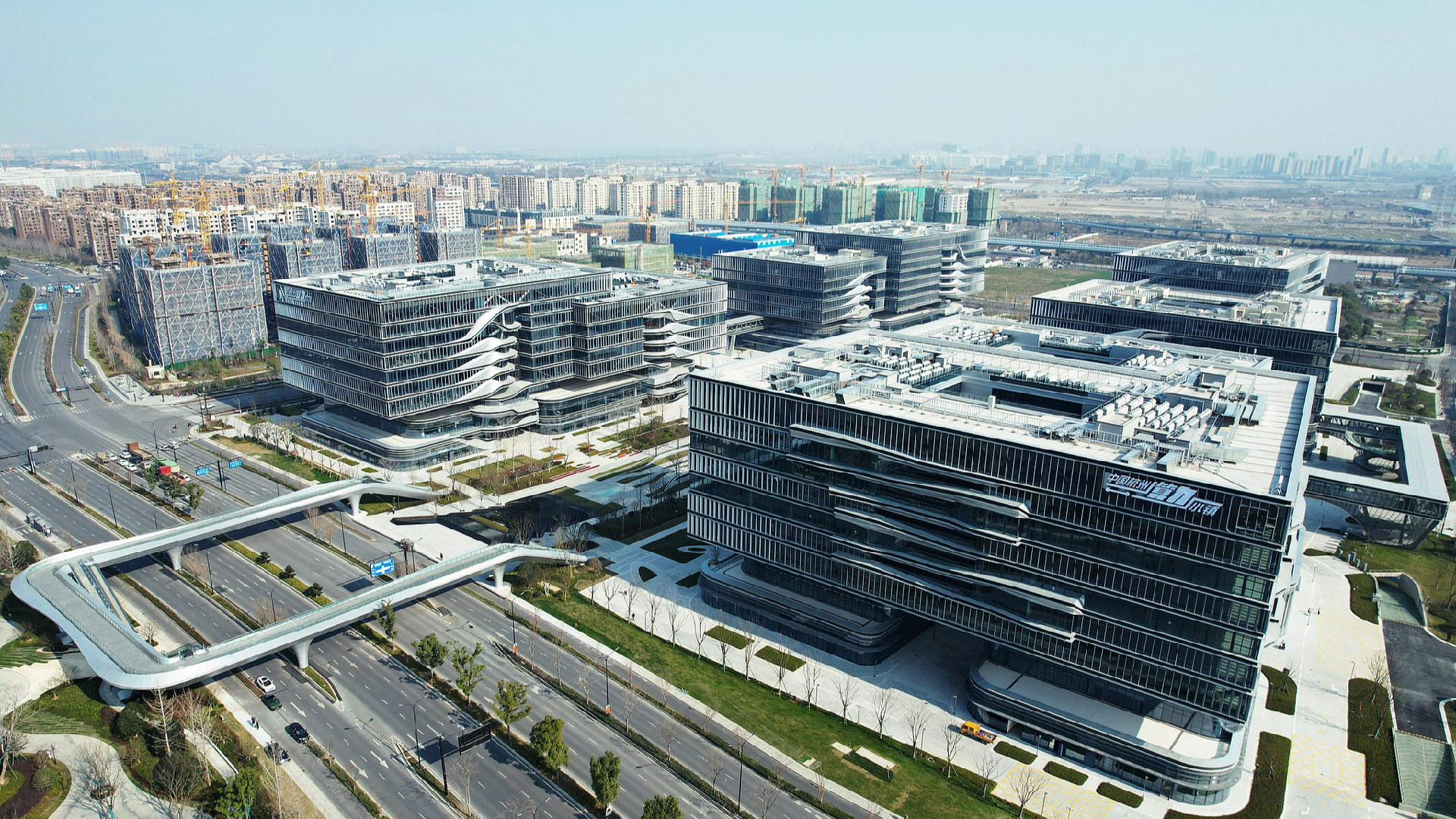
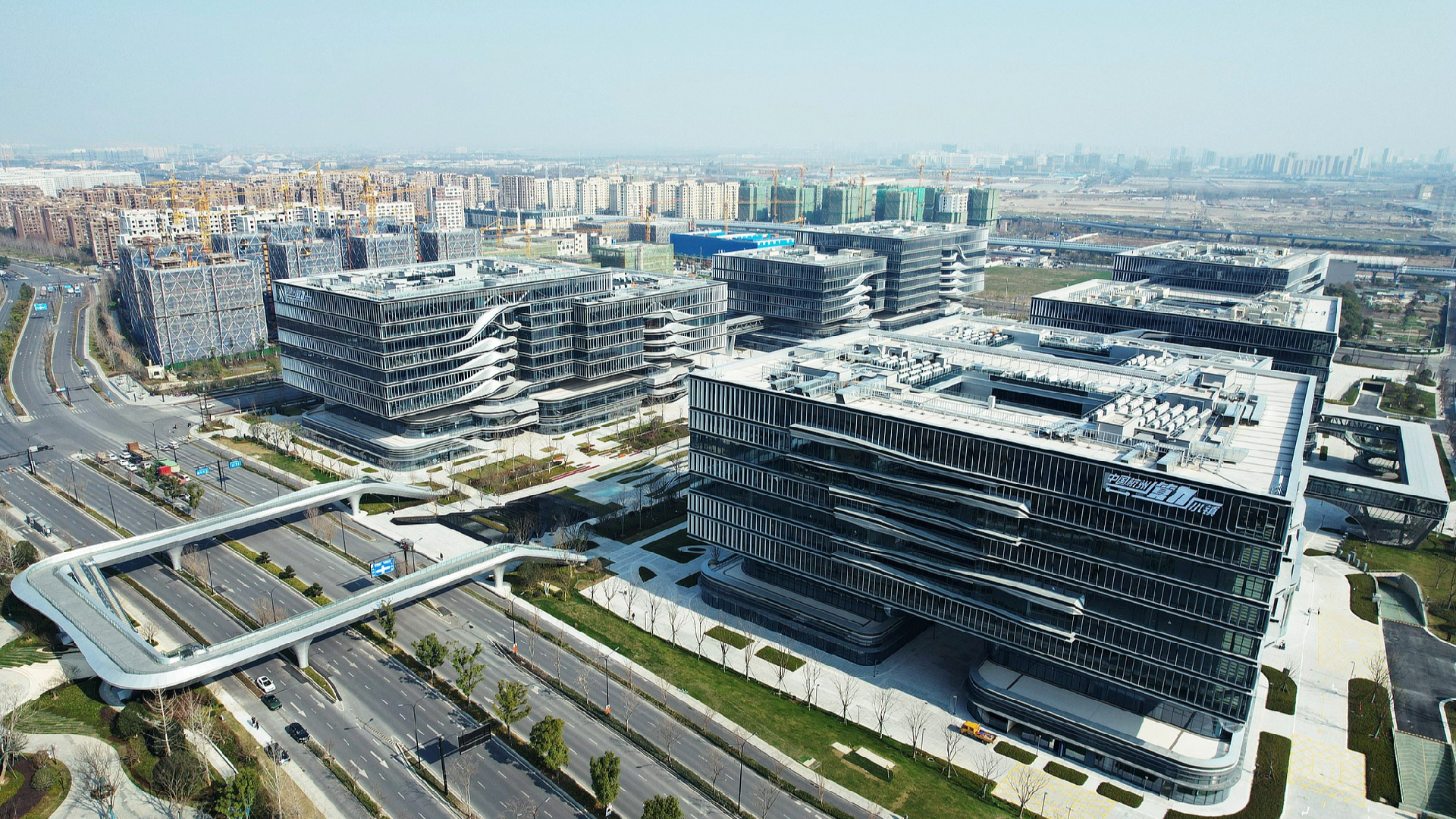
Parallel to the manufacturing story, a more futuristic lane is taking shape in Wuxi, Jiangsu, where the 2026 Aerospace Information Conference runs July 16 to 17, showcasing the latest developments in satellite remote sensing, the integrated BeiDou navigation-communication-remote sensing system and space computing technologies.
Experts believe these innovations are accelerating the commercialization of aerospace technologies across agriculture, transportation, emergency management, environmental monitoring and smart cities.
“With the advanced networking and intelligence of space-based information systems, orbital computing has emerged as a strategic high ground in global technological competition,” said Hao Xuetao, vice president of Geovis Technology Co., Ltd. and general manager of its Commercial Aerospace Strategy Department.
China has incorporated the development of the aerospace information industry, along with the construction of the satellite internet and an integrated space-ground information network, into several national strategies, including the Digital China Initiative. Enterprises and research institutions are seizing the opportunities presented by these strategic initiatives.
Hao said orbital computing is expected to play a pivotal role in the next stage of digital and intelligent development, with applications spanning communications, remote sensing and navigation. Its ability to enable rapid global connectivity, real-time data processing and intelligent decision-making will support a wide range of sectors, including smart cities, public security, meteorological services and environmental monitoring.