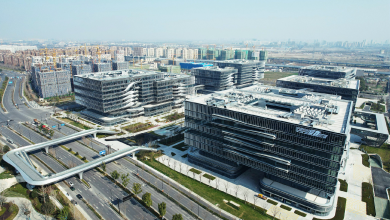


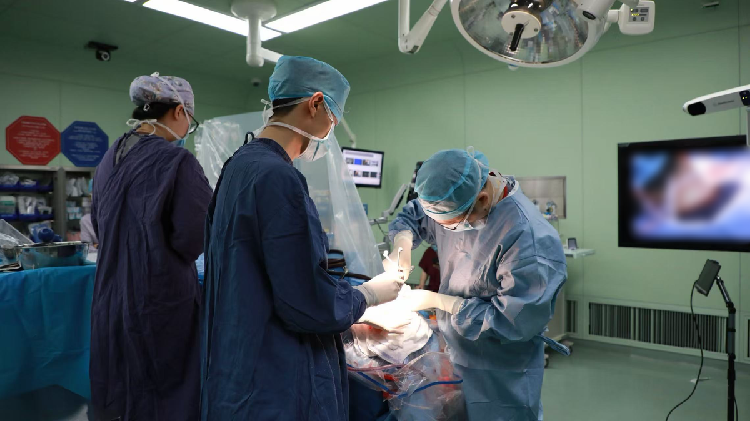
China’s first commercial brain-computer interface (BCI) surgery was performed on Monday at Huashan Hospital affiliated with Fudan University in Shanghai.
The operation adopted the Neural Electronic Opportunity (NEO) implantable hand motor function compensation system developed by Neuracle Technology (Shanghai) Co., Ltd. Certified as China’s Class III medical device on March 13, NEO stands as the world’s first approved implantable BCI product. Developed for patients with quadriplegia resulting from cervical spinal cord injuries, the system allows users to regain controllable hand movement via minimally invasive implantation.
<img src='https://news.cgtn.com/news/2026-07-16/Shanghai-hospital-completes-world-s-first-BCI-for-hand-movement-1OOMpvnsFfa/img/cfdb4c5420984374bb59780f5d33eab1/cfdb4c5420984374bb59780f5d33eab1.png' alt='China's first commercial brain-computer interface surgery was performed at Huashan Hospital affiliated with Fudan University in Shanghai, July 13, 2026. /Courtesy of Huashan Hospital affiliated with Fudan University'
According to the hospital, the patient who underwent the surgery remains in stable condition after the operation. Intraoperative test results showed that the epidural electroencephalogram (EEG) signals collected by the system from the patient were stable and of good quality.
The patient who received the surgery sustained a spinal cord injury in a car accident 10 years ago, resulting in impaired hand-grasping function and limited ability to perform activities of daily living. After undergoing standardized rehabilitation treatment, the patient’s functional improvement remained stagnant. Following screening and evaluation by a multidisciplinary team in accordance with the product’s registered indications, the patient was selected for this implantation.
By capturing and decoding epidural EEG signals to identify motor intention, the NEO system can assist patients in compensating for hand-grasping function, significantly help improve their ability to perform activities of daily living and bring new hope for the rehabilitation of patients with spinal cord injuries.