CooperationEurasiaNewsNSNPhotosSilk Road

China Pushes Multilateralism as Spain and Russia Deepen Ties in Beijing

Russia-China Alignment Signals Emerging Geopolitical Bloc

  • Multilateralism Vision Gains Momentum Amid Global Uncertainty

  • Spain Navigates Economic Opportunity and Strategic Caution

  • Russia-China Alignment Signals Emerging Geopolitical Bloc

  • Competing Models of Global Order Shape the Future of Cooperation

By Muhammad Arif, Editor NSN.Asia

Beijing, April 14, 2026 — In a week marked by high-profile diplomatic engagements, China has positioned itself at the center of a renewed push for multilateral cooperation, hosting both Spanish Prime Minister Pedro Sánchez and Russian Foreign Minister Sergey Lavrov in Beijing. The parallel visits come at a time when the global order appears increasingly fractured, shaped by geopolitical rivalries, economic uncertainty, and weakening international institutions.

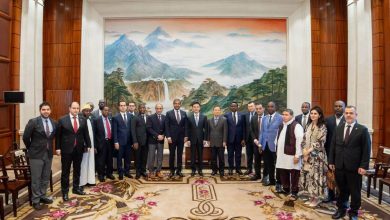
China Pushes Multilateralism as Spain and Russia Deepen Ties in Beijing NSN Asia 2026

Chinese leadership, under President Xi Jinping, has used the moment to reiterate its longstanding narrative: that multilateralism, anchored in cooperation rather than confrontation, offers the only viable pathway through global instability. Yet, critics argue that Beijing’s version of multilateralism is as much about reshaping global governance in its favor as it is about fostering genuine cooperation.

  • A Diplomatic Convergence in Beijing

The visits by Sánchez and Lavrov underscore China’s expanding diplomatic bandwidth. While Spain represents a key European Union voice navigating complex ties with Beijing, Russia remains China’s strategic partner amid ongoing tensions with the West.

During his meetings, Sánchez emphasized economic cooperation, climate commitments, and balanced engagement between Europe and China. Spain’s outreach reflects a broader European recalibration—seeking economic engagement with China while remaining cautious about overdependence.

In contrast, Lavrov’s visit reinforced the deepening alignment between Moscow and Beijing. As Russia continues to face Western sanctions and isolation, China has emerged as a critical economic and diplomatic partner. Their discussions reportedly focused on energy cooperation, regional security, and coordination in international forums such as the United Nations and BRICS.

  • China’s Multilateralism: Principle or Strategy?

China’s advocacy for multilateralism is not new. It has consistently called for a “multipolar world” and promoted initiatives such as the Belt and Road Initiative (BRI) as vehicles for shared development. However, the timing and optics of these visits amplify Beijing’s intent to position itself as a stabilizing force amid global disorder.

Critically, China’s multilateralism diverges from Western interpretations. While Western models emphasize liberal democratic values and institutional norms, China promotes a sovereignty-first approach—prioritizing non-interference and state-led development.

Supporters argue this model resonates with many countries in the Global South, offering an alternative to Western-dominated systems. Detractors, however, caution that it risks normalizing authoritarian governance and weakening accountability in global institutions.

  • Europe’s Strategic Tightrope

Spain’s engagement with China highlights the European Union’s internal balancing act. While countries like Spain seek economic opportunities through trade and investment, concerns over human rights, market access, and strategic dependencies persist within the EU.

Sánchez’s visit signals a pragmatic approach—engagement without full alignment. It also reflects Europe’s broader effort to maintain strategic autonomy, avoiding a binary alignment between Washington and Beijing.

Spanish Prime Minister Pedro Sánchez visits China to foster cooperation NSN Asia 2026

Yet, this balancing act is increasingly difficult. As global tensions sharpen, European states may find their room for maneuver narrowing, particularly in areas such as technology, security, and supply chains.

  • Russia-China Axis: Consolidating an Alternative Order

Lavrov’s presence in Beijing reinforces what many analysts describe as an emerging counterweight to Western influence. The China-Russia partnership, often framed as a “no-limits” relationship, is grounded in shared opposition to what both countries perceive as Western hegemony.

Minister of Foreign Affairs of the Russia Foreign Minister Sergey Lavrov meeting with the President of the of China Xi Jinping Ap 2026 NSN Asia

Their cooperation extends beyond bilateral ties into multilateral platforms, where they advocate reforms to global governance structures. However, this alignment raises concerns about the formation of competing blocs—potentially accelerating the fragmentation China claims it seeks to mitigate.

  • A Fractured World, Competing Visions

The simultaneous visits of European and Russian leaders to Beijing illustrate a paradox at the heart of contemporary geopolitics: even as the world fragments, major powers continue to converge in pursuit of their interests.

China’s push for multilateralism is both an opportunity and a challenge. On one hand, it offers a platform for dialogue and cooperation in an increasingly polarized world. On the other, it reflects a strategic effort to redefine the rules of global engagement.

The question remains whether China’s vision can genuinely bridge divides or whether it will deepen existing fault lines under a different banner.

  • Conclusion: Multilateralism in an Age of Contestation

As Beijing hosts leaders from divergent geopolitical camps, it is clear that multilateralism is no longer a shared concept but a contested one. China’s approach—pragmatic, state-centric, and strategically flexible—appeals to many but unsettles others.

In a chaotic and fractured world order, the real test of multilateralism lies not in rhetoric but in outcomes. Whether China can translate its vision into inclusive and equitable global governance remains uncertain.

What is evident, however, is that the struggle to define the future of international cooperation is intensifying—and Beijing intends to be at its center.

ARIF NSN

Muhammad Arif is a journalist repoting on Asian Affairs, with focus on connectivity in Eurasia. He holds Ph.D degree on Global Journalism from HBU, China, he teaches journalism at a university in Islamabad. He has language skills Chinese, Persian, Russian.
Back to top button