

Study puts Gaza death toll over 75,000, challenges inflation claims

A new peer-reviewed study published in The Lancet Global Health estimates that more than 75,000 Palestinians were killed during the first 15 months of Israel’s military campaign in Gaza, a toll far higher than the roughly 49,000 deaths reported by local health officials at the time.
Published Wednesday, the study found that women, children and older adults accounted for 56.2% of those killed by violence, a breakdown researchers said broadly mirrors figures released by Gaza’s Health Ministry.
The field research was conducted by the Palestinian Center for Policy and Survey Research, led by veteran pollster Khalil Shikaki, who has carried out public opinion surveys in the West Bank and Gaza for decades.
The study’s lead author is Michael Spagat, a professor at Royal Holloway, University of London.
The authors described it as the first independent population-based survey of mortality in the Gaza Strip. Researchers surveyed 2,000 Palestinian households over seven days beginning Dec. 30, 2024.
“The combined evidence suggests that, as of Jan. 5, 2025, 3% to 4% of the population of the Gaza Strip had been killed violently and there have been a substantial number of nonviolent deaths caused indirectly by the conflict,” the authors wrote.
Reliable ministry’s figures
The Gaza death toll has been bitterly disputed since Israel’s assault began after Hamas’ Oct. 7, 2023, incursion into southern Israel.
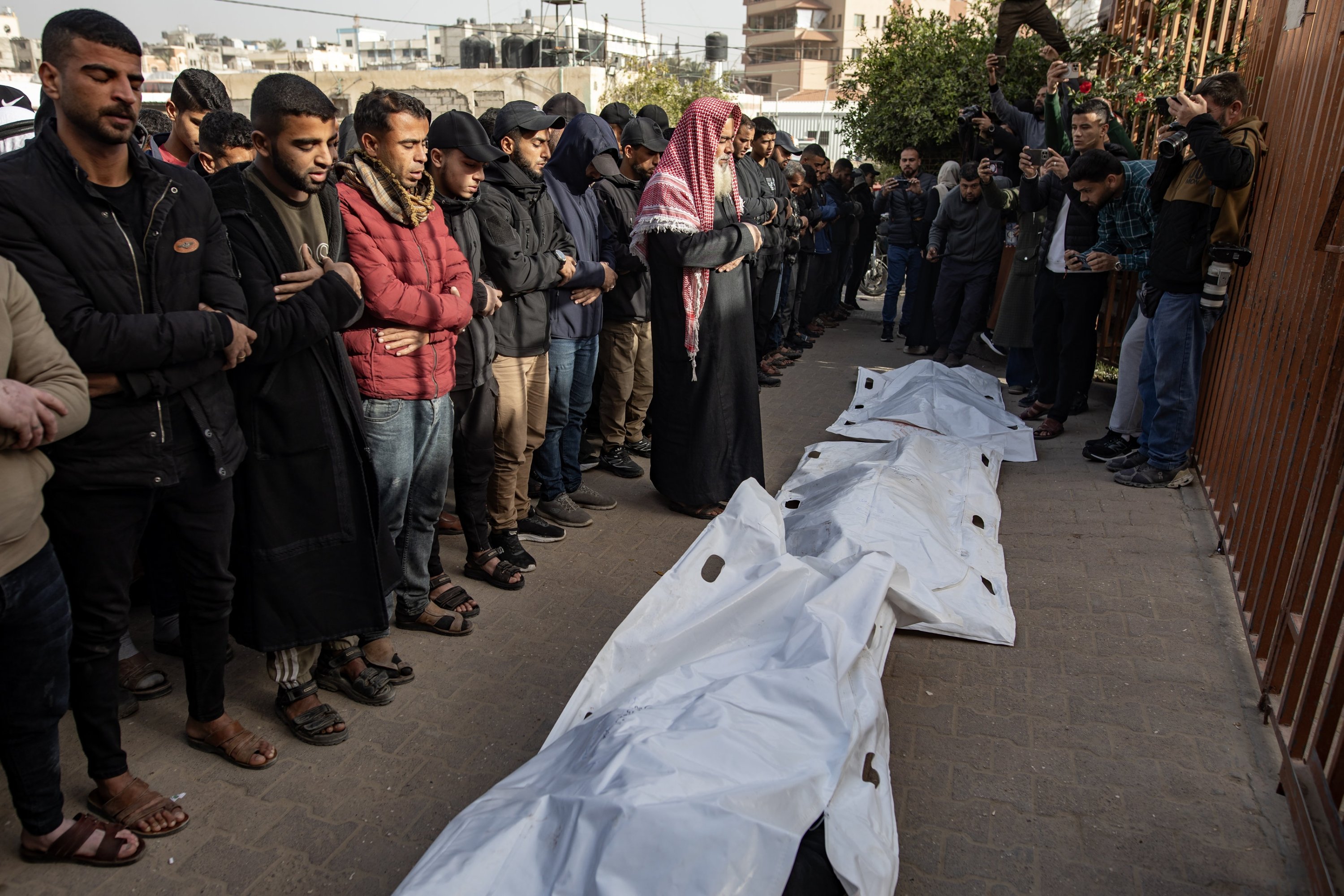
Gaza health authorities, whose figures the United Nations has long deemed reliable, report more than 72,000 killed and estimate that thousands more remain uncounted beneath destroyed buildings 28 months later.
Israel has questioned those tallies, citing Hamas control of the ministry. A senior military officer told Israeli media last month that the figures were broadly accurate, a view the army later said did not reflect official data.
Researchers writing in The Lancet Global Health said their analysis contradicts claims that the toll has been inflated and suggests the ministry’s figures may be conservative given the extreme conditions.
Mortality calculation
A statistical analysis published last year in The Lancet found the Health Ministry likely undercounted deaths by about 40% during the first nine months of the war.
The new research appears to suggest a similar margin of undercounting.
Field staff, mostly women experienced in survey work, conducted face-to-face interviews with households across Gaza’s districts, the authors wrote. The questionnaire asked respondents to list members of their immediate household who were killed.
“We calculated mortality estimates as weighted sums. Each individual in the sample received a weight representing the number of people in the Gaza Strip they represent,” the authors wrote.
The researchers said the survey was the first Gaza mortality study that did not rely on Health Ministry administrative records. They said their estimate of violent deaths carried a 95% confidence interval, a statistical measure of precision.
The study estimated about 16,300 nonviolent deaths during the first 15 months of the war, caused by disease, preexisting conditions, accidents or other causes not directly related to combat.
Those deaths are separate from the estimated 75,200 violent deaths during that period.
Hamas killed more than 1,200 people and took about 250 hostages during the 2023 attack on southern Israel.
Some hostages and the remains of those who died in captivity were released during cease-fires.
Hamas has confirmed the deaths of some military leaders in fighting with Israel but has rarely disclosed fatalities among its members.