
Spaceflight by Yuri Gagarin Reflects Victory in the Space Race
Monument is powerful symbol of humanity’s determination to reach new heights in intellectual and technological advancement: Russian Ambassador


-
Spaceflight by Cosmonaut Yuri Gagarin reflects victory in the space race forged through the collective endeavor of Soviet statesmen, scientists, and workers.
- Spaceflight event highlights the steadily developing bilateral dialogue between Moscow and Islamabad
By Muhammad Arif, Editor NSN.Asia
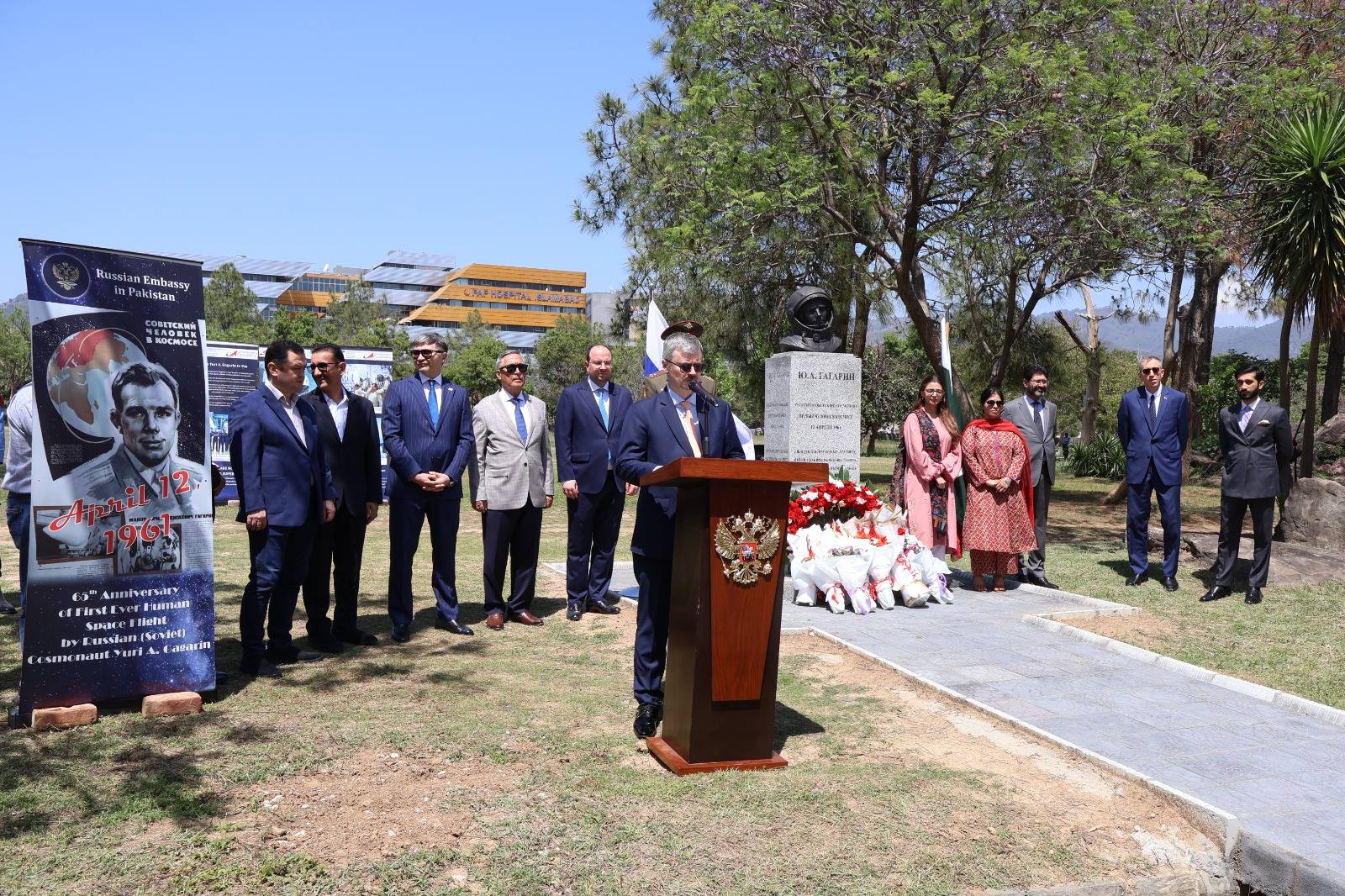
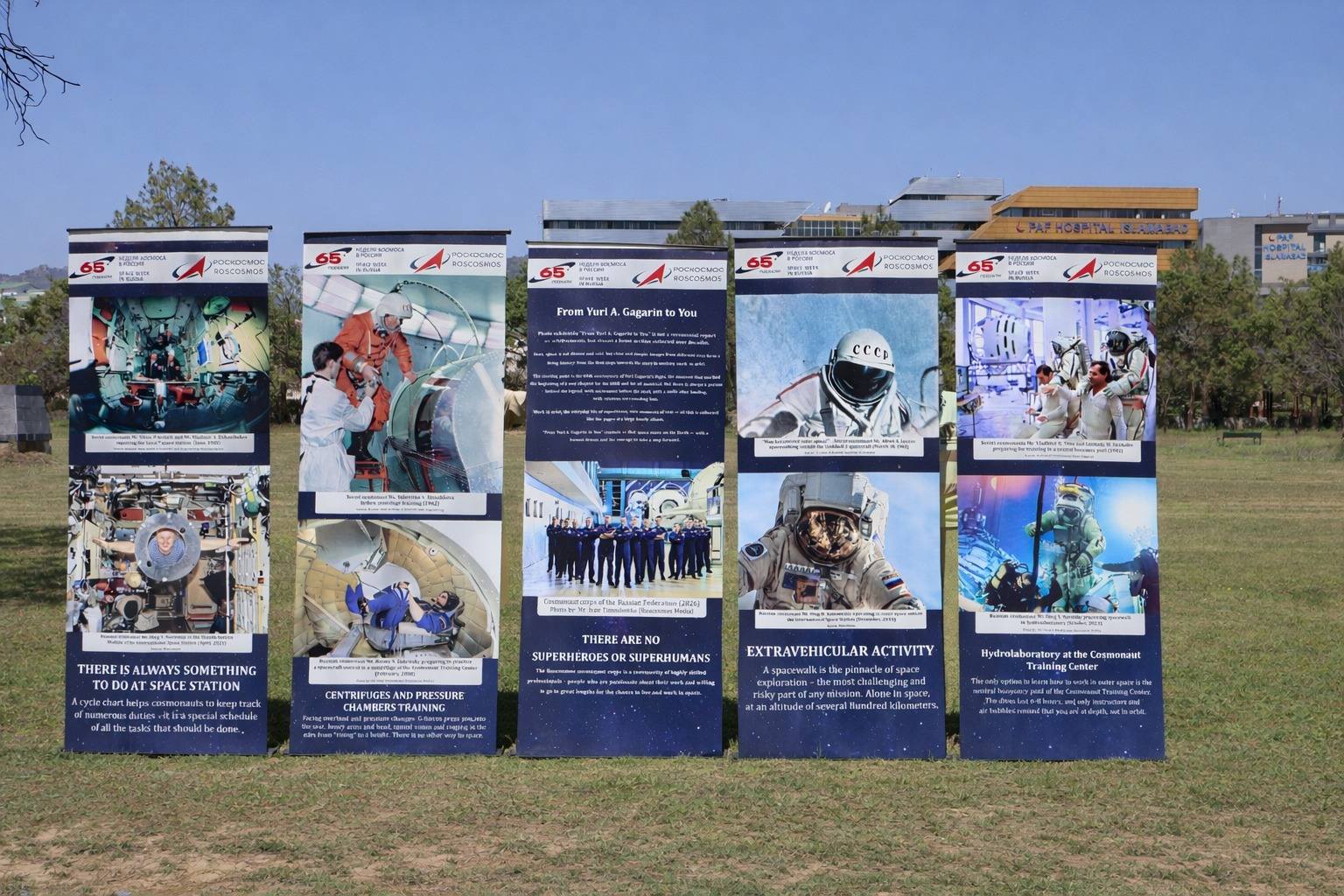
Islamabad: A wreath-laying ceremony at the monument dedicated to Soviet cosmonaut Yuri Gagarin in Fatima Jinnah Park of Islamabad was organized by the Russian Embassy in Pakistan.
Spaceflight ceremony was attended by Ambassador Albert P. Khorev, Additional Foreign Secretary of Pakistan Ayesha Ali, Ambassadors of Belarus, Kazakhstan, Kyrgyzstan, Tajikistan, Turkmenistan and Uzbekistan, Russian Defense Attaché Colonel Vadim Fenchenko, Russian Trade Representative Denis Nevzorov, as well as officials from the CDA and SUPARCO.
The event was also attended by Embassy staff, Russian community and Pakistani academia.
In his remarks, Albert P. Khorev emphasized that Yuri Gagarin’s flight ushered in a new chapter in human history – the era of the Universe exploration. It became a powerful symbol of humanity’s determination to reach new heights in intellectual and technological advancement, to overcome any obstacle on the path toward the most ambitious and noble goals.
The Ambassador also noted that the successful launch of the Vostok-1 spacecraft was made possible by the selfless and tireless efforts of millions of Soviet citizens – the brotherly peoples of the former Soviet republics – who devoted their lives to serving their Motherland. Victory in the space race was forged through the collective endeavor of Soviet statesmen, scientists, and workers.
Additional Foreign Secretary Ayesha Ali, on behalf of the Government of Pakistan, thanked the Russian Embassy for organizing the event and highlighted the steadily developing bilateral dialogue between Moscow and Islamabad.
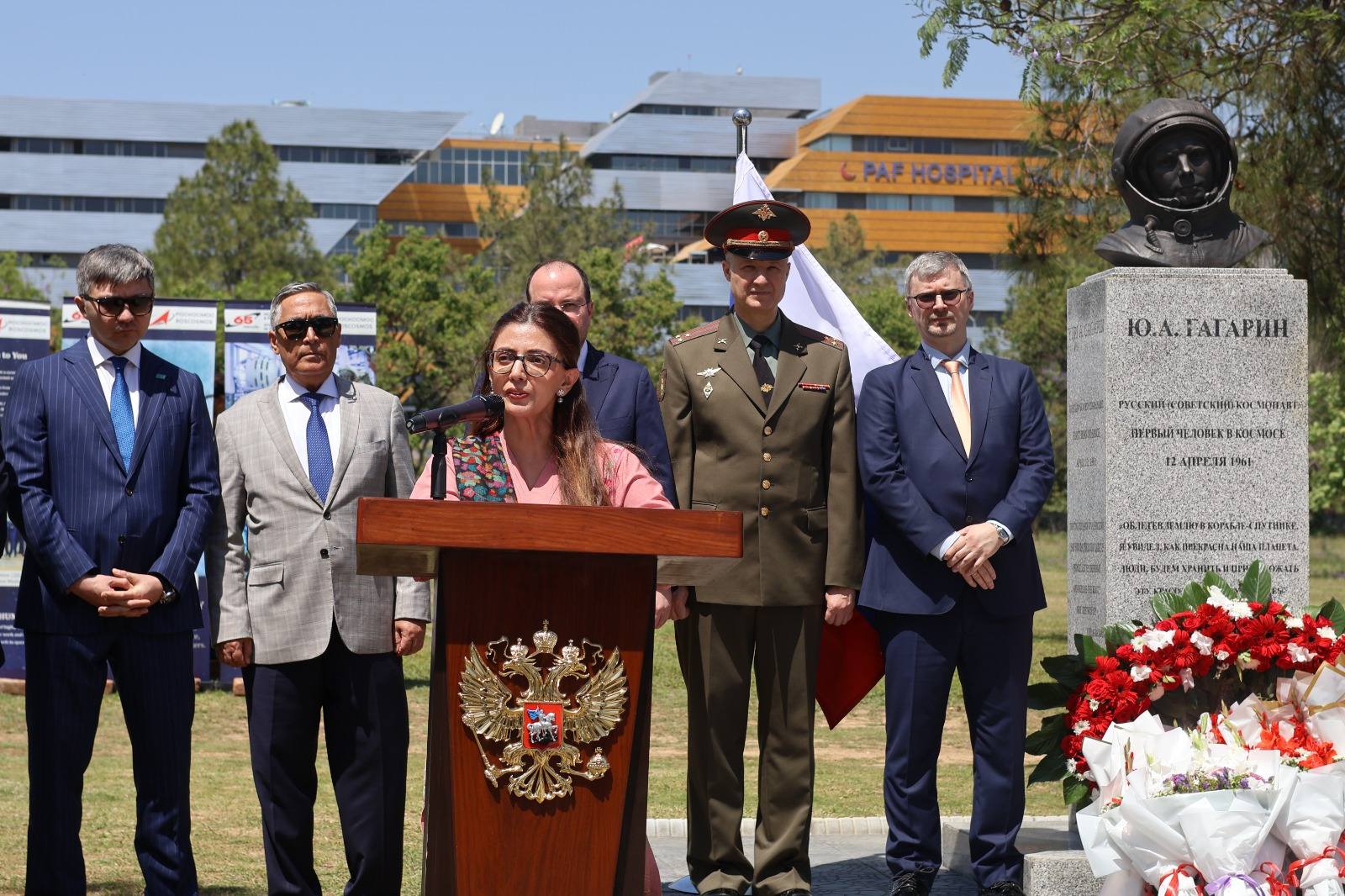
Ayesha Ali noted, “Pakistan attaches great importance to its multifaceted relations with Russia. Over the years, our two countries have steadily expanded cooperation in diverse fields, including energy, regional connectivity, education and cultural exchanges. Shared commemorations do not only honor historic milestones, but also strengthen the bonds of friendship and mutual respect between Pakistan and Russia.”
The Russian Embassy in Pakistan expresses its gratitude to the International Charitable Public Foundation “Dialogue of Cultures – United World” and the St. Petersburg International. Mercantile Exchange for providing the bust of Yuri Gagarin and supporting the construction of the monument.
The friendship between Pakistan and Russia has evolved from a distant and cautious relationship during the Cold War into a pragmatic and steadily growing partnership in recent years.
Historically, ties between the two countries were limited. During the Cold War, Pakistan aligned closely with the United States, while Russia—then the Soviet Union—maintained strong relations with India. This geopolitical divide kept Pakistan and Russia on opposite sides of regional and global politics.
The relationship between Pakistan and Russia in trade is steadily expanding, though still below its full potential. Both countries are increasing exchanges in key sectors such as energy, wheat, fertilizers, textiles, and agriculture. Russia has become an important supplier of crude oil and grain to Pakistan, while Pakistan exports textiles and food products. Efforts to improve trade mechanisms, including alternative payment systems and regional connectivity through platforms like the Shanghai Cooperation Organisation, signal a long-term commitment to strengthening commercial ties.
Economic cooperation is primarily driven by energy and infrastructure development. The Pakistan Stream Gas Pipeline remains the flagship project, reflecting Russia’s role in supporting Pakistan’s energy security. Beyond this, Russian interest in sectors like oil refining, steel, and hydropower highlights complementary economic needs. While progress has faced delays due to financial and geopolitical constraints, both sides continue to view economic collaboration as a cornerstone of their partnership.
In the field of education, cooperation is gradually rebuilding through scholarships, academic exchanges, and university partnerships. Pakistani students are increasingly studying in Russian institutions, particularly in medicine, engineering, and technical disciplines. Universities such as Peoples’ Friendship University of Russia play a role in fostering people-to-people connections, which are essential for sustaining long-term bilateral relations.
Scientific and technical cooperation, though still emerging, offers significant future potential. Collaboration is focused on areas such as energy technology, engineering research, and peaceful nuclear applications, guided by international frameworks like the International Atomic Energy Agency. While currently the least developed aspect of the partnership, this sector could become a key driver of innovation and strategic cooperation if both countries invest more actively.
At the diplomatic level, both countries share converging interests in regional stability, particularly in Afghanistan. They have cooperated in multilateral forums such as the Shanghai Cooperation Organisation, where they work together on counterterrorism, security, and economic initiatives.
Culturally and politically, there is a growing recognition of mutual benefits in strengthening ties. High-level visits, defense agreements, and economic dialogues reflect a shift toward a balanced and diversified foreign policy on both sides.
In conclusion, Pakistan-Russia relations have transformed from Cold War estrangement to a pragmatic partnership based on shared strategic, economic, and regional interests. While challenges remain, the trajectory suggests a future of cautious but meaningful cooperation, contributing to regional peace and multipolar global dynamics.