
-
Putin Unveils New Far East Investment Strategy at 11th Eastern Economic Forum
-
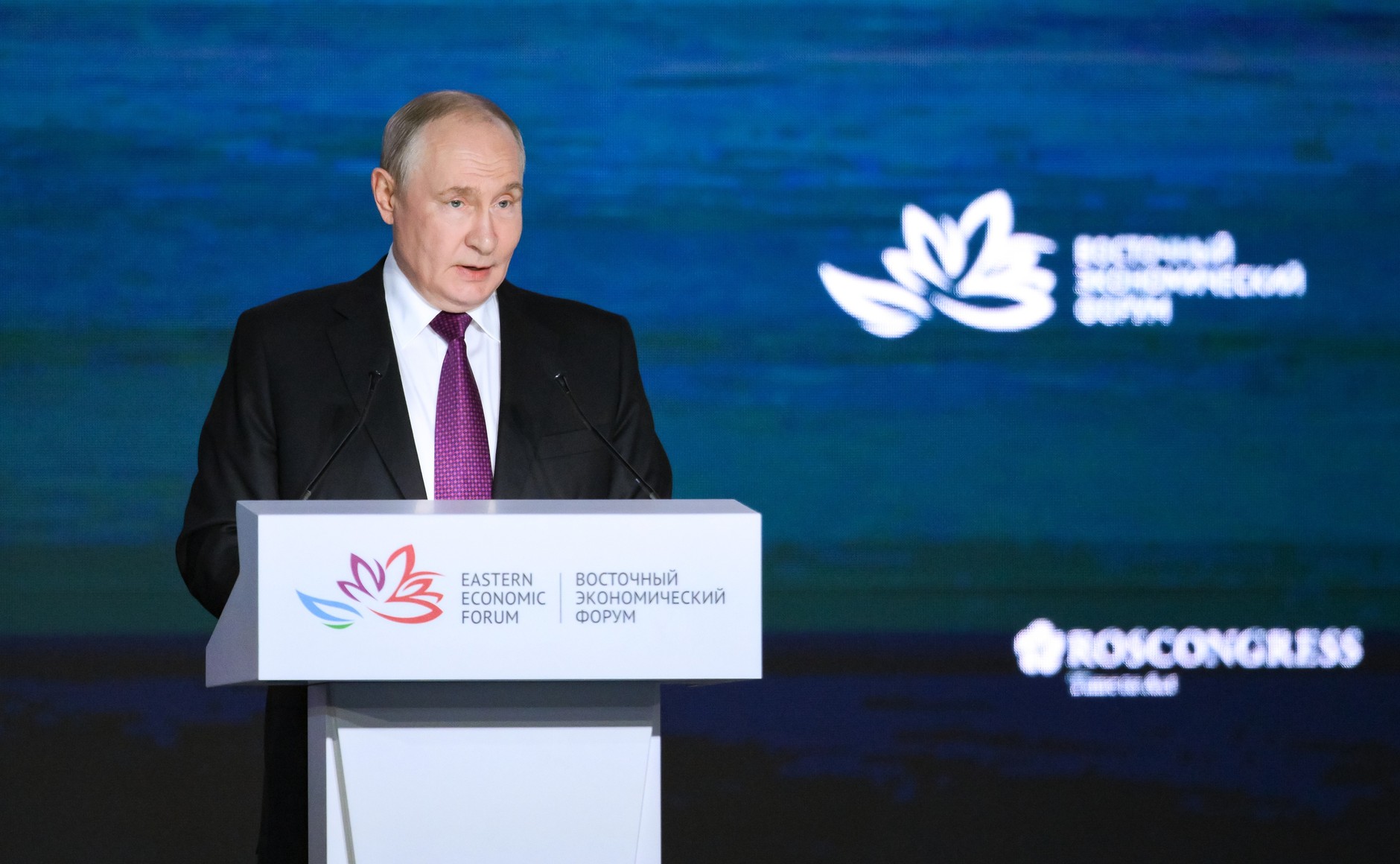
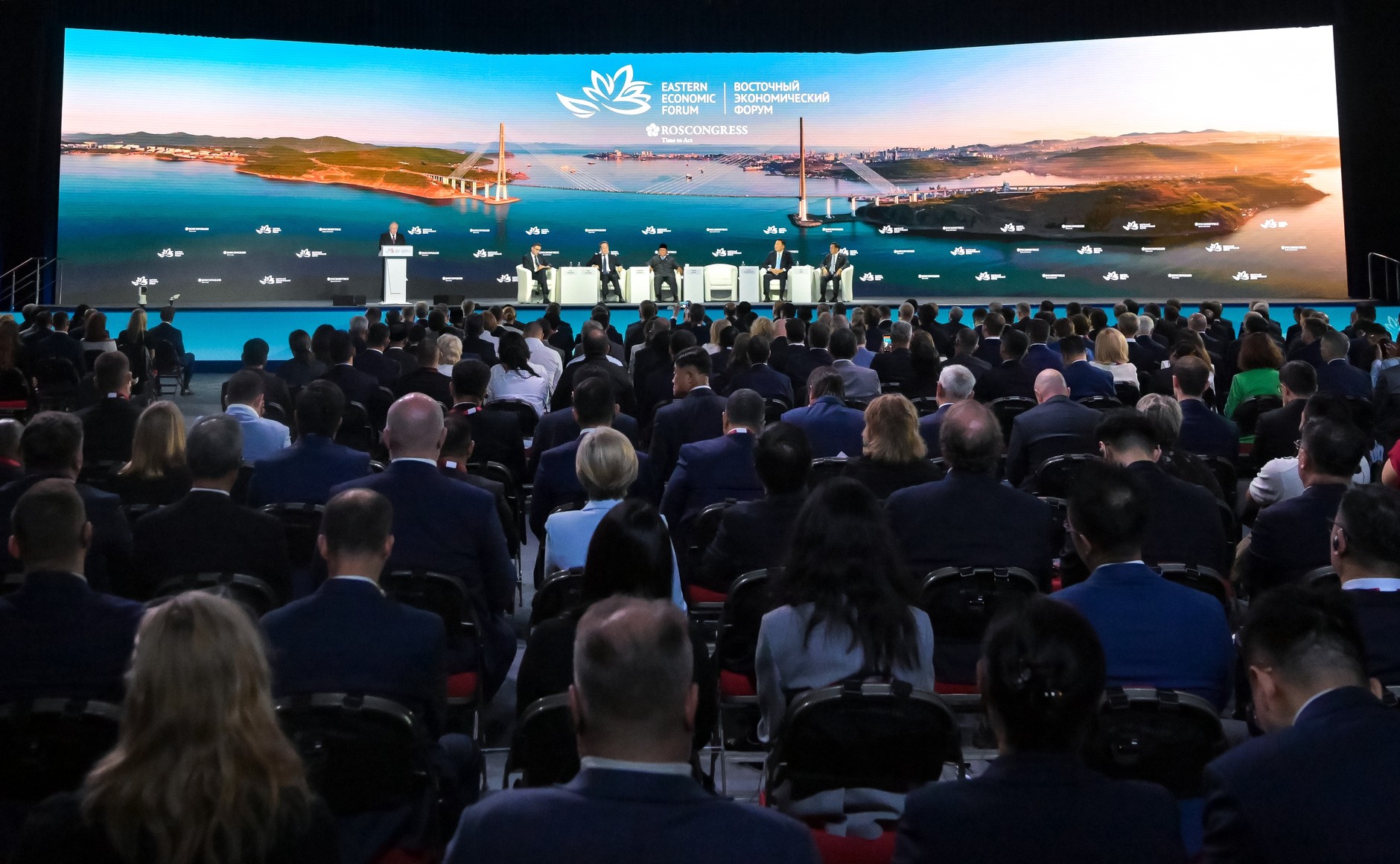
President Putin addressed the plenary session of the 11th Eastern Economic Forum (EEF) in Vladivostok
-
Vladivostok hosts world leaders as Russia unveils unified tax regime and 10-year development plan through 2036
By Muhammad Arif, Editor NSN.Asia
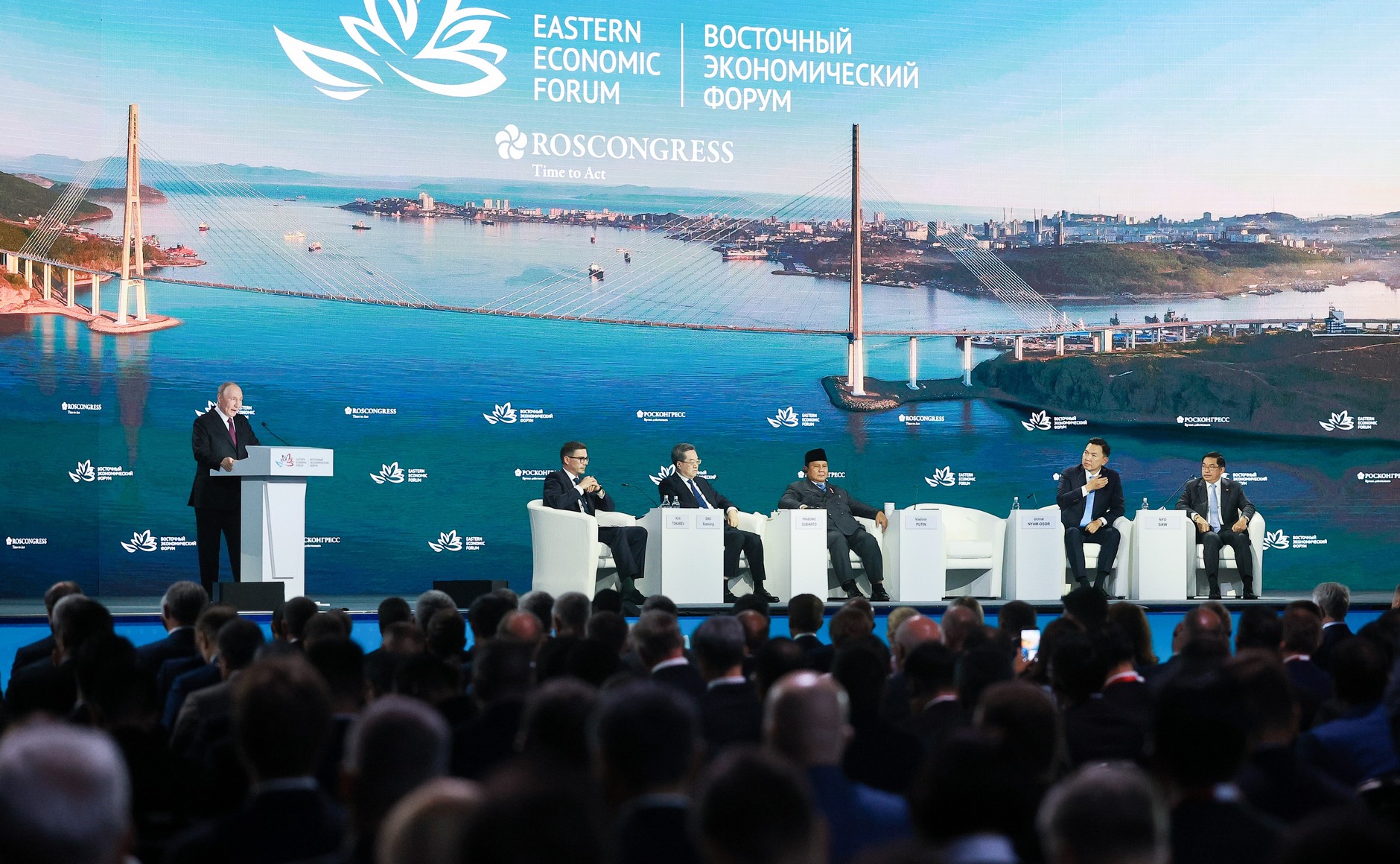
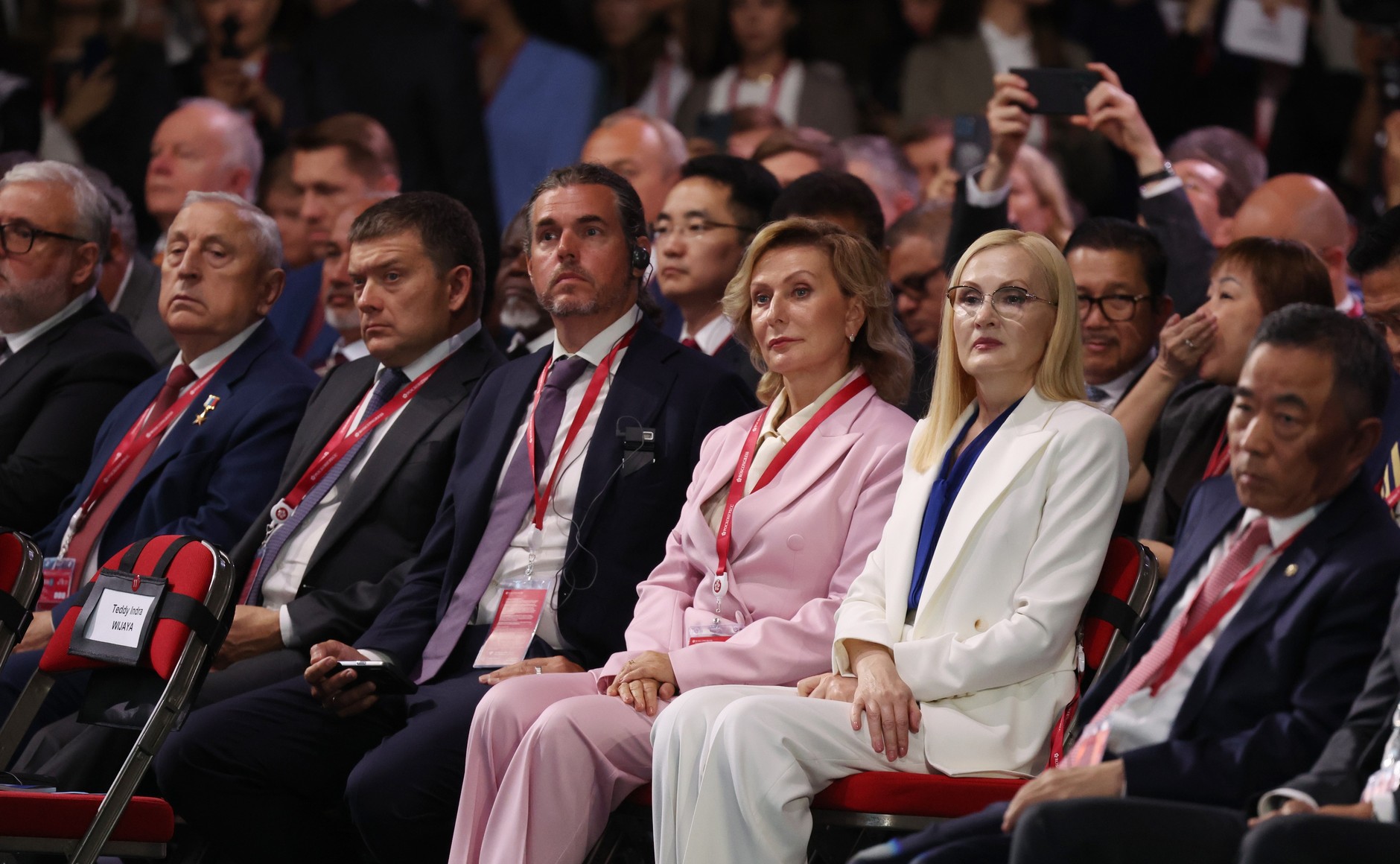
President Vladimir Putin addressed the plenary session of the 11th Eastern Economic Forum (EEF) in Vladivostok, unveiling a sweeping new economic strategy for Russia’s Far East and Arctic regions. He was joined on stage by Indonesian President Prabowo Subianto, Mongolian Prime Minister Nyam-Osoryn Uchral, Myanmar Vice President U Nyo Saw, and Chinese Vice Premier Ding Xuexiang, underscoring the forum’s growing role as a hub for Asia-Pacific economic cooperation.
The discussion, moderated by RBC Editor-in-Chief Kirill Tokarev, centered on this year’s theme: “The Far East: Development for the Benefit of People.”
Far East Investment Has Tripled Regional GDP in 11 Years
Putin opened his remarks by highlighting the scale of Russia’s Far Eastern transformation, noting that the region is a critical growth engine within the broader Asia-Pacific economy.
“Over the past 11 years, Russia’s Far Eastern regions have attracted about 25 trillion rubles in capital investment… As a result, regional GDP in the Far East has more than tripled over the past 11 years.”
Key Economic Achievements Cited
- 25 trillion rubles in capital investment attracted over 11 years
- Regional GDP more than tripled
- 200,000 new jobs created through preferential economic zones
- Major projects completed, including the Zvezda shipbuilding complex, the Amur Gas Processing Plant, and the Amur Gas Chemical Complex
Unemployment Hits Record Low
Putin pointed to labor market improvements as one of the clearest signs of the region’s turnaround.
- Far Eastern unemployment stood at 8% two decades ago, a legacy of the 1990s
- The rate peaked at 16.4% in 1998
- Today, unemployment sits at 2.2% — a record low, on par with the national average
- Roughly one-third of the region’s workforce is employed by small and medium-sized businesses
New Far East Development Strategy Through 2036
Building on this foundation, Putin announced Russia is moving into the next phase of development: an updated Far Eastern Federal District Development Strategy, extending through 2036.
Three Strategic Investment Priorities
1. Domestic Demand and Regional Market Growth
Industrial, infrastructure, tourism, and creative-sector projects aimed at expanding the national market and meeting rising demand across Asia.
2. Innovation and Digital Infrastructure
Investment in high-tech companies and digital and platform economy infrastructure, with a strong emphasis on frontier technologies — including:
- Artificial intelligence
- Biotechnology
- New energy sources
- Other advanced technology sectors, to be developed under the country’s most up-to-date regulatory framework
3. Social Infrastructure and Quality of Life
New investment in education, healthcare, culture, and sports facilities, along with city and village development guided by structured master plans.
“Modern and highly educated people will not live in conditions that do not meet their high standards,” Putin said, emphasizing that human capital is central to the region’s industrial ambitions.
Unified Tax and Investment Regime Launches January 2027
In one of the speech’s most significant policy announcements, Putin confirmed that starting January 1, 2027, a single preferential regime will apply across the entire Far East and Arctic — replacing the current system tied to specific special economic zones.
What Changes Under the New Regime
- Support tools will no longer be tied to a specific zone, but tailored by type of business activity
- A unified “menu” of incentives will apply across the whole Far East and Arctic, including:
- Reduced social security contributions
- Tax and customs benefits
- Infrastructure connection assistance
- Support for industrial facility construction
- Existing benefits preserved for current residents of advanced special economic zones and the Free Port of Vladivostok
Putin instructed the government to ensure that new and existing federal, regional, and industry-specific incentives complement rather than conflict with one another, warning against risks of double taxation for businesses.
Call to Reduce Bureaucratic Burden
Putin also urged regulators to ease administrative pressure on businesses, cautioning that excessive audits and oversight could undercut the benefits of tax incentives.
“It is harmful and even pointless to introduce tax concessions while clamping down on businesses with additional audits, excessive control and oversight.”
He called on government agencies to adopt a risk-based regulatory approach, leveraging digital tools, artificial intelligence, and the Internet of Things (IoT) to modernize regulatory oversight — replacing blanket audits with smarter, technology-driven monitoring that reduces friction for compliant businesses.
“I believe our colleagues from competent ministries and agencies will hear this message and will respectively continue to improve their work by more actively using a risk-oriented approach, digital solutions, artificial intelligence, the internet of things, and other innovative technology for oversight activities.”
Resource Development and Local Processing
Putin highlighted major resource projects driving industrial growth, including:
- Udokan — Russia’s largest copper deposit (Trans-Baikal Territory)
- Elga — the country’s largest coking coal deposit (Yakutia)
- Ozerny Mining and Processing Plant — a major zinc and lead facility (Buryatia)
He stressed that extracted resources should increasingly be processed locally — in metallurgy, petrochemicals, and fertilizer production — to create jobs and boost regional and municipal budget revenues.
High-Tech Industry and Offset Contracts
Beyond resource extraction, Putin emphasized growth in high-technology sectors:
- Shipbuilding and aircraft manufacturing
- Robotics and electronics
- Space industry (anchored by the Vostochny Cosmodrome)
- Pharmaceuticals
- Forestry, agriculture, and aquaculture
To support these industries, Russia is introducing offset contracts, developed with state development bank VEB, guaranteeing long-term demand from the state, regions, and municipalities for businesses that invest in new production facilities.
Conclusion: The Far East as Russia’s Gateway to the Asia-Pacific
Taken together, Putin’s remarks point to a single overarching ambition: cementing Russia’s Far East as a central hub for Asia-Pacific economic cooperation. The presence of leaders from Indonesia, Mongolia, Myanmar, and China at the plenary session — alongside 11 years of data showing investment, GDP, and employment all outpacing the national average — was framed as evidence that this transformation is already underway, not merely aspirational.
With the unified tax and investment regime launching in 2027 and the new development strategy extending through 2036, Russia is signaling a long-term, structural commitment to the region rather than a short-term stimulus package. The strategy rests on three mutually reinforcing pillars: deeper integration with Asian markets, a decisive push into AI, biotechnology, and new energy, and continued investment in the people and communities who will build and sustain this growth.
Regulatory modernization is central to that pitch. By pairing tax and customs incentives with AI- and IoT-enabled, risk-based oversight, Moscow is positioning the Far East and Arctic not just as resource-rich territories, but as a genuinely competitive investment destination for Asia-Pacific partners — one built on predictability, reduced red tape, and smarter regulation rather than on concessions alone.
Putin also signaled support for continued legislative reform, calling on the incoming State Duma, to be elected in September, to actively pursue business-climate improvements — reinforcing that the Far East’s role as a regional economic hub will continue to be shaped as much by policy as by geography.

Reporting based on official remarks delivered at the plenary session of the 11th Eastern Economic Forum in Vladivostok. Photo credit: Vyacheslav Viktorov, Roscongress.