

Pakistan hosts foreign ministers of Saudi Arabia, Egypt and Turkey for meeting in Islamabad to investigate halt escalation in Middle East
The ongoing conflict triggered by United States and Israeli military actions against Iran has pushed the Middle East into one of its most dangerous phases in decades. What began as a strategic offensive in late February 2026 has evolved into a multi-layered regional crisis involving missile strikes, maritime insecurity, and the risk of a wider war. Amid this volatile environment, Pakistan has emerged as a key diplomatic actor, positioning itself as a mediator and facilitator of peace. The hosting of foreign ministers from Saudi Arabia, Egypt, and Turkey in Islamabad marks a significant step in this direction, reflecting Pakistan’s growing relevance in crisis diplomacy.
Escalation and Regional Fallout
The conflict has already inflicted heavy damage, with thousands reported dead and critical infrastructure in Iran targeted through sustained airstrikes. The situation has further escalated with the involvement of regional actors such as Yemen’s Houthi forces, who have launched missile and drone attacks against Israeli targets, widening the conflict’s geographic scope.
Equally concerning is the disruption of global energy and trade routes. The Strait of Hormuz—one of the world’s most vital oil chokepoints—has been severely affected, raising fears of a global economic shock. The United States has reportedly deployed additional military assets to the region, with speculation of a possible ground offensive further intensifying tensions.
Against this backdrop, the urgency for diplomatic intervention has become critical, opening space for regional actors like Pakistan to play a constructive role.
Islamabad as a Diplomatic Hub
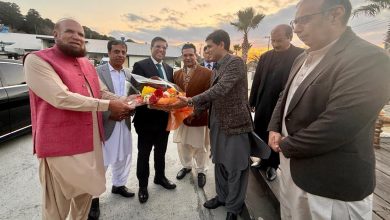
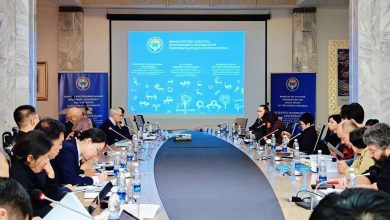
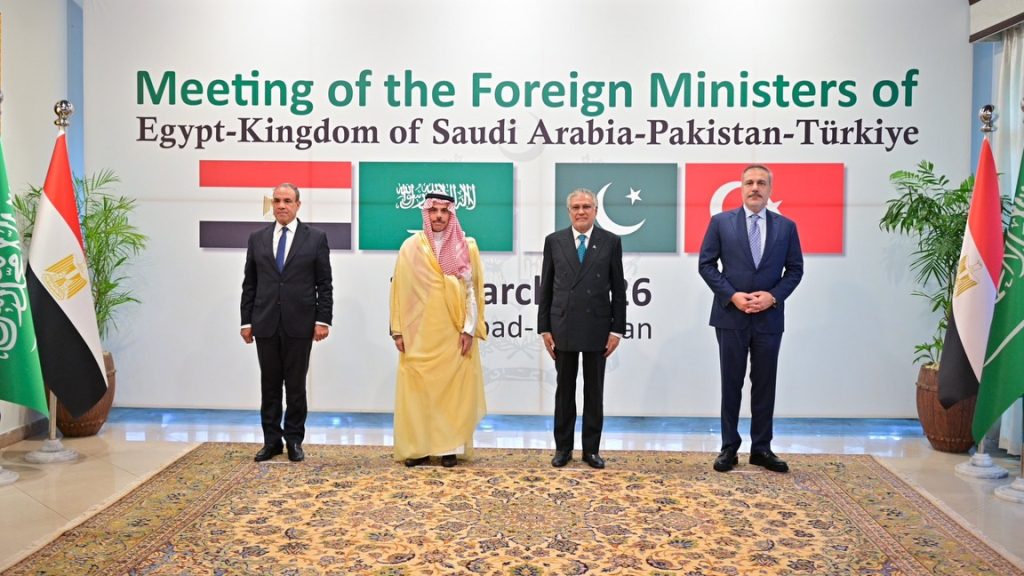
Pakistan’s decision to host high-level talks involving Saudi Arabia, Turkey, and Egypt signals its intent to transform Islamabad into a center for peace negotiations. The two-day meeting brings together influential Muslim-majority countries with stakes in regional stability, aiming to craft a coordinated response to the crisis.
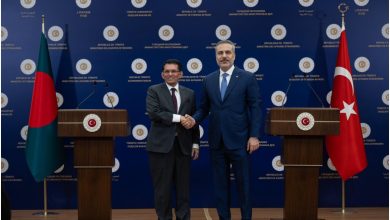
The presence of key diplomats—including Saudi Foreign Minister Prince Faisal bin Farhan, Turkish Foreign Minister Hakan Fidan, and Egyptian Foreign Minister Badr Abdelatty—highlights the seriousness of the initiative. These discussions are focused on de-escalation, ceasefire prospects, and creating pathways for direct dialogue between the United States and Iran.
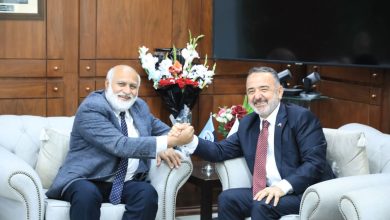
Pakistan’s Foreign Minister, Ishaq Dar, has engaged in extensive bilateral consultations, emphasizing restraint and the need for diplomacy over military confrontation. The Islamabad meeting is widely seen as part of a broader multinational effort to prevent further escalation and stabilize the region.
Pakistan as a Mediator Between Adversaries
One of Pakistan’s most significant contributions lies in its unique diplomatic positioning. Unlike many countries, Pakistan maintains working relations with both Iran and key US allies such as Saudi Arabia. This allows Islamabad to function as a bridge between opposing camps.
Pakistan has already been involved in “shuttle diplomacy,” conveying messages between Washington and Tehran. Reports indicate that Islamabad has even been considered as a potential venue for direct US–Iran negotiations, underscoring international confidence in its neutrality.
Moreover, Pakistan has reportedly played a role in preventing further escalation by urging restraint from all sides. In one instance, mediation efforts contributed to the temporary removal of Iranian officials from potential targeting lists, preserving diplomatic channels.
Strategic Motivations Behind Pakistan’s Role
Pakistan’s peace efforts are not purely altruistic; they are deeply rooted in its national interests. The country faces significant economic and security risks from prolonged instability in the Middle East.
First, Pakistan is heavily dependent on energy imports routed through the Strait of Hormuz. Any disruption directly affects its economy, leading to fuel shortages and inflationary pressures.
Second, Pakistan shares a long border with Iran, making it vulnerable to spillover effects such as refugee flows, cross-border militancy, and sectarian tensions. Internal protests and unrest linked to the conflict have already been reported, reflecting the domestic impact of the crisis.
Third, Pakistan must carefully balance its relations with Saudi Arabia—its long-standing ally—and Iran, its neighbor. The 2025 Pakistan–Saudi Strategic Mutual Defence Agreement adds complexity, as Islamabad must avoid being drawn into a broader military confrontation while maintaining its commitments.
Thus, Pakistan’s diplomatic activism is driven by a combination of strategic necessity and geopolitical opportunity.
A Coordinated Muslim World Response
The Islamabad meeting also reflects a broader trend: the emergence of a coordinated diplomatic effort among Muslim-majority countries. Saudi Arabia, Turkey, and Egypt—each with significant regional influence—are working alongside Pakistan to create a unified platform for de-escalation.
This collective approach is important for several reasons. It enhances the legitimacy of peace efforts, reduces fragmentation in the Muslim world’s response, and increases pressure on conflicting parties to engage in dialogue. Turkish officials, for instance, have emphasized the urgency of actionable strategies to end the war and protect critical trade routes.
By hosting these talks, Pakistan is not only facilitating diplomacy but also strengthening multilateral cooperation among key regional actors.
Challenges and Limitations
Despite its proactive role, Pakistan faces significant challenges in achieving tangible outcomes. One major limitation is the absence of direct representation from the primary belligerents—the United States, Israel, and Iran—in the Islamabad talks. Without their direct participation, the effectiveness of any proposals remains uncertain.
Additionally, deep mistrust between Washington and Tehran complicates mediation efforts. Iran has expressed skepticism toward US intentions, particularly amid reports of potential ground operations.
There is also the broader geopolitical context to consider. External powers, including Russia and China, as well as regional actors like the Gulf states, have their own strategic interests, which may not always align with Pakistan’s mediation efforts.
Opportunities for Pakistan’s Global Standing
Despite these challenges, Pakistan’s diplomatic initiative offers significant opportunities. Successfully facilitating dialogue—even indirectly—could enhance its international reputation as a responsible and constructive actor in global affairs.
Historically, Pakistan has played mediation roles in various conflicts, but the scale and stakes of the current crisis provide a unique opportunity to elevate its diplomatic profile. Hosting high-level talks and engaging multiple stakeholders positions Islamabad as a credible venue for conflict resolution.
Furthermore, this role aligns with Pakistan’s broader foreign policy objective of promoting regional stability while avoiding direct military involvement. Analysts have described this approach as “limited alignment without military entanglement,” allowing Pakistan to maintain strategic flexibility.
Conclusion
In the face of escalating tensions following US–Israel actions against Iran, Pakistan has stepped forward as a key diplomatic intermediary. By hosting foreign ministers from Saudi Arabia, Egypt, and Turkey, Islamabad has created a platform for coordinated regional efforts aimed at de-escalation and dialogue.
While the road to peace remains uncertain, Pakistan’s role underscores the importance of middle-power diplomacy in managing global crises. Its ability to balance relationships, facilitate communication, and mobilize regional actors places it at the center of ongoing peace efforts.
Ultimately, whether these initiatives succeed will depend on the willingness of the primary parties to engage in meaningful negotiations. However, Pakistan’s proactive stance demonstrates that even in the midst of conflict, diplomacy remains a vital tool—and Islamabad is determined to use it.