Pakistan Delegation Calls on Ambassador Khalil Hashmi in Beijing
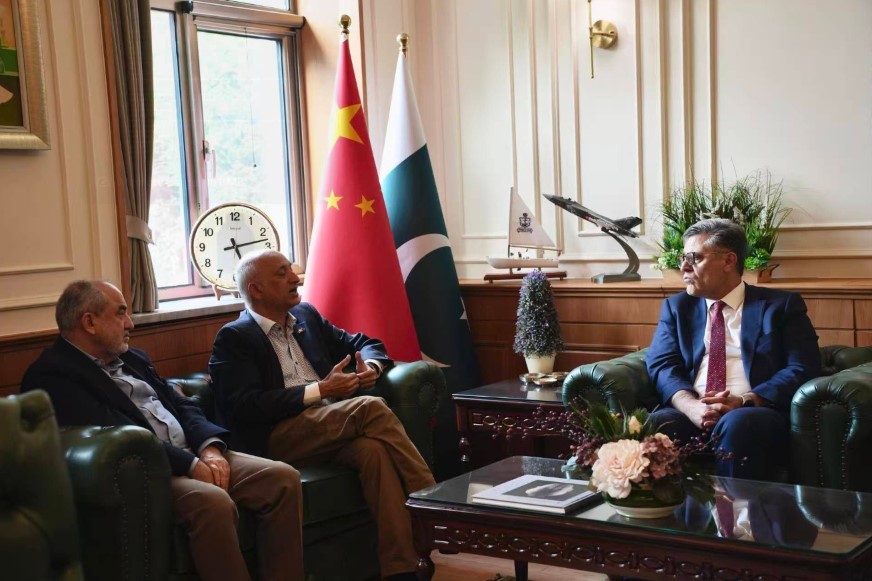
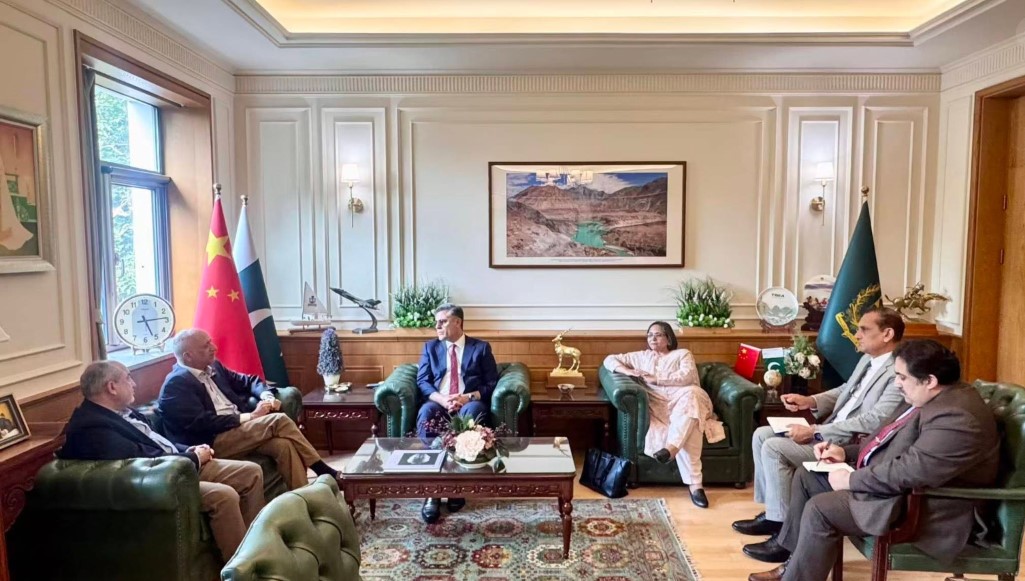
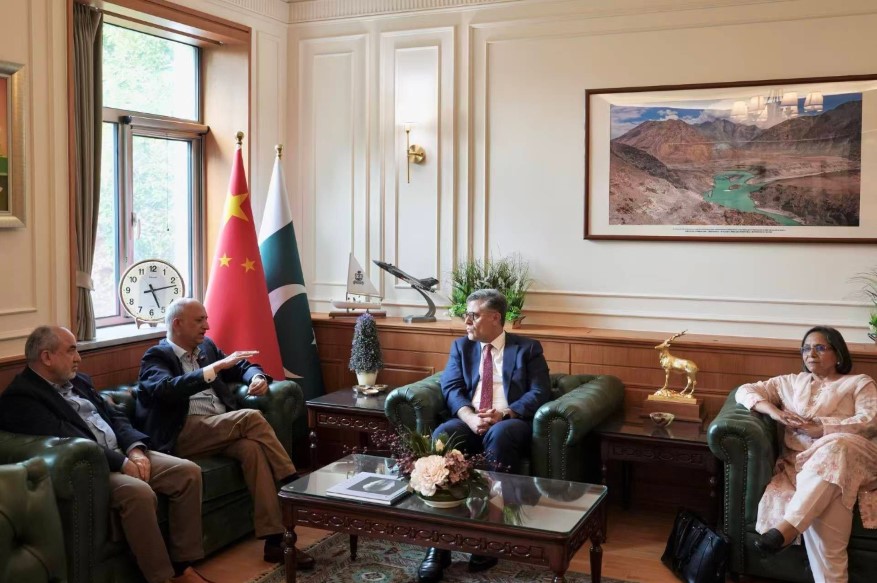
Delegates discuss the engagements with Chinese industrial and financial institutions in steel, footwear and chemicals

-
Delegates discuss the engagements with Chinese industrial and financial institutions in steel, footwear and chemicals
-
Ambassador Khalil Hashmi Outlines the Shift from CPEC 1.0 to CPEC 2.0
- By Muhammad Arif, Editor NSN.Asia
Beijing: Delegates from the Pakistan Regional Economic Forum (PREF) held high-level consultations in Beijing this week, briefing Ambassador Khalil Hashmi on the forum’s ongoing engagements with Chinese industrial and financial institutions across three priority sectors: steel, footwear and chemicals. The meeting underscored Pakistan’s continuing efforts to deepen economic cooperation with China and attract fresh industrial investment under the next phase of bilateral collaboration.
Delegation Details PREF’s Outreach to Chinese Investors
Chairman of the Pakistan Regional Economic Forum, Haroon Sharif, accompanied by Ambassador Naghmana Hashmi, called on Ambassador Khalil Hashmi to update him on the forum’s progress in connecting Chinese industrial and financial institutions with Pakistani businesses. The briefing focused on PREF’s structured approach to identifying viable sectors for joint ventures and cross-border investment partnerships.
During the meeting, the delegates explained that PREF’s engagement with Chinese counterparts builds on earlier outreach efforts aimed at linking Chinese investors with leading Pakistani companies. Based on that groundwork, the forum has now shortlisted steel, footwear and chemicals as priority sectors for deeper collaboration, citing their potential for scalable industrial partnerships and export-oriented growth.
Steel, Footwear and Chemicals Emerge as Priority Sectors
The selection of steel, footwear and chemicals as focus areas reflects a broader strategy to align Pakistan’s industrial capacity with China’s manufacturing expertise and investment appetite. These sectors have long been identified as areas where Pakistan holds comparative advantages, including access to raw materials, a skilled labour force and growing regional demand.
According to the briefing, Chinese companies operating in these industries are expected to visit Pakistan in the coming months for follow-up discussions. The visits are intended to pave the way for potential joint ventures with credible Pakistani business groups, moving discussions from preliminary interest to concrete investment commitments. PREF officials emphasized that the shortlisting process was designed to ensure that only serious, well-capitalized Chinese firms are matched with established Pakistani partners, reducing the risk of stalled or symbolic agreements that have sometimes characterized past investment drives.
Industry observers note that steel and chemicals, in particular, are capital-intensive sectors where Chinese firms have significant global manufacturing experience, while footwear offers opportunities for labour-intensive export manufacturing that could benefit from technology transfer and access to Chinese supply chains.
Ambassador Khalil Hashmi Outlines the Shift from CPEC 1.0 to CPEC 2.0
A central part of the discussion centered on the evolving trajectory of the China-Pakistan Economic Corridor (CPEC). Ambassador Khalil Hashmi shared his perspective on how the flagship initiative has progressed from its first phase to its current one, offering the delegation a broader strategic context for PREF’s sector-specific efforts.
He explained that CPEC 1.0 was largely defined by large-scale infrastructure development, including energy projects, road networks and port development at Gwadar, which laid the foundational connectivity required for deeper economic integration between the two countries. This initial phase focused heavily on addressing Pakistan’s energy shortages and building the transport and logistics backbone needed to support future trade and investment.
Ambassador Hashmi noted that the corridor has since entered a new phase, CPEC 2.0, which places greater emphasis on agriculture, mining and minerals, information and communication technology (ICT), and industrial cooperation. He described this shift as opening new avenues for high-quality, mutually beneficial collaboration between Pakistan and China, moving the relationship beyond infrastructure into sectors with longer-term economic value addition and job creation.
This evolution, he suggested, aligns closely with PREF’s current sectoral focus, as steel, footwear and chemicals fall squarely within the industrial cooperation pillar that defines the second phase of CPEC. The convergence between PREF’s investment matchmaking efforts and the broader CPEC 2.0 framework was highlighted as a positive indicator of coordinated economic diplomacy between Islamabad and Beijing.
Strengthening Institutional Coordination
The meeting also served as a platform to strengthen coordination between Pakistani diplomatic missions in China and organizations like PREF that work directly on investment facilitation. Ambassador Naghmana Hashmi’s participation in the meeting reflected the continued involvement of senior diplomatic figures in supporting Pakistan’s private-sector-led investment outreach.
By briefing Ambassador Khalil Hashmi directly, PREF aimed to ensure that its sector-specific initiatives remain aligned with the broader diplomatic and economic priorities set by Pakistan’s mission in Beijing. Such coordination is seen as essential for maintaining consistent messaging to Chinese investors and for leveraging diplomatic channels to facilitate smoother business-to-business engagement.
What This Means for Pakistan-China Economic Ties
The briefing comes at a time when Pakistan is actively seeking to diversify its sources of foreign direct investment and expand industrial partnerships beyond traditional infrastructure financing. With CPEC entering its second phase, there is growing recognition on both sides that sustainable economic cooperation requires moving beyond large infrastructure projects toward sectors that generate direct employment, technology transfer and export growth.
Steel, footwear and chemicals each offer distinct advantages in this context. Pakistan’s steel sector stands to benefit from Chinese expertise in modern production techniques and capacity expansion. The footwear industry, already a notable export earner for Pakistan, could see enhanced competitiveness through Chinese investment in manufacturing technology and supply chain integration. Meanwhile, the chemicals sector presents opportunities for import substitution and value-added industrial production, areas where Pakistan currently relies heavily on imports.
If the anticipated visits by Chinese companies materialize into concrete joint ventures, the outcomes could provide a meaningful boost to Pakistan’s industrial base, create new employment opportunities and contribute to reducing the trade imbalance with China. PREF’s role as a matchmaking platform will be closely watched in the coming months as these engagements progress from exploratory discussions to formal partnerships.
Looking Ahead
As Chinese delegations prepare for follow-up visits to Pakistan, both PREF and Pakistan’s diplomatic mission in Beijing appear focused on ensuring these engagements translate into tangible investment outcomes. The emphasis on credible Pakistani business groups suggests a deliberate effort to build durable partnerships rather than one-off agreements, reflecting lessons learned from previous phases of bilateral economic cooperation.
With CPEC 2.0 providing the strategic framework and PREF driving sector-specific matchmaking, Pakistan’s steel, footwear and chemicals industries may be entering a new chapter of Chinese industrial collaboration—one that officials hope will deliver more diversified, sustainable and mutually beneficial economic outcomes for both countries.
Keywords: PREF, Pakistan Regional Economic Forum, CPEC 2.0, Pakistan China investment, steel sector Pakistan, footwear industry Pakistan, chemicals sector investment, Ambassador Khalil Hashmi, Haroon Sharif, China Pakistan Economic Corridor, industrial cooperation, joint ventures Pakistan China