Pakistan, China Operationalize Boundary Joint Commission to Deepen Connectivity
Pakistan and China Operationalize Boundary Joint Commission, Deepening Border and People-to-People Ties

-
Pakistan and China Operationalize Boundary Joint Commission, Deepening Border and People-to-People Connectivity
-
Pakistan-China Boundary Joint Commission, a new institutional mechanism, is designed to strengthen cooperation across border management, joint border surveys, trade flows, and people-to-people connectivity
-
Pakistan China new era, people-to-people connectivity, Khunjerab Pass trade
By: Muhammad Arif, Editor NSN.Asia
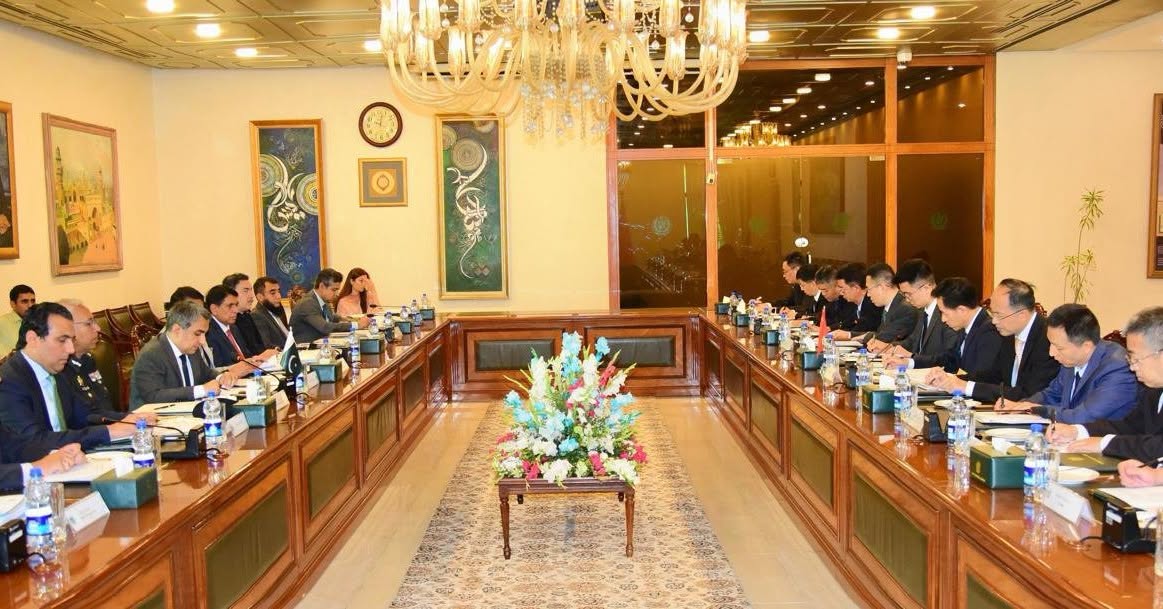
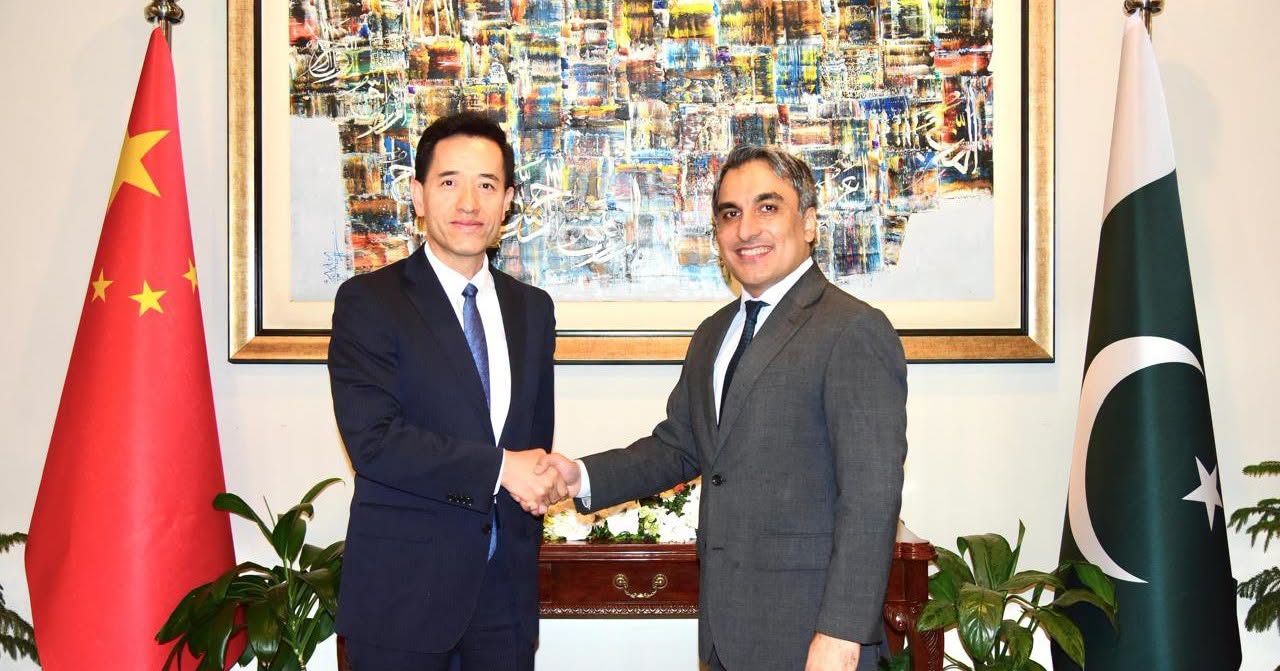
Islamabad: Pakistan and China today marked a significant milestone in their bilateral relationship with the operationalization of the Pakistan-China Boundary Joint Commission, a new institutional mechanism designed to strengthen cooperation across border management, joint border surveys, trade flows, and people-to-people connectivity.
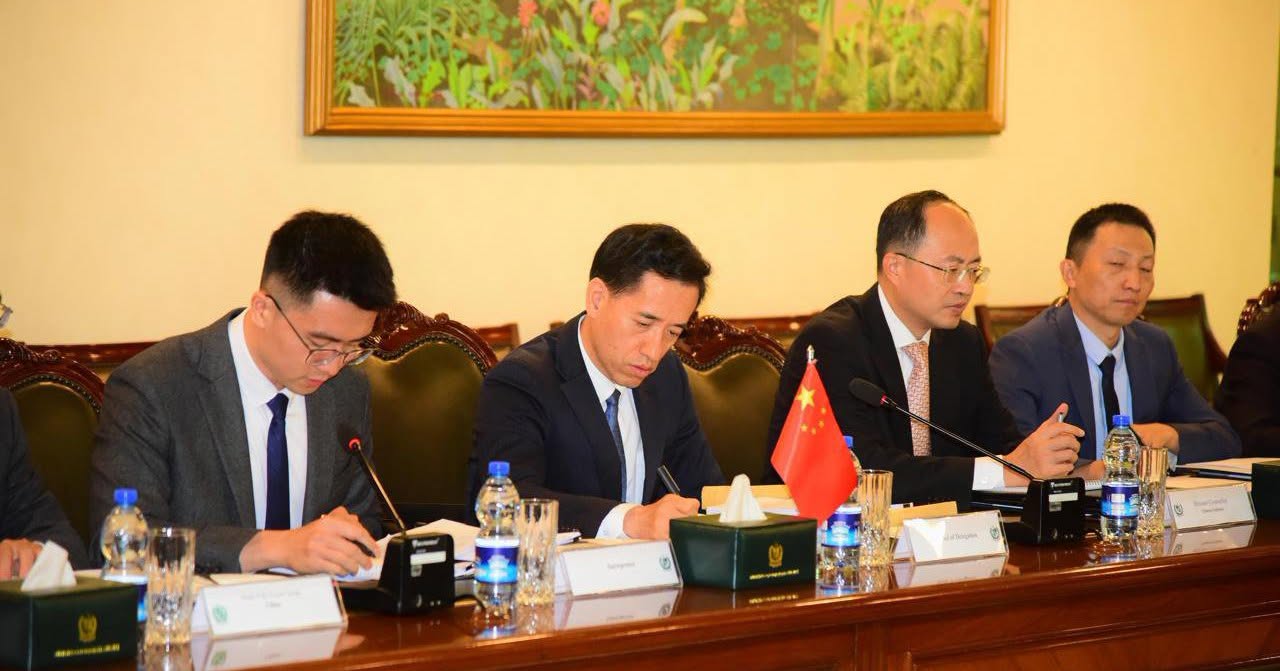
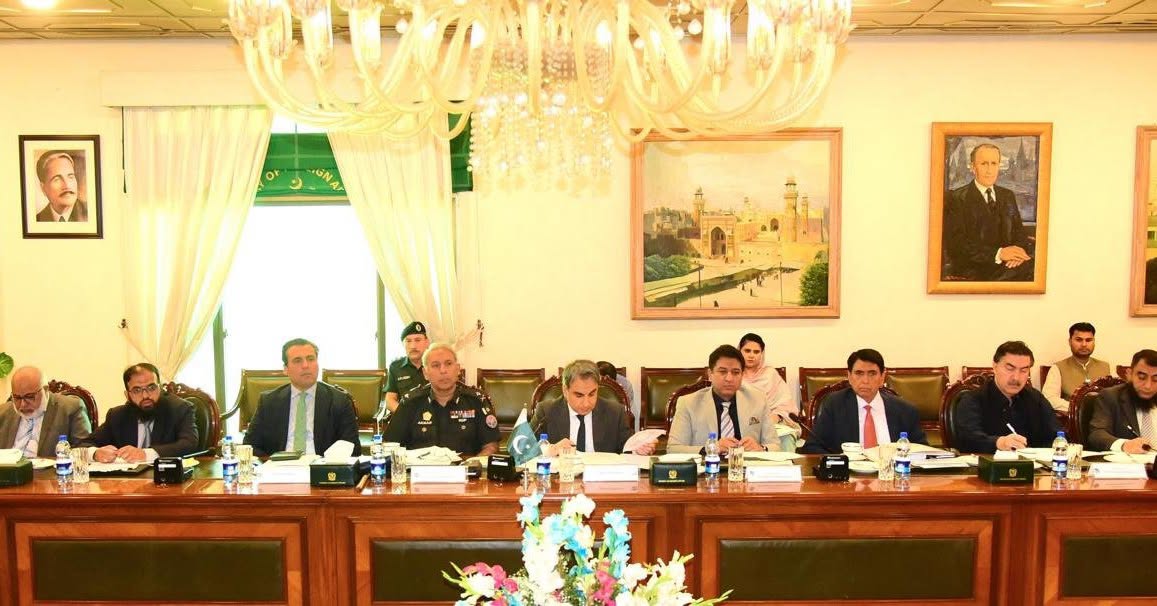
The inaugural meeting of the Commission was held at the Ministry of Foreign Affairs in Islamabad, co-led by Mr. Li Ya, Deputy Director General of the Department of Boundary and Ocean Affairs at China’s Ministry of Foreign Affairs, and Mr. Bilal Mahmood Chaudhary, Director General (China) at Pakistan’s Ministry of Foreign Affairs. The Commission’s launch gives the two countries a dedicated, standing platform through which to manage a shared border that, while historically stable, requires ongoing technical coordination as trade volumes, infrastructure projects, and cross-border movement continue to expand.
What the Commission Is Designed to Do
The Boundary Joint Commission’s mandate spans four interlinked areas. On border management, the Commission is expected to provide a structured channel for resolving technical and administrative matters related to the shared frontier, reducing the need for ad hoc diplomatic engagement each time an issue arises. Joint border surveys — a technical exercise involving demarcation verification and terrain assessment — will help ensure both sides maintain a common, updated understanding of the boundary, particularly relevant given the challenging high-altitude terrain the two countries share in the Karakoram range.
On trade facilitation, the Commission’s work is likely to intersect directly with ongoing efforts to streamline cross-border commerce, including customs coordination and the operational efficiency of border crossing points such as the Khunjerab Pass, which serves as the primary land link between the two countries. Finally, the explicit inclusion of people-to-people connectivity within the Commission’s mandate signals that Islamabad and Beijing view the human dimension of the relationship — not just trade and security — as a formal area of institutional cooperation going forward.
A Deliberate Institutional Step
The operationalization of the Commission fits a broader pattern in Pakistan-China relations, where high-level political commitments are increasingly being followed by dedicated bureaucratic architecture designed to execute them. Rather than routing every border-related matter through general diplomatic channels, the Commission creates a specialized track staffed by officials whose sole remit is managing this specific dimension of the relationship — a structure that mirrors similar joint commissions China maintains with several of its other neighbors.
For Pakistan, the Commission’s launch offers a practical benefit: a predictable, institutionalized forum for raising and resolving border-related issues, rather than relying on periodic high-level visits or one-off working groups. For China, it reflects a broader interest in formalizing border governance mechanisms with all its neighbors as part of a longer-term strategy of reducing ambiguity along its frontiers.
Backgrounder: Pakistan-China Ties in a New Era
The Pakistan-China relationship has long been described by officials on both sides as “all-weather” and “iron-clad,” rooted in decades of strategic alignment dating back to the establishment of diplomatic relations in 1951. For much of that history, the relationship’s public face was dominated by high-level strategic cooperation, defense ties, and, since 2015, the large-scale infrastructure investment associated with the China-Pakistan Economic Corridor (CPEC).
In recent years, however, officials on both sides have increasingly spoken of a “new era” in the relationship — one intended to broaden beyond government-to-government and infrastructure cooperation into deeper societal engagement. People-to-people connectivity has emerged as a specific pillar of this shift, encompassing student exchange programmes, expanded direct flight connections, tourism promotion, Chinese language instruction in Pakistani universities, and growing numbers of Pakistani students pursuing higher education in China.
This emphasis responds to a practical reality: a relationship built primarily on state-level strategic and infrastructure cooperation can remain somewhat abstract to ordinary citizens on both sides. Broader human connectivity — through education, tourism, and cultural exchange — is increasingly viewed by both governments as necessary to sustain long-term public support for the relationship, particularly in Pakistan, where large-scale Chinese-funded projects have occasionally drawn domestic scrutiny over financing terms, security costs, and the pace of benefits reaching local communities.
The Boundary Joint Commission’s explicit inclusion of people-to-people connectivity within its technical mandate is a modest but telling detail: it suggests that even in a forum focused primarily on demarcation and border logistics, Islamabad and Beijing are treating human exchange as infrastructure in its own right — something to be planned, coordinated, and institutionally supported, rather than left to develop organically.
The Way Forward
The Commission’s real test will be procedural consistency rather than symbolism. Border and boundary commissions of this kind tend to succeed or stagnate based on how regularly they meet, how much technical authority is delegated to them, and whether the officials involved have the standing to resolve issues without escalating every matter back to ministerial level.
If the Commission functions as intended, it could offer a template for how Pakistan and China manage the next phase of their relationship more broadly: less reliant on periodic high-profile summits and more anchored in standing institutional mechanisms with clear, narrow mandates. Given that people-to-people connectivity now sits formally within this border-focused body’s remit, its performance may also serve as an early indicator of whether the broader “new era” rhetoric around deeper societal ties between the two countries translates into concrete, measurable outcomes — or remains, for now, aspirational.