Pakistan Calls for SCO Digital Trade Corridor as CPEC 2.0 Expands into Technology
Pakistan presents digital transformation agenda at SCO Digital Economy Forum 2026 in Urumqi, highlighting AI, digital trade, cybersecurity, advanced manufacturing and youth-led growth

-
Pakistan Calls for SCO Digital Trade Corridor as CPEC 2.0 Expands into Technology
-
Pakistan presents digital transformation agenda at SCO Digital Economy Forum 2026 in Urumqi, highlighting AI, digital trade, cybersecurity, advanced manufacturing and youth-led growth.
-
Pakistan recorded $4.6 billion in IT and ICT export remittances during the last financial year
- By: Muhammad Arif, Editor NSN.Asia
URUMQI, China — Pakistan has called for a deeper digital partnership among Shanghai Cooperation Organisation (SCO) member states, proposing an SCO Digital Trade Corridor and greater cooperation in artificial intelligence, shared digital infrastructure, cybersecurity and the digital transformation of key economic sectors.
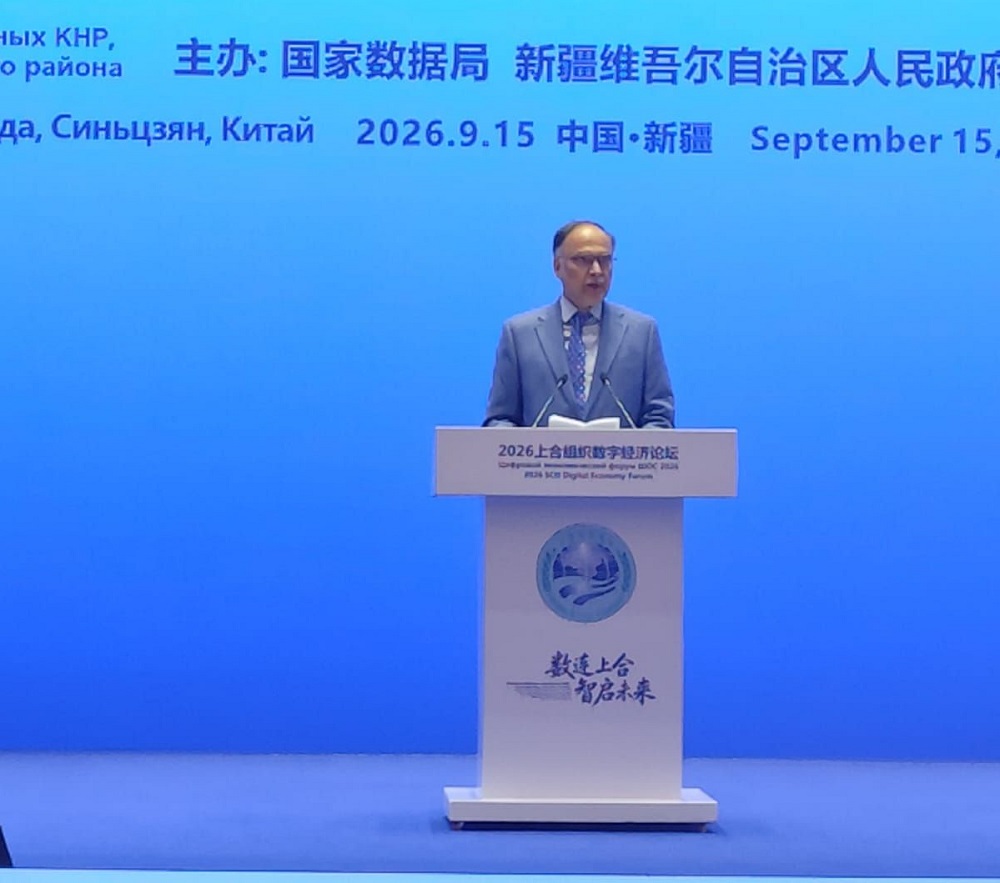
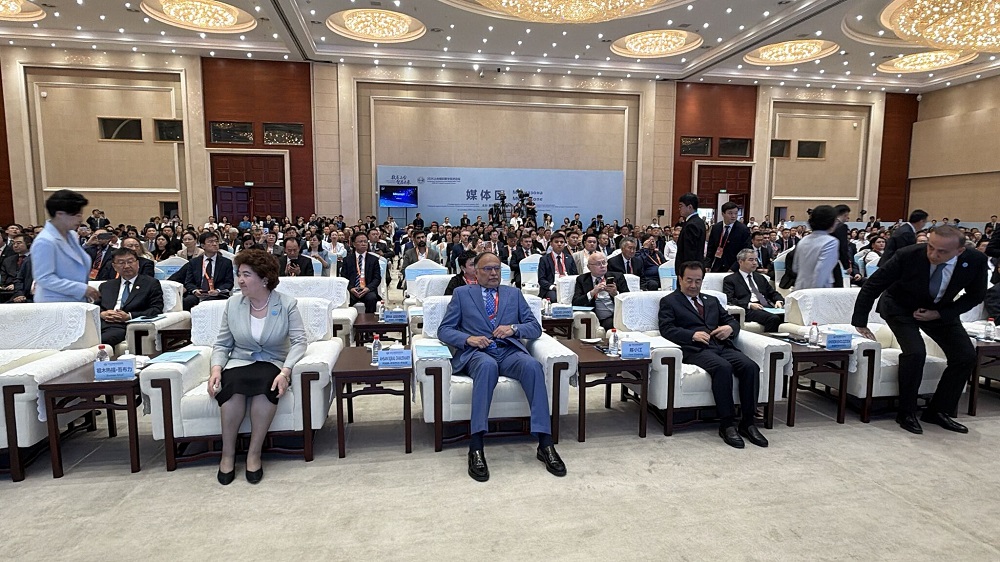
Federal Minister Prof. Ahsan Iqbal Chaudhary addressed the opening ceremony and main forum of the 2026 SCO Digital Economy Forum held in Urumqi city, Xinjiang, China, presenting Pakistan’s digital transformation as part of a broader strategy to move the country from a consumer and service provider of digital technologies toward a producer of technology, digital platforms and intellectual property.
The Minister highlighted the rapid expansion of Pakistan’s digital ecosystem, saying the country now has more than 150 million digital users, while data consumption has increased by approximately 25 percent over the past two years.
Pakistan’s fibre connectivity has also expanded significantly, with fibre connections increasing from nearly three million to more than five million. The country has set a national target of extending wired broadband connectivity to 10 million households.
The digital transformation, Iqbal emphasized, must also be inclusive. He highlighted progress in reducing Pakistan’s mobile-internet gender gap from 35 percent to 8 percent, while women’s mobile-internet adoption increased from 33 percent to 45 percent.
For Pakistan, the figures illustrate both the scale of the country’s emerging digital market and the challenge of converting connectivity into productive economic participation.
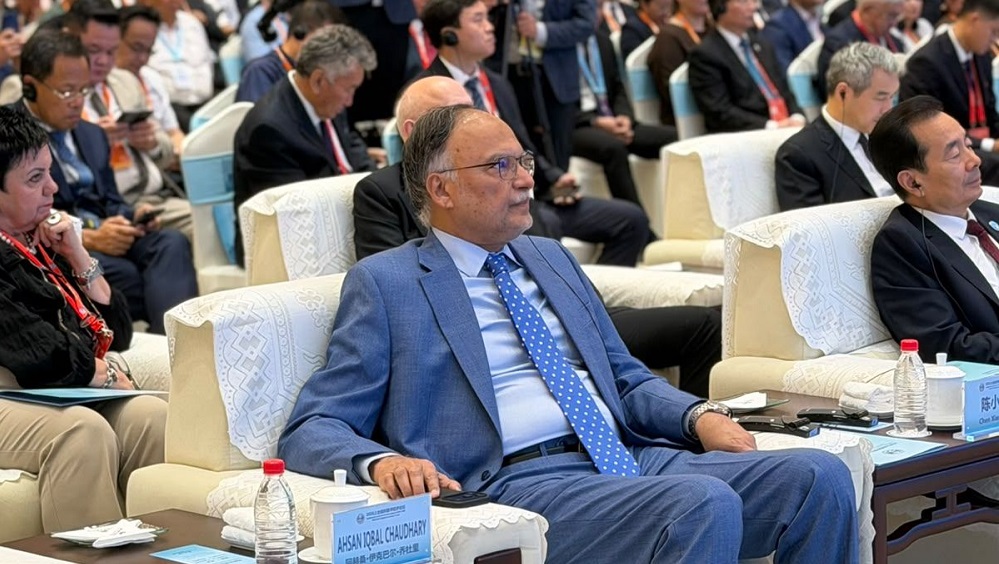
“A digital transformation that leaves women behind can neither be economically transformative nor socially just.”
From Digital Services to Technology Products
A central theme of Pakistan’s presentation was the need to move beyond traditional IT and digitally delivered services.
Pakistan recorded $4.6 billion in IT and ICT export remittances during the last financial year, according to the figures presented by the Minister. The next stage, he said, is to develop higher-value technology products, digital platforms, intellectual property and technology-enabled industries.
This represents an important shift in the country’s digital-economy strategy.
Rather than relying primarily on software services, freelancing and outsourced digital work, Pakistan is seeking to build capabilities across the technology value chain — from research and skills development to product development, industrial applications and international commercialization.
The strategy places greater emphasis on linking universities, research institutions, startups, industry and government.
Pakistan is strengthening capabilities in artificial intelligence, cybersecurity, cloud computing, semiconductors, advanced manufacturing and other emerging technologies.
Seven AI hubs are also being established to connect research, skills development, startups and industry, according to the Minister.
The emphasis on these areas reflects a broader recognition that the economic impact of digitalization will depend not only on internet access but on whether countries can develop the human capital, infrastructure and industrial capacity required to create and deploy advanced technologies.
E-Pakistan and the $1 Trillion Economic Vision
Iqbal linked Pakistan’s digital agenda to URAAN Pakistan, the country’s broader development framework aimed at achieving a $1 trillion economy by 2035 through export-led growth, higher productivity, innovation, investment and human-capital development.
Within this framework, E-Pakistan is identified as one of five pillars, placing digital transformation at the center of Pakistan’s economic modernization agenda.
The approach connects digitalization with wider economic objectives rather than treating technology as a separate sector.
Digital infrastructure can support trade and logistics, while AI and data technologies can transform agriculture and manufacturing. Cloud computing can enable businesses to scale digital operations, while cybersecurity and digital trust are increasingly necessary for cross-border commerce.
The challenge for Pakistan is therefore to convert its rapidly expanding digital user base into greater productivity, investment, exports and employment.
Four Priorities for SCO Digital Cooperation
Against this backdrop, Pakistan proposed four areas for enhanced digital cooperation among SCO member states.
1. SCO Digital Trade Corridor
The first proposal is the development of an SCO Digital Trade Corridor to facilitate digital commerce and strengthen connections between businesses and markets across the organization.
Digital trade infrastructure could help reduce administrative barriers, improve customs and trade processes, and make cross-border transactions more efficient.
For Pakistan, such a mechanism also complements its geographic position at the intersection of South Asia, Central Asia, China and the Middle East.
The concept extends the traditional understanding of connectivity. Roads, railways, ports and energy networks remain important, but increasingly they operate alongside digital platforms, data networks and electronic trade systems.
2. Digital Transformation of Strategic Sectors
Pakistan also called for cooperation in applying digital technologies to agriculture, industry, mining and energy.
These sectors are particularly significant for SCO economies because of their large agricultural bases, industrial capacity and extensive energy and mineral resources.
Artificial intelligence, automation, cloud computing and data analytics can potentially improve productivity, resource management, supply chains and industrial processes.
For Pakistan, digital transformation of these sectors could also support the country’s efforts to increase exports and improve industrial competitiveness.
3. Shared AI Infrastructure and Research
The third priority focuses on shared AI infrastructure, research and multilingual AI models.
The proposal reflects the growing importance of artificial intelligence to economic development and the particular linguistic diversity of the SCO region.
Cooperation in research, computing infrastructure and AI models could enable participating countries to develop applications better suited to their own languages, economies and social requirements.
For Pakistan, building domestic AI capacity is also linked to its objective of developing a new generation of technology professionals and researchers.
4. Cybersecurity, Digital Trust and Inclusion
The fourth priority is cybersecurity, digital trust and inclusion.
As economies become increasingly dependent on digital platforms, the expansion of connectivity creates corresponding requirements for secure networks, data protection and trusted digital transactions.
Pakistan’s emphasis on cybersecurity alongside digital expansion reflects the recognition that regional digital integration requires confidence in the underlying infrastructure and systems.
Inclusion is another central component. The reduction in Pakistan’s mobile-internet gender gap highlighted at the forum demonstrates the importance Islamabad places on ensuring that digital transformation reaches previously underserved groups.
CPEC 2.0: Connecting Technology, Enterprise and Markets
Pakistan’s digital agenda also intersects with the evolving concept of CPEC 2.0.
The first phase of the China-Pakistan Economic Corridor was heavily associated with physical infrastructure, particularly energy and transport connectivity.
The emerging second phase places greater emphasis on industrial cooperation, business-to-business partnerships, technology transfer, special economic zones and export-oriented economic activity.
At the SCO forum, Iqbal said CPEC 2.0 and Special Economic Zones can connect Chinese technology, Pakistani enterprise and regional markets.
This creates a potential bridge between China’s technological and industrial capabilities, Pakistan’s growing digital workforce and the wider consumer and production markets of the SCO region.
The model could extend beyond infrastructure construction toward joint ventures, technology partnerships, research collaboration and technology-enabled manufacturing.
Pakistan’s existing fibre-optic connectivity with China also provides an information-infrastructure component to the broader connectivity architecture.
The strategic question is now how physical corridors and digital networks can be integrated to generate greater trade, investment and industrial competitiveness.
Youth as the Core of Digital Transformation
Human capital emerged as another important dimension of Pakistan’s digital strategy.
The country has a large and increasingly connected young population, creating a substantial potential workforce for technology-intensive industries.
However, connectivity alone does not automatically produce technological competitiveness.
The transition toward AI, semiconductors, advanced manufacturing and technology products requires specialized education, research capabilities, technical training and links between universities and industry.
Pakistan’s plans for AI hubs and advanced technology development are intended to address this gap by connecting skills, research, startups and industrial demand.
The emphasis also fits within Pakistan-China cooperation, where education, technology transfer and professional training can complement investment and infrastructure partnerships.
From Declarations to Projects
Concluding his address, Iqbal stressed that the success of the SCO Digital Economy Forum should not be measured only by declarations but by the results generated through cooperation.
He identified greater trade, increased investment, stronger technology partnerships, more competitive industries and new employment opportunities as practical indicators of progress.
This focus on implementation is significant because digital cooperation increasingly requires practical interoperability — compatible systems, secure data exchanges, common standards, investment mechanisms, skilled professionals and commercially viable projects.
For Pakistan, the objective is to transform its growing digital market and human capital into productive economic capacity.
For the SCO, the opportunity lies in connecting large markets, energy and mineral resources, scientific capabilities and young populations through a more integrated digital economy.
Building a Digital Eurasian Economy
Pakistan’s message from Urumqi places digitalization within a much broader transformation of regional economic connectivity.
The proposed SCO Digital Trade Corridor, shared AI infrastructure, sectoral digitalization and cybersecurity cooperation could complement existing physical connectivity across Eurasia.
For Islamabad, the agenda also provides a potential pathway for linking Digital Pakistan with CPEC 2.0, Special Economic Zones and the country’s export ambitions.
The emphasis is increasingly moving from simply connecting places to connecting data, businesses, technologies, researchers, markets and people.
Pakistan has signaled its readiness to work with China and other SCO members to translate these priorities into practical initiatives.
The next stage will depend on implementation: whether digital corridors can facilitate actual trade, whether technology partnerships produce competitive products, whether AI research generates commercially useful applications, and whether investment creates new industries and employment.
The Urumqi forum therefore reflects an expanding definition of regional connectivity — one in which digital infrastructure and technological capability become as important to economic integration as roads, ports and energy networks.
For Pakistan, the ambition is to use this transition to strengthen its role as a technology-enabled economic and connectivity hub linking China, Central Asia, South Asia and wider Eurasian markets.