
Liaquat Ali Khan’s Brilliant Step to Recognize China in 1950
Pakistan’s Strategic Move to Join Hands with the People's Republic of China

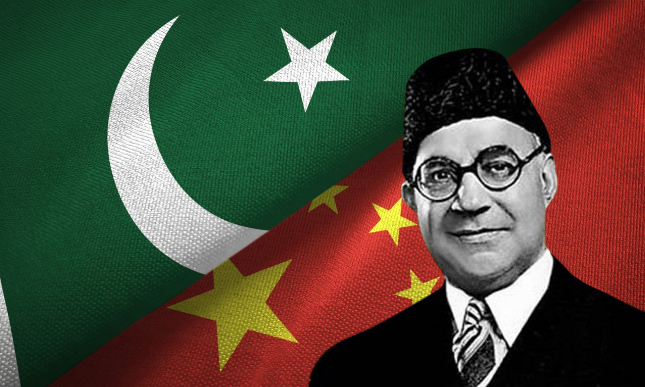
In the annals of Pakistan’s diplomatic history, few decisions have proven as far-sighted and impactful as the one taken by the nation’s first Prime Minister, Liaquat Ali Khan, when he recognized the newly founded People’s Republic of China (PRC) 4 January 1950, becoming the first Muslim country to do so. At a time when global politics was being shaped by Cold War rivalries and ideological divisions, Liaquat Ali Khan’s decision to establish relations with the Communist China reflected not only his diplomatic acumen but also his independent and pragmatic approach to foreign policy.
Barely two years after the creation of Pakistan, Liaquat Ali Khan was faced with the immense challenge of positioning the young state on the world map. The country was still grappling with the aftermath of partition, managing refugee crises, economic instability, and strained relations with India. In such uncertain times, the foreign policy decisions taken by its early leadership were crucial in defining Pakistan’s identity in the global arena.
Liaquat Ali Khan, known as Quaid-e-Millat (Leader of the Nation), understood that Pakistan’s survival depended not on aligning blindly with any one bloc but on building balanced relations that served the country’s long-term strategic and economic interests. In this context, his recognition of the People’s Republic of China on January 4, 1950, just months after its establishment in October 1949, was a landmark move that laid the foundation for one of the most enduring and time-tested friendships in international relations.
A Vision Beyond His Time
To appreciate the significance of Liaquat Ali Khan’s decision, one must understand the global environment of 1949. The world was entering the early phase of the Cold War, divided between the Western bloc led by the United States and the Eastern bloc under the Soviet Union. China had just undergone a revolution under the leadership of Chairman Mao Zedong, and the Communist Party had come to power after a prolonged civil war.
Many Western countries, including the United States and its allies, refused to recognize the new Chinese government, continuing instead to support the exiled Nationalist regime in Taiwan. At that moment, Liaquat Ali Khan’s decision for Pakistan to formally recognize the People’s Republic of China was both bold and visionary. It signaled that Pakistan would make its foreign policy decisions independently, based on national interest rather than external pressure.
While many newly independent countries hesitated to take a clear stance, Pakistan became one of the first Muslim-majority and non-Communist nations to extend recognition to Beijing. This early step established mutual trust between the two nations that has only deepened with time.
Laying the Foundations of Pak-China Friendship
By recognizing the People’s Republic of China, Liaquat Ali Khan not only set the tone for future bilateral relations but also ensured that Pakistan’s foreign policy maintained a delicate balance in a polarized world. The move was welcomed warmly by Beijing, and both sides began exploring avenues of cooperation.
Although formal diplomatic relations were established later in 1951, the groundwork laid by Liaquat Ali Khan’s initiative played a vital role in bridging two civilizations — South Asian and East Asian. China, emerging from years of revolution, found in Pakistan a friendly neighbor that understood its quest for sovereignty and development.
For Pakistan, the recognition of China carried immense symbolic value. It reflected the nation’s commitment to principles of self-determination, respect for sovereignty, and peaceful coexistence — values that would later form the basis of its foreign policy. Liaquat Ali Khan saw in China not merely a political ally but a partner in regional peace and stability.
A Diplomatic Balancing Act
What made Liaquat Ali Khan’s foreign policy particularly remarkable was his ability to maintain equilibrium in international relations. On one hand, he reached out to the United States for economic and strategic cooperation, seeing in it an opportunity for Pakistan’s development. On the other, he kept the door open for strong relations with neighboring powers like China and the Soviet Union.
This policy of “friendship with all, enmity with none” reflected his understanding that Pakistan, as a newly independent nation, could not afford to become a pawn in global power politics. His approach was pragmatic — rooted in Pakistan’s geographic realities and security needs rather than ideological alignment.
When Liaquat Ali Khan accepted an invitation to visit the United States in 1950 instead of the Soviet Union, critics argued that he was tilting towards the West. However, his simultaneous recognition of the People’s Republic of China proved that he was, in fact, pursuing a balanced and flexible foreign policy — one that prioritized Pakistan’s strategic interests above all else.
Recognition of China — A Turning Point in Asia
Liaquat Ali Khan’s foresight in recognizing China also positioned Pakistan as an important player in Asian geopolitics. The decision resonated strongly across the developing world, especially among newly independent nations of Asia and Africa that were seeking to break free from colonial influence.
By acknowledging the legitimacy of the Chinese government, Pakistan sent a clear message that it supported the will of the people and the principle of sovereignty over imposed regimes. This decision would later serve as the cornerstone for Pakistan’s active role in the Non-Aligned Movement and its consistent advocacy for peaceful coexistence.
Decades later, this early recognition blossomed into a deep-rooted friendship, famously described as “higher than the Himalayas, deeper than the oceans, and sweeter than honey.” The bond that today manifests in projects like the China-Pakistan Economic Corridor (CPEC) traces its origins back to the diplomatic vision of Liaquat Ali Khan in 1949.
Liaquat Ali Khan’s Legacy in Modern Diplomacy
The assassination of Liaquat Ali Khan in 1951 cut short a life dedicated to public service and nation-building. Yet his diplomatic legacy continues to shape Pakistan’s global relations. His understanding of geopolitics, especially regarding China, proved prophetic.
At a time when other nations viewed China with suspicion, Liaquat saw an opportunity for regional cooperation and mutual growth. His actions reflected not only his intellect but also his courage to take decisions that went against the prevailing global currents.
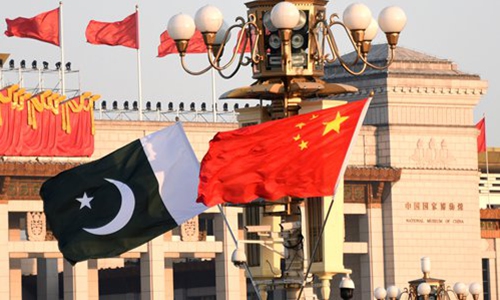
Today, Pakistan’s enduring friendship with China — a partnership that spans defense, infrastructure, technology, and culture — stands as one of the most successful diplomatic relationships in the world. Every visit, agreement, and exchange between Islamabad and Beijing carries within it the spirit of Liaquat Ali Khan’s early gesture of trust and recognition.
A Timeless Decision
 As Pakistan commemorates its early years and honors the memory of its first Prime Minister, it becomes clear that Liaquat Ali Khan’s recognition of the People’s Republic of China was not just a political move — it was an act of vision and principle. It defined Pakistan’s commitment to independent decision-making and respect for international equality.
In the changing dynamics of global politics today, where alliances shift and new powers rise, Liaquat Ali Khan’s diplomatic wisdom offers timeless guidance. His belief that Pakistan should maintain balance, pursue peace, and uphold dignity in its foreign relations remains as relevant as ever.
Liaquat Ali Khan did not live to see the full fruit of his efforts, but his foundation ensured that Pakistan and China would stand together through decades of challenges and triumphs. The recognition he extended in 1949 was not merely diplomatic — it was historic, shaping the destiny of two nations for generations to come.
Indeed, Liaquat Ali Khan’s vision made Pakistan not just a friend of China — but a partner in history.