

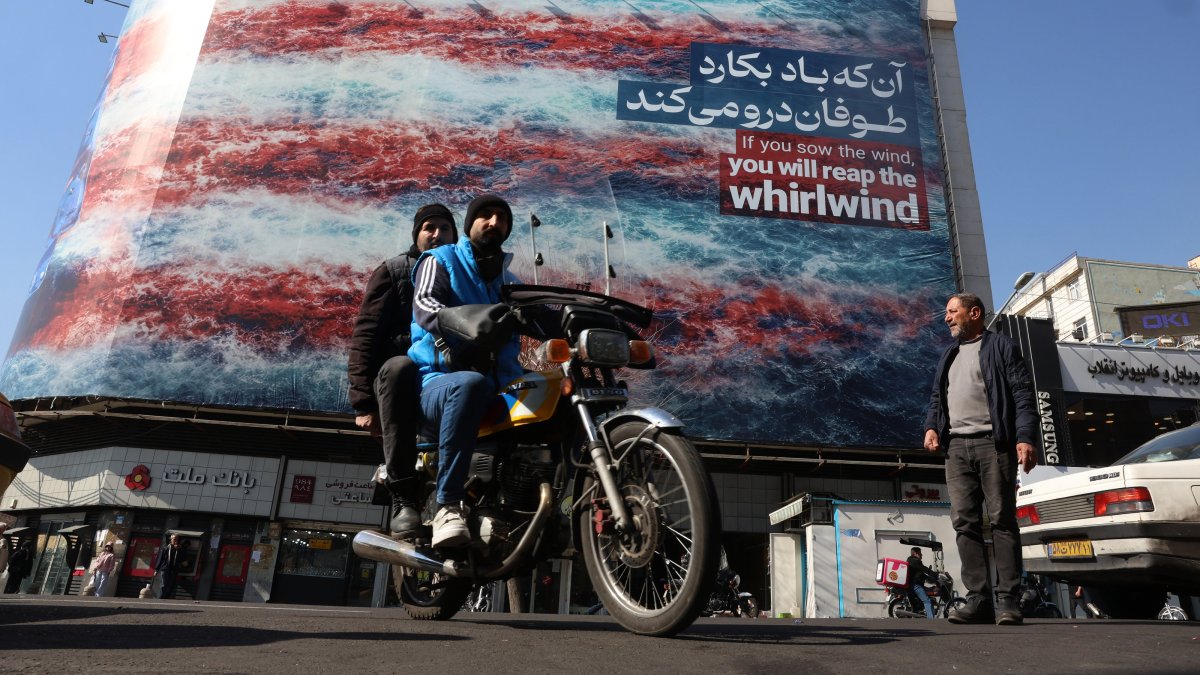
Iran’s Foreign Minister Abbas Araghchi said Tehran and Washington have agreed on a set of guiding principles for a potential deal, while noting that no date has been determined for a third round of talks between the two sides.
“Ultimately, we were able to reach broad agreement on a set of guiding principles, based on which we will move forward and begin working on the text of a potential agreement,” Araghchi told state TV after the talks in Geneva, which he described as “more constructive” than the previous round earlier this month.
“I can say that, compared with the previous round, fully serious discussions were raised and the atmosphere was more constructive,” he added.
Tehran and Washington held Tuesday a second round of negotiations – which began earlier this month – after talks last year collapsed following Israel’s attack on Iran in June, which triggered a 12-day war.
That war saw the United States briefly join Israel with strikes on key Iranian nuclear sites.
The latest talks were held after Washington deployed an aircraft carrier group to the Middle East following Iran’s deadly crackdown last month on anti-government protests, first sparked by economic hardships.
During the interview with state TV, Araghchi said the two sides have begun a path toward an agreement, but noted that “this does not mean we can reach a deal quickly.”
“We hope this process can be completed as soon as possible and we are ready to devote sufficient time to it,” he added.
He acknowledged that it “will take time to narrow” the gap between the positions of both sides, “but at least we now have a set of guiding principles and a clearer path to move forward on.”
However, he added that no date had been set for a third round of talks with the United States, as both sides will develop draft texts for a potential deal before fixing a time.
“No specific time has been set” for the third round, Araghchi told state TV. “It was agreed that both sides would work further on draft texts for a potential agreement, after which the drafts would be exchanged and a date for a third round would be set.”
He also urged the U.S. to immediately desist from threatening the use of force against Tehran.
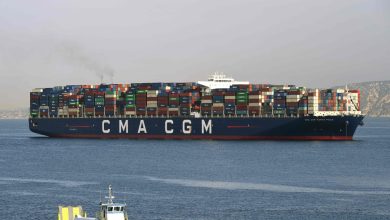
Iranian state media reported earlier that Iran would temporarily shut part of the Strait of Hormuz, a vital global oil supply route, as it held talks over its nuclear program with the U.S., which has sent a battle force to the Gulf region to press Tehran to make concessions.
U.S. President Donald Trump has said “regime change” in Tehran may be the best thing that can happen, while Iran’s Supreme Leader Ayatollah Ali Khamenei said on Tuesday that any U.S. attempts to depose his government would fail.
Just as the talks got underway in Geneva, Iranian state media reported that parts of the strategic strait would close for a few hours due to “security precautions” while Iran’s elite Revolutionary Guards conducted military drills there.
Tehran has in the past threatened to shut down the strait to commercial shipping if it is attacked, a move that would choke off a fifth of global oil flows and drive up crude prices.
Alongside Aragchi, U.S. envoy Steve Witkoff and Jared Kushner took part in the Geneva talks, which were being mediated by Oman.