CooperationNewsNSNPakistan-China CooperationPhotosSilk Road
BRI: Xinjiang Hosts China–Central and South Asia Legal Forum 2025
BRI: China–Central and South Asia Legal Forum 2025 promotes legal awareness, understanding between BRI partners

-
BRI: CPEC is a vital driving force for industrial development, agricultural modernization, and digital transformation of Pakistan
-
BRI: China–Central and South Asia Legal Forum 2025 aims to promote legal awareness, understanding between BRI partners
-
The rule of law is an “indispensable” foundation that can guarantee for Belt and Road cooperation, experts
By Muhammad Arif, Editor NSN.Asia
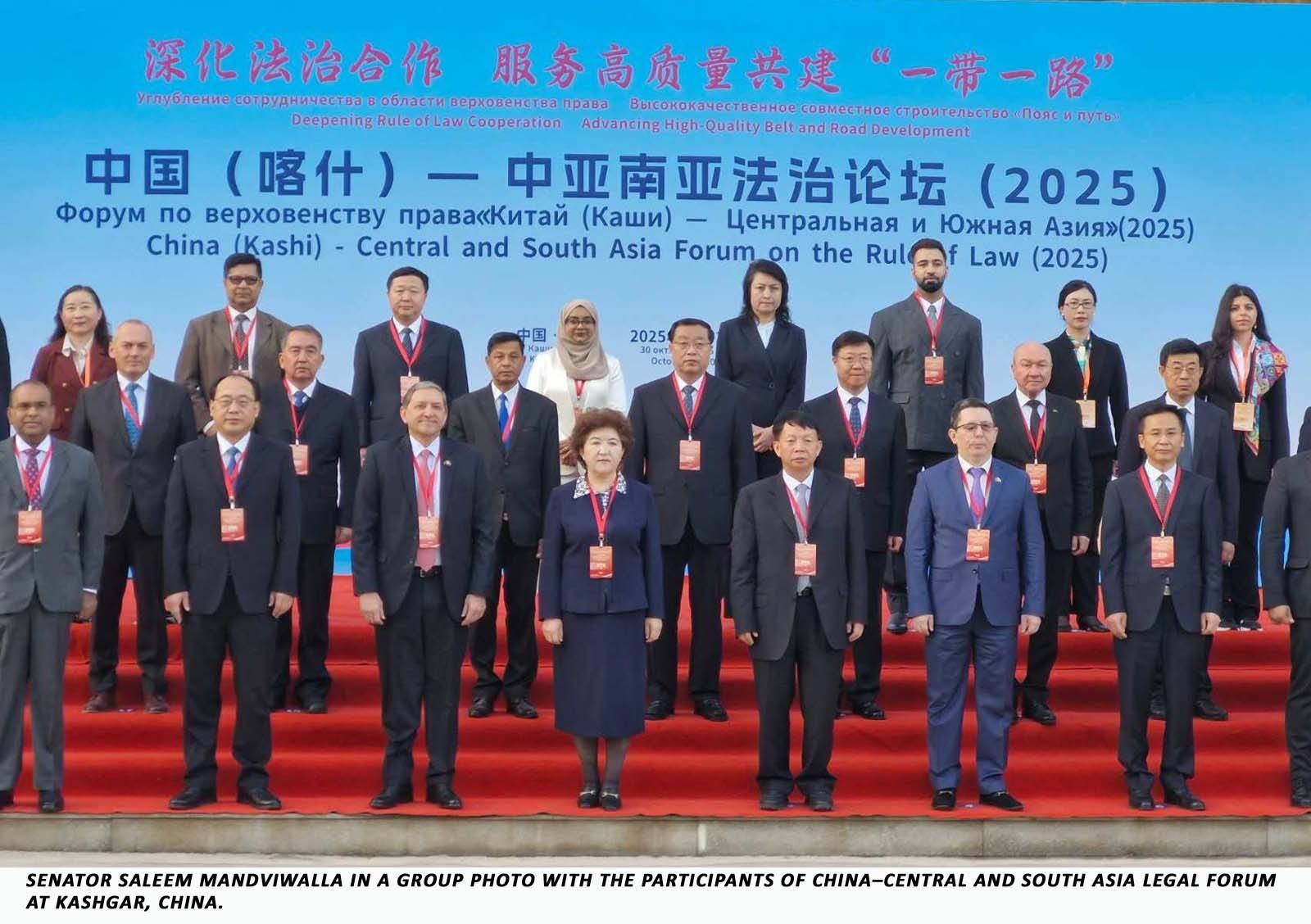
Islamabad: Senator Saleem Mandviwalla has represented Pakistan at the China–Central and South Asia Legal Forum 2025 held in Xinjiang, Western China, a starting point of ancient Silk Road and Xi Jinping’s the Belt and Road Initiative (BRI).
During the forum held on Tuesday, Senator Saleem Mandviwalla highlighted the importance of a strong legal and institutional framework for the high-quality joint construction of the Belt and Road Initiative (BRI).
Senator Saleem Mandviwalla of Pakistan, drawing from Pakistan’s experience, outlined three key pillars:
-
Sustainable investment through legal certainty:
Investors gain confidence in an environment where contracts are enforceable, intellectual property is protected, and profits are guaranteed.
-
Building trust through dispute resolution:
Business disagreements are natural, but uncertainty deters investment. The Senator proposed the establishment of international commercial courts and arbitration centers to resolve disputes efficiently.
-
Strengthening legal capacity:
A successful legal framework requires trained professionals. Senator Mandviwalla emphasized investment in joint legal education, specialized courses, and exchange programs.
Senator Mandviwalla described CPEC as the flagship project of the BRI, noting that it has now entered its third phase—focused on industrial development, agricultural modernization, and digital transformation.
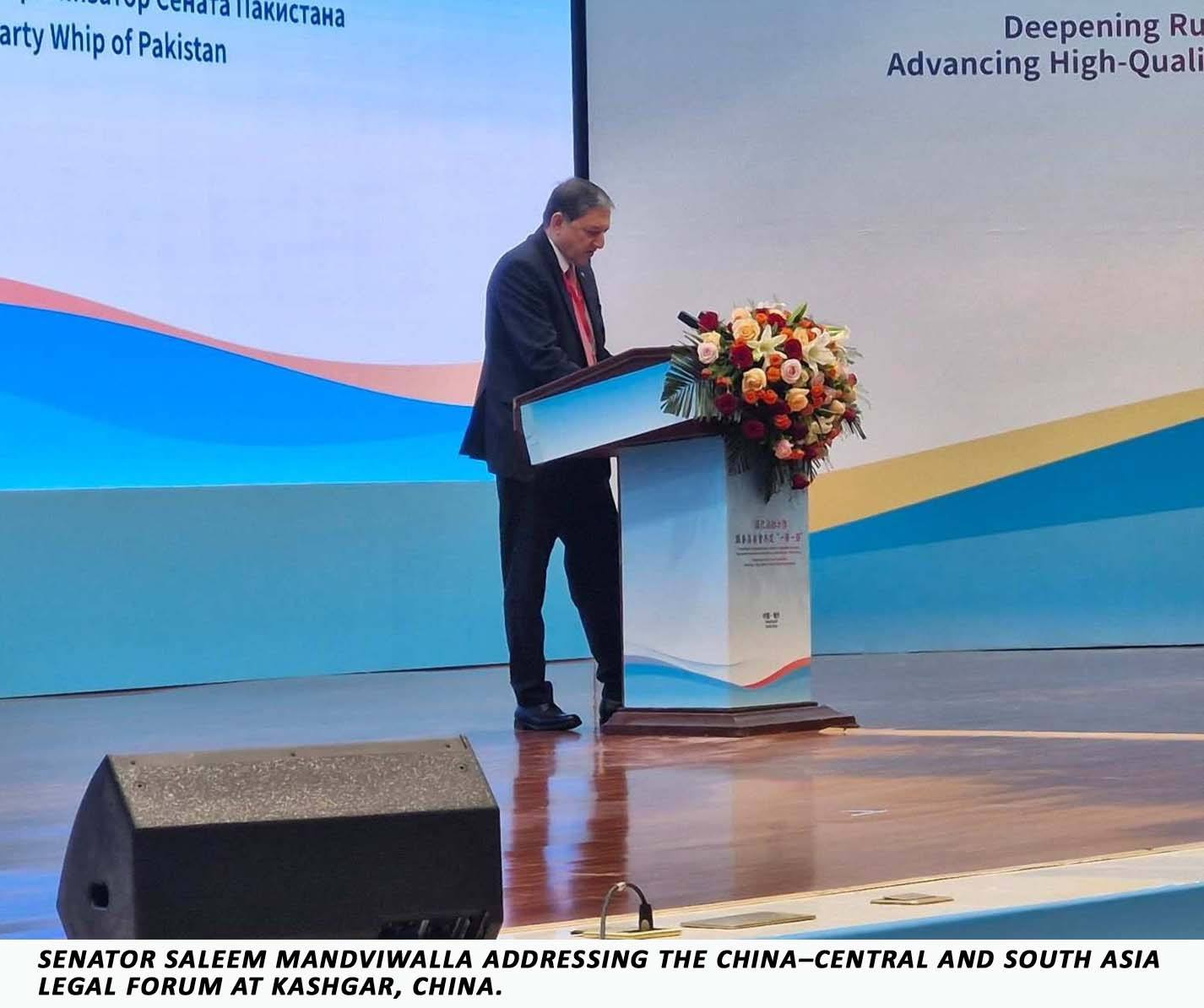
He stated, “The BRI is our shared journey toward connectivity and collective prosperity,” reaffirming that under the leadership of President Asif Ali Zardari, Pakistan remains committed to fostering a legal environment based on trust, transparency, and mutual respect.
Currently, Xinjiang has established a comprehensive foreign-related legal service framework, which is centered on the Silk Road Economic Belt Legal Services District, and supported by the One-Stop Dispute Resolution Center in the Urumqi International Land Port Area, the “Legal Intelligence Valley” in Kashgar, and the Khorgos Yilu International Legal Zone. These institutions work collaboratively to foster a foreign-related legal service system with distinctive features, complementary functions, and collaborative innovation.
The rule of law is an “indispensable” foundation that can guarantee for Belt and Road cooperation, and legal professionals from all participating countries could continue to have in-depth exchanges and discussions, deepen cooperation on the rule of law, and strengthen China’s ties with Central and South Asian countries to achieve more fruitful results.
Experts believe improved connectivity in policies, rules and standards, to promote global connectivity.
Moreover, practical cooperation in law enforcement, justice and legal services should be promoted, and more academic exchanges and cooperation on the rule of law should be carried out through platforms such as the China Forum on International Legal Cooperation.
The forum aims to urge all parties to expand the fields and channels of exchange by carrying out bilateral and multilateral cooperative research, and holding academic forums, seminars, and training courses on laws regarding BRI implementation.
The event, which was attended by representatives from China and nine other countries, including Kazakhstan, Tajikistan, Turkmenistan, Uzbekistan, Pakistan, and India.
The China-Pakistan Economic Corridor (CPEC), China’s 15-year, $62 billion investment in Pakistan and the flagship project of the Belt and Road Initiative.